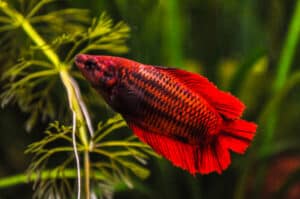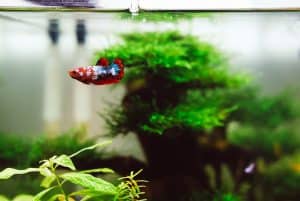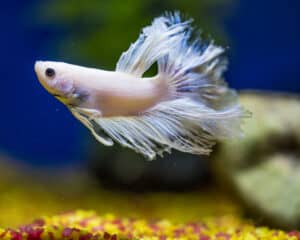

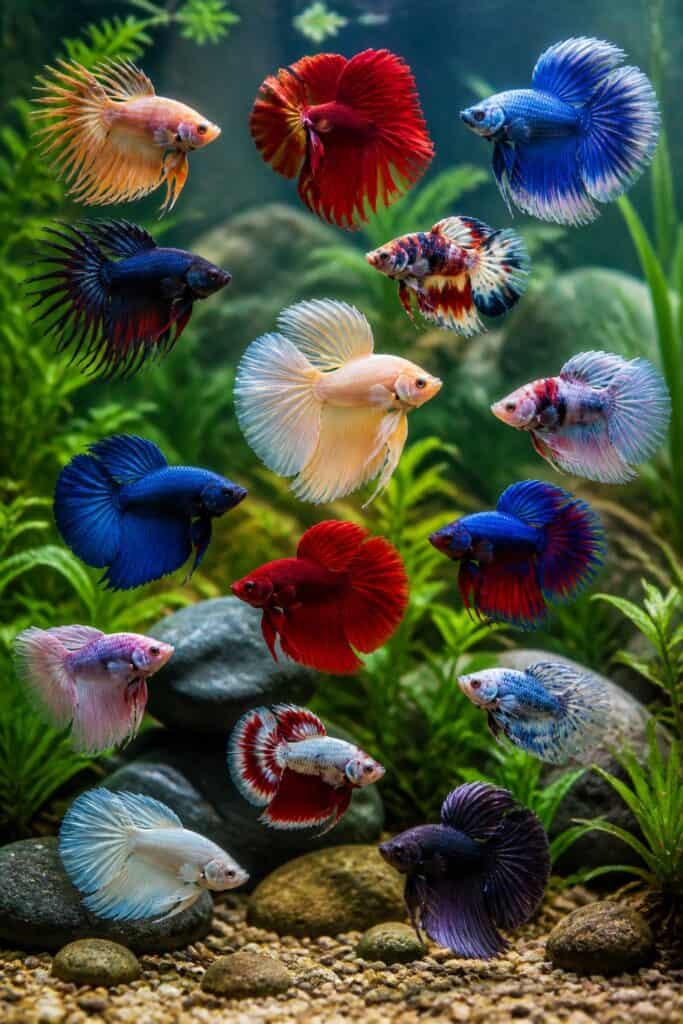
You stand in front of a tank at the shop, or you’re scrolling a breeder’s listing at midnight, and suddenly there’s a riot of colors and shapes — bettas flashing long veils, compact little fighters, wide halfmoons that look almost architectural. Some fins sweep gently through plants. Others slice the water like they mean it. Knowing the type helps you match tail shape to space needs and plant choices so your betta can actually move comfortably, not just survive.
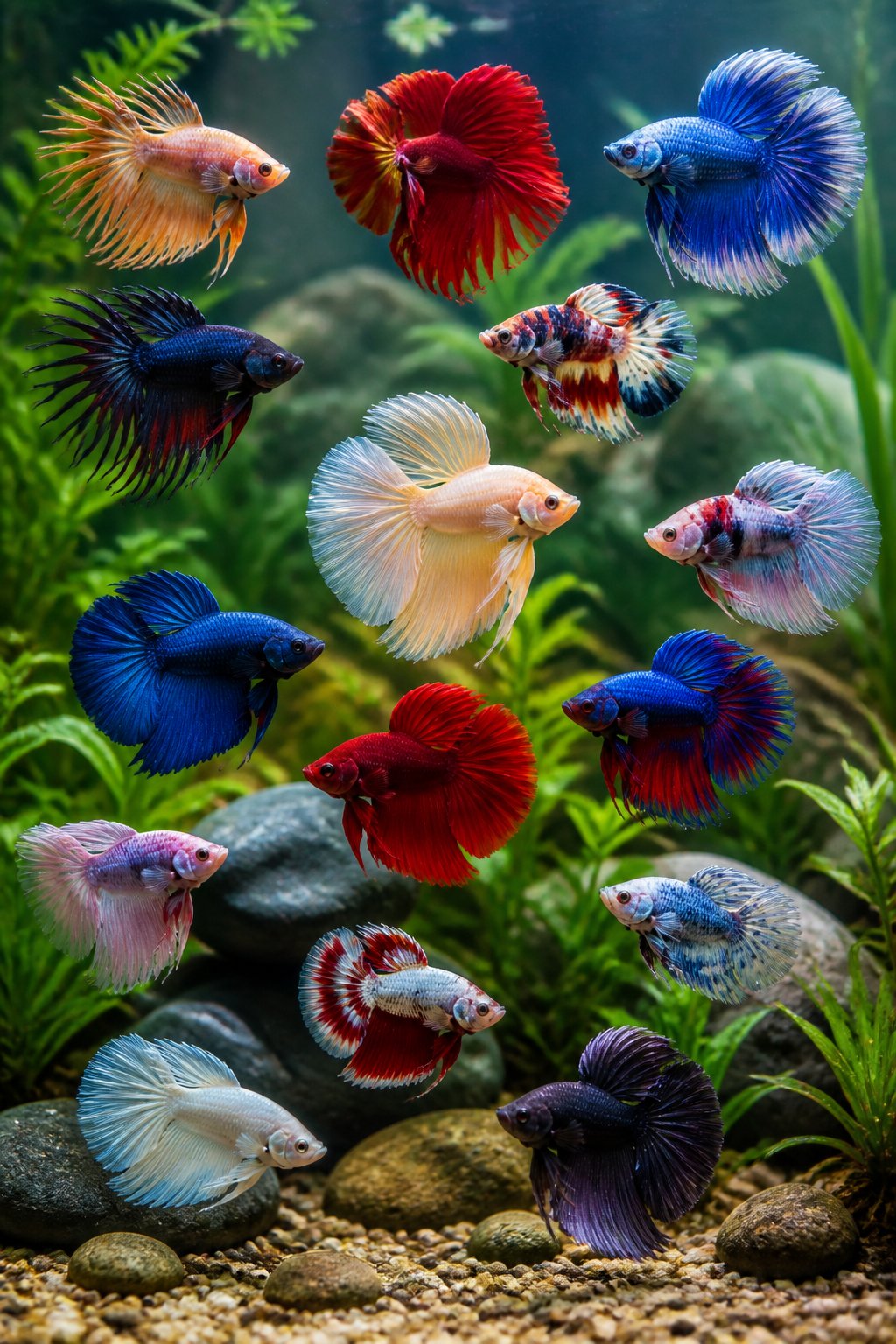
Tail shape also tells you what to expect in terms of behavior, fin vulnerability, and which plants or decor might cause problems. This guide walks through the types you’ll realistically encounter — at pet stores, from breeders, in online listings — and flags what to look for before you bring one home.
1) Veil Tail Betta
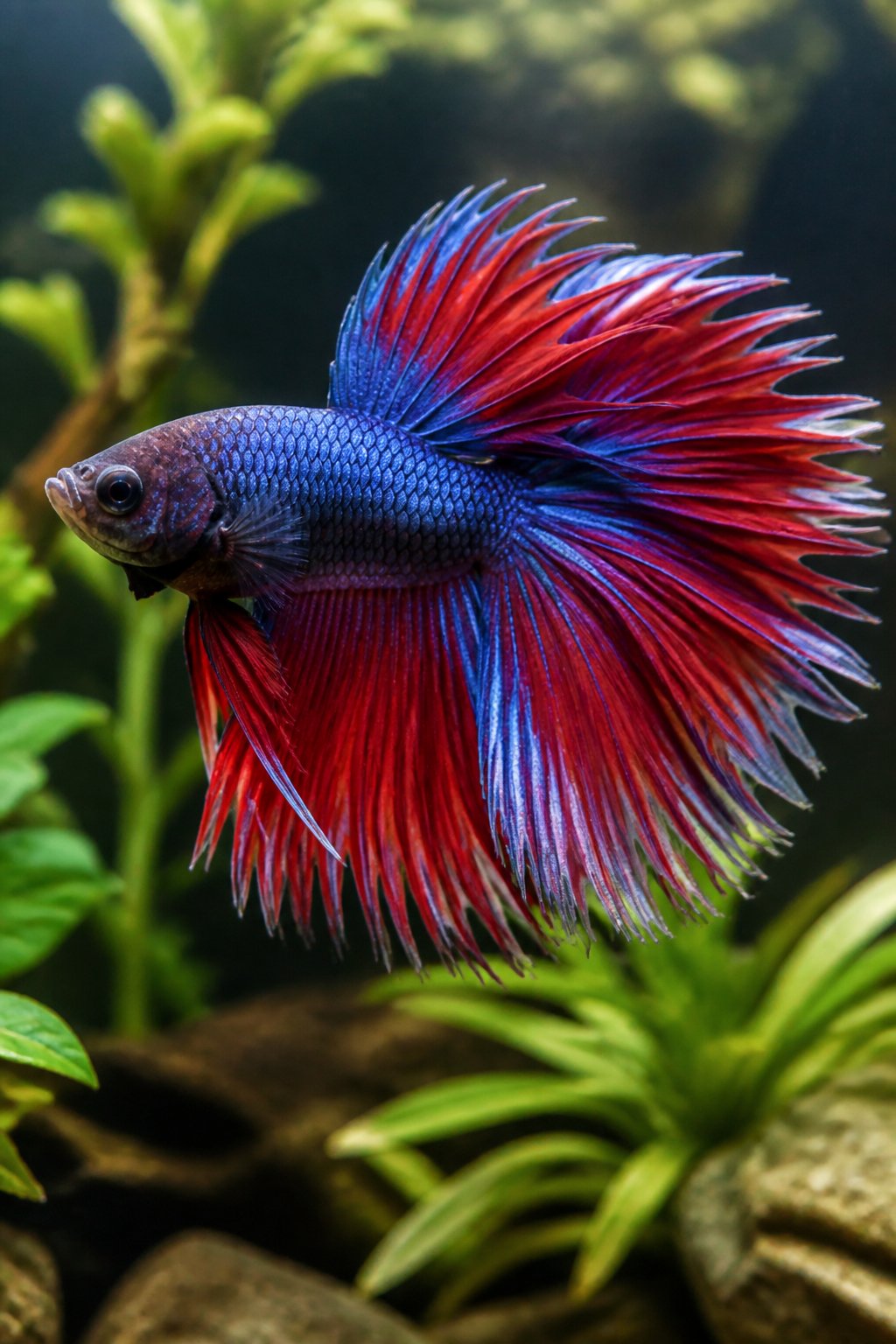
Long, soft fins that hang like a curtain, slow deliberate movement, colors ranging from single solid tones to marbled mixes. Veil tails are probably what most people picture when they think “betta fish,” and they’re the most common type you’ll find at chain pet stores.
What separates them from fancier long-finned types is the relaxed, unfussy look. The fins are long but not extravagant. They do well in planted tanks where broad-leaved plants and smooth surfaces keep those fins from catching. Avoid anything with fine, wiry texture — Java moss in thick clumps, for example, can snag a trailing veil tail fin more than you’d expect.
Aim for at least a 5 to 10 gallon tank with gentle filtration and plenty of low-flow areas. Broad leaves from Anubias or Amazon Sword give your fish somewhere to rest without fighting a current. Veil tails are so widely bred that quality varies a lot — when buying, look for an active fish with unfrayed fins and good color saturation rather than the cheapest cup on the shelf.

NICREW Slim Quiet Aquarium Filter 5 Gallon
Check Price2) Halfmoon Betta
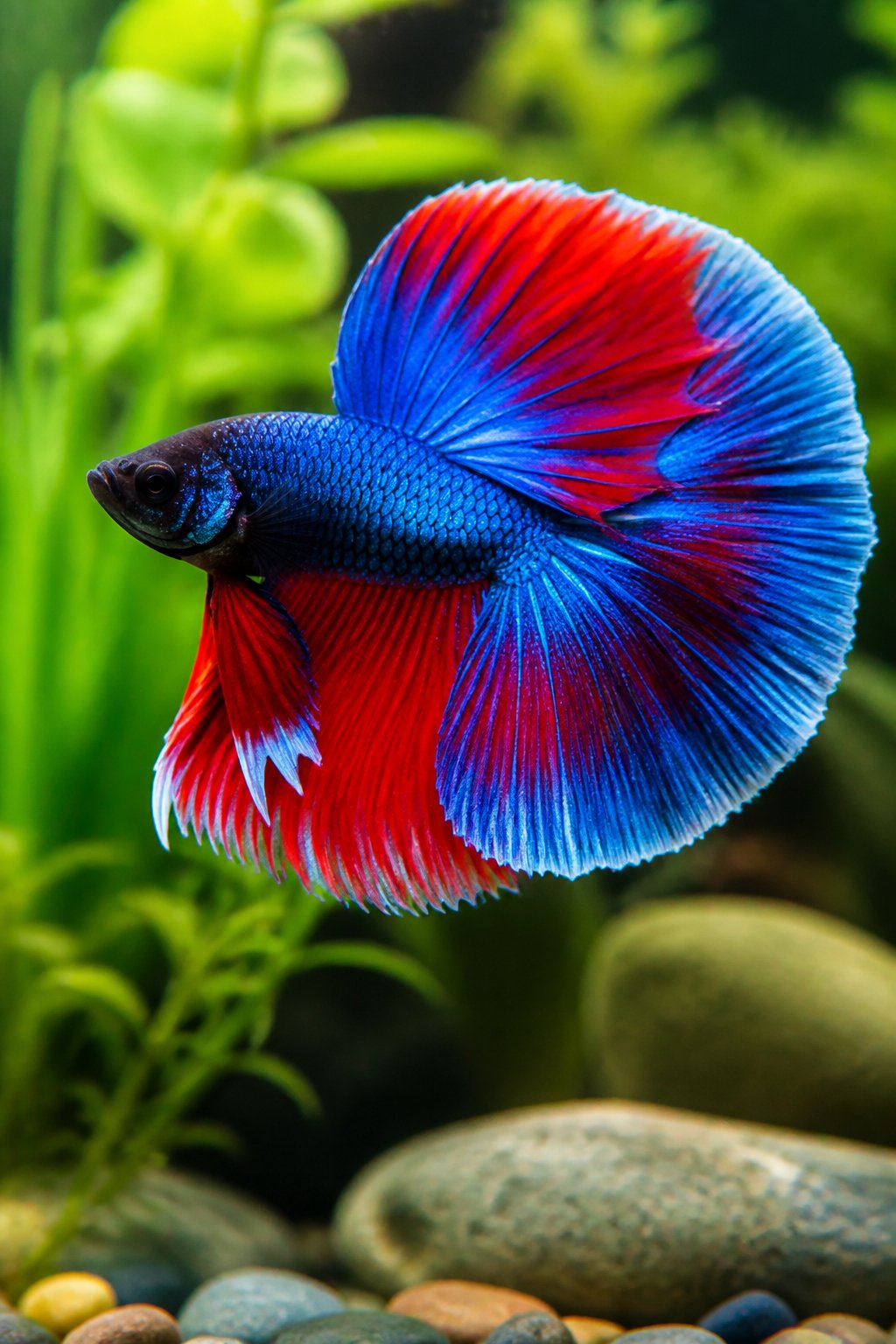
That tail spread is the whole point. When a halfmoon flares, the caudal fin opens into a near-perfect semicircle — close to 180 degrees. It’s genuinely impressive, especially against a dark green background of Anubias or Cryptocoryne.
Colors run from solid reds and blues to marbled blends, and the long rounded fins move slowly as the fish patrols the upper water column. That large tail needs space to spread without bumping into hardscape, so a 10-gallon tank with open swimming lanes works better than a heavily planted nano. Fine, delicate stems are a problem here. Choose sturdy swords or Anubias tied to driftwood rather than anything wispy.
Halfmoons prefer calm water. Strong filtration stresses their fins constantly, which leads to tearing over time. They’re popular enough that you’ll find them in most pet stores, but overbred specimens with weak, torn tails are common. Look for clean, even fin edges and active swimming before you commit.
3) Crowntail Betta
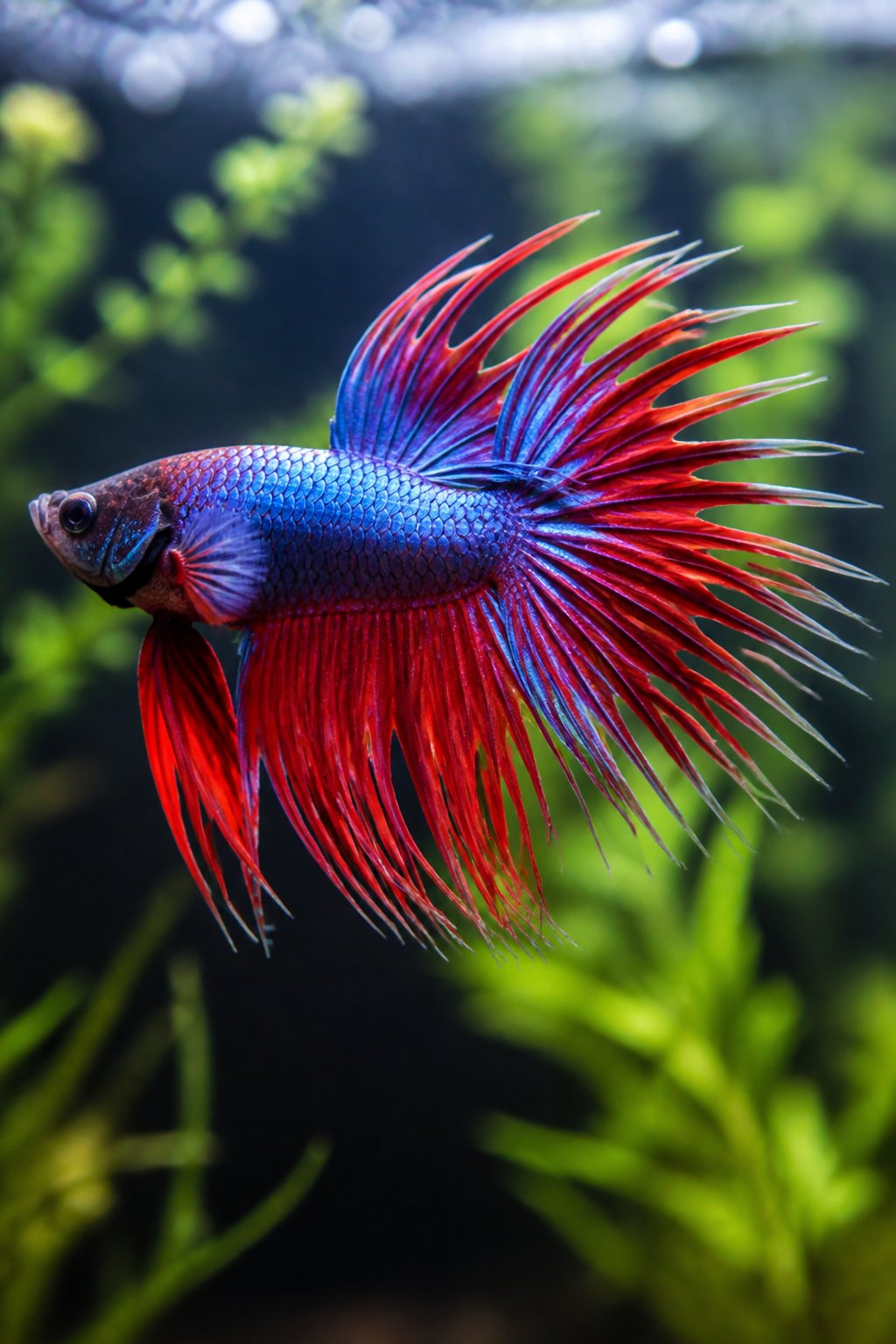
The fins look like a spiky crown, with deep cuts between the rays that make them fan out almost like fingers. That reduced webbing gives crowntails a jagged, architectural silhouette that’s completely different from the soft curves of a veil tail or halfmoon.
Colors range from solid reds and blues to marbled mixes, and the movement is slower and more deliberate than you might expect given the dramatic look. Because those fin rays are exposed with minimal webbing, they snag more easily on rough surfaces. Broad, smooth-leaved plants are essential here. Fine-leaved stems like Hornwort or Cabomba can catch individual rays and cause real damage over time.
A 5 to 10 gallon tank works well. Floating plants that soften surface flow help a lot. When buying, inspect the fin tips carefully — ragged or discolored tips can signal the early stages of fin rot, which is worth catching before it progresses.
4) Delta Tail Betta
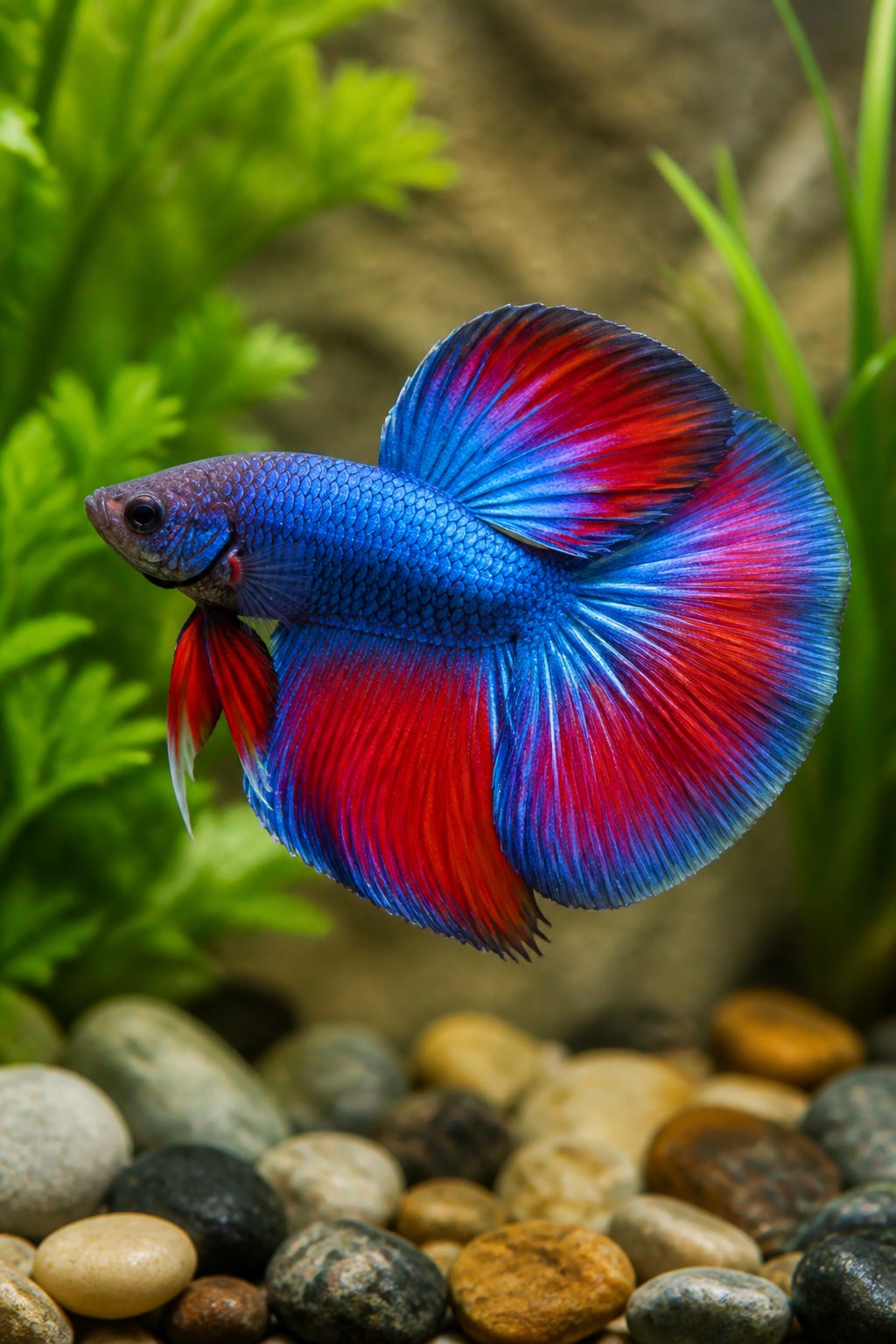
Broad and triangular, the delta tail looks almost geometric when it spreads — wide at the base, tapering to a straight rear edge. It doesn’t open quite as far as a halfmoon, but it has a clean, graphic quality that reads beautifully against round-leaved plants.
Movement tends to be steady and deliberate rather than flowing. The delta tail moves in purposeful bursts, which makes it fun to watch as it navigates around stems and over substrate. Smooth-leaved plants like Anubias and Java Fern suit it well, and hiding spots near the surface give it somewhere to rest between patrols.
Aim for at least 5 gallons with gentle flow. Delta tails are common in pet stores and online, but check for torn fins or muted, uneven coloring before buying. Healthy deltas show clean fin edges and consistent color that doesn’t look washed out at the edges.
“The fish you choose sets the visual tone of your whole tank — tail shape, movement, even how it rests on a leaf changes what the setup feels like to look at.”
5) Plakat (Short-Finned) Betta
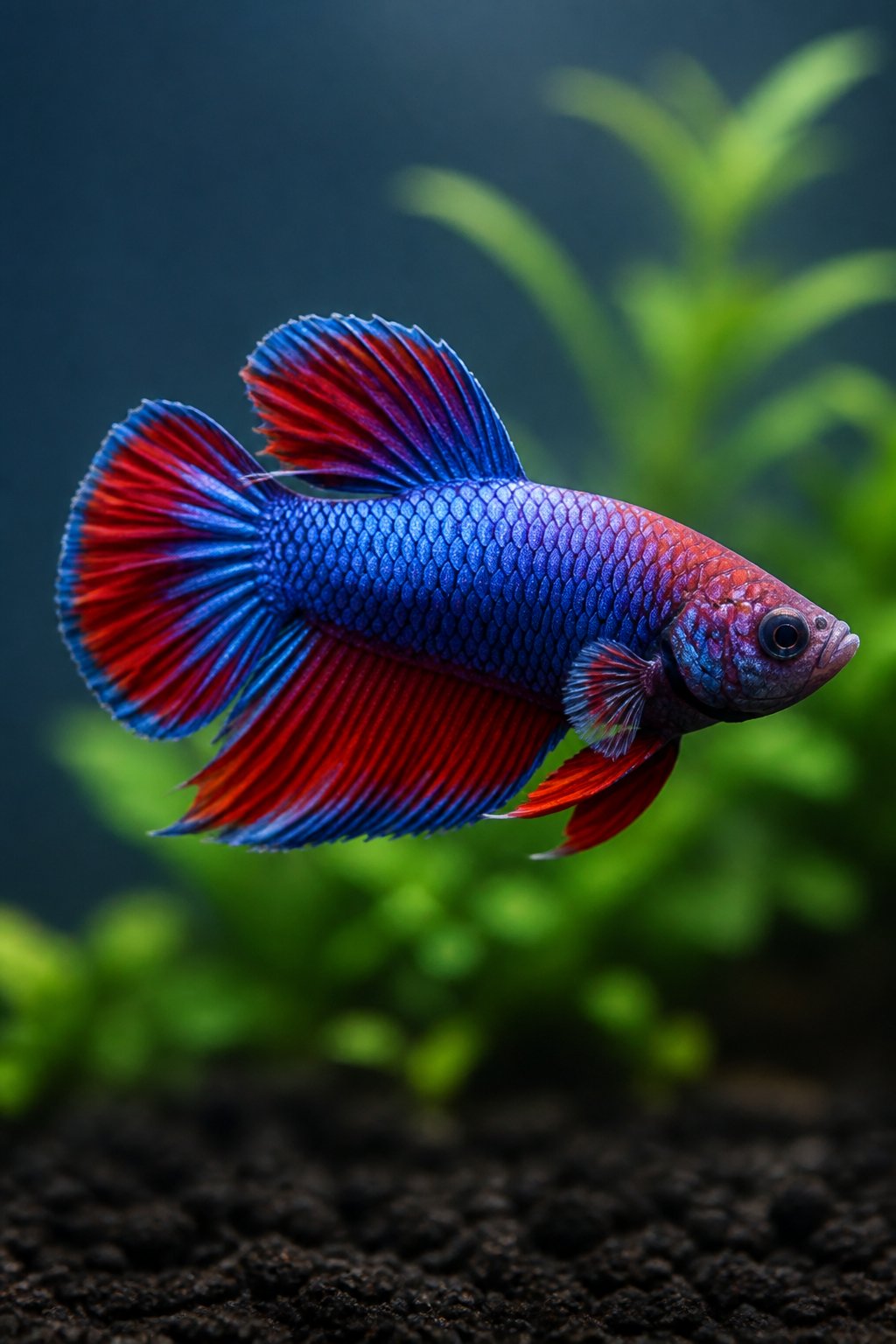
Short, rounded fins. Bold body colors. Quick, confident movement close to the substrate. Plakats look more like the wild-type betta than their long-finned relatives, and that compact profile changes how they interact with a planted tank entirely.
Because the fins are short, they don’t catch on Java Moss or narrow sword leaves the way a veil tail or crowntail would. Plakats handle gentle currents better too, which gives you slightly more flexibility with filtration. They’re also more active explorers — expect yours to investigate every corner of the tank rather than hovering in one spot.
Plan for at least 10 gallons with broad-leaf plants for resting spots and plenty of structure to swim through. Low to moderate flow works well. When buying, look for a fish that brightens when you approach the glass. That quick color response usually means it’s healthy and will settle into a new tank without too much drama.

Tetra 10-Gallon Glass Aquarium Kit with LED
Check Price6) Double Tail Betta
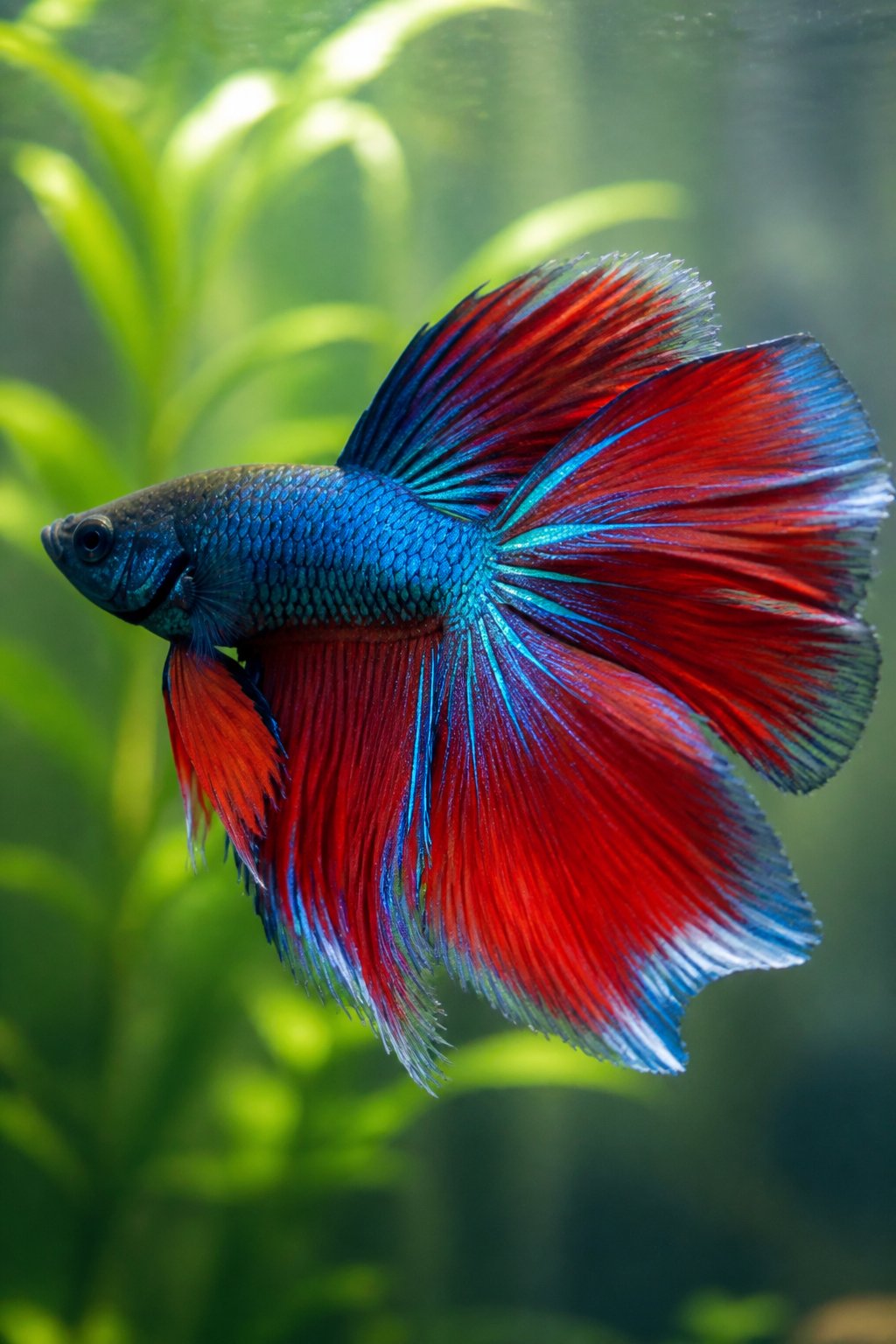
Two lobes instead of one, carried wide and high as it glides. The split tail gives the double tail a bold, symmetrical silhouette that looks striking against broad-leaved plants, especially when the fish turns and the paired lobes flick sharply to one side.
That split happens at the caudal peduncle, which also tends to be broader than on single-tailed varieties. Colors range from solid to bi-color, and the overall body shape feels a bit stockier than a halfmoon or veil tail. Smooth-leaved plants matter here. Anything pointy or fine-leaved risks tearing the split lobes, which are individually smaller and more vulnerable than a single wide tail.
Aim for at least 10 gallons. Double tails are moderately available from breeders, but less common in big-box stores. Check for healthy, even fin edges on both lobes before buying — ragged edges on one side and not the other often point to fin rot or an injury that’s been healing poorly.
The double tail trait is caused by a gene that duplicates the dorsal fin as well, which is why double tails typically have a wider, fuller dorsal than other betta types. It’s a two-for-one visual payoff that’s easy to miss until you know to look for it.
7) Rosetail Betta
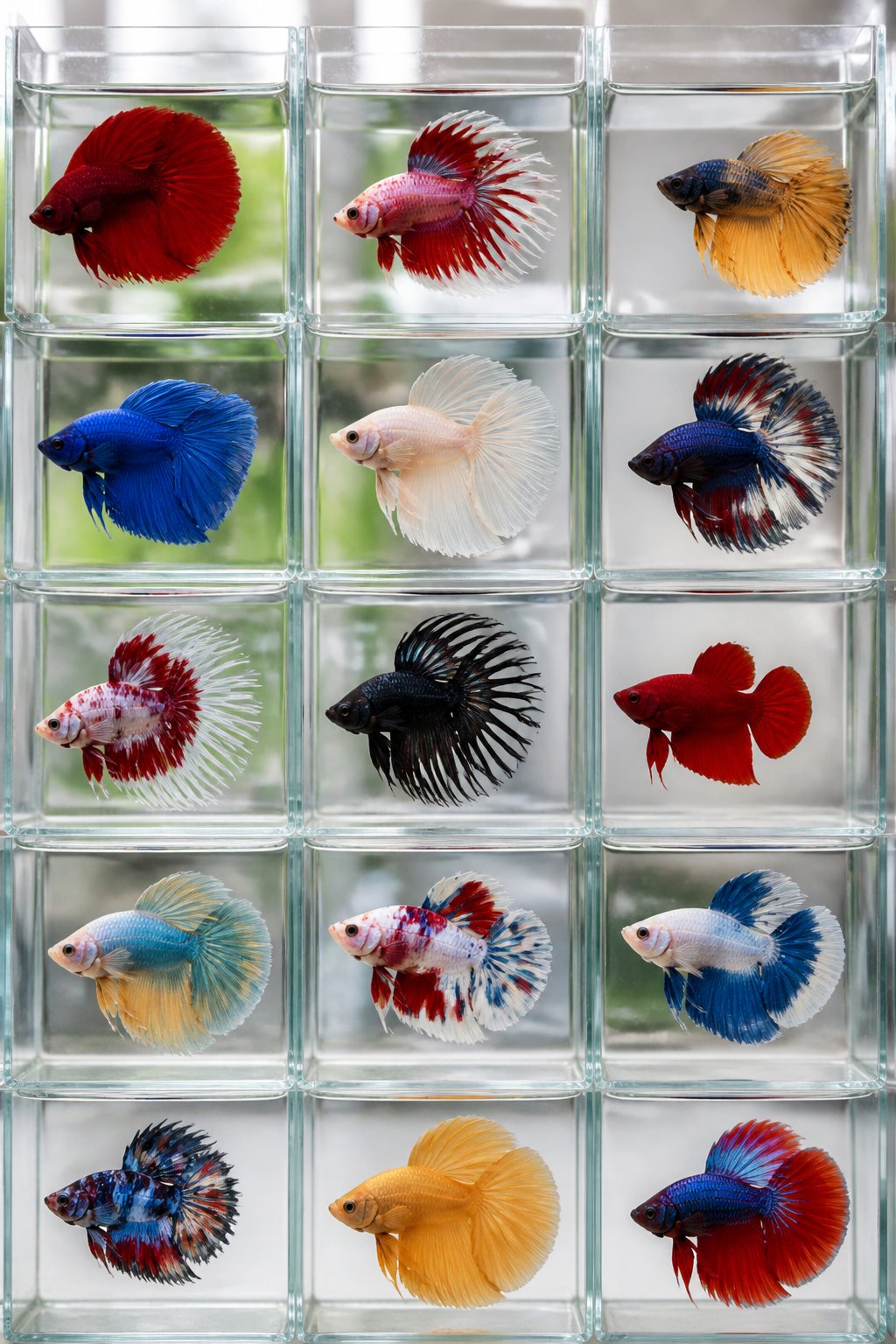
The fin edges on a rosetail are so heavily ruffled they look like overlapping rose petals. Deep reds, soft pinks, blues — the colors vary, but the silhouette is unmistakable. It moves slowly, with wide, floating beats that let those lace-like fins spread fully.
That extreme fin webbing is the rosetail’s defining feature, and also its main vulnerability. Heavy fins snag easily on anything textured — rough decor, fine-leaved plants, sharp substrate edges. Broad-leaf plants like Anubias and smooth driftwood are the safest choices. Avoid anything with small leaves or spiky structure entirely.
Keep the tank calm. Ten gallons is a reasonable minimum so your fish can turn without battling a current. Dense, low hiding spots help the rosetail rest without those fins constantly fanning open against flow. Rosetails tend to be pricier than basic veil tails, so look carefully at fin condition before buying — full, even ruffles with no ragged patches are what you’re after.
8) Feathertail Betta
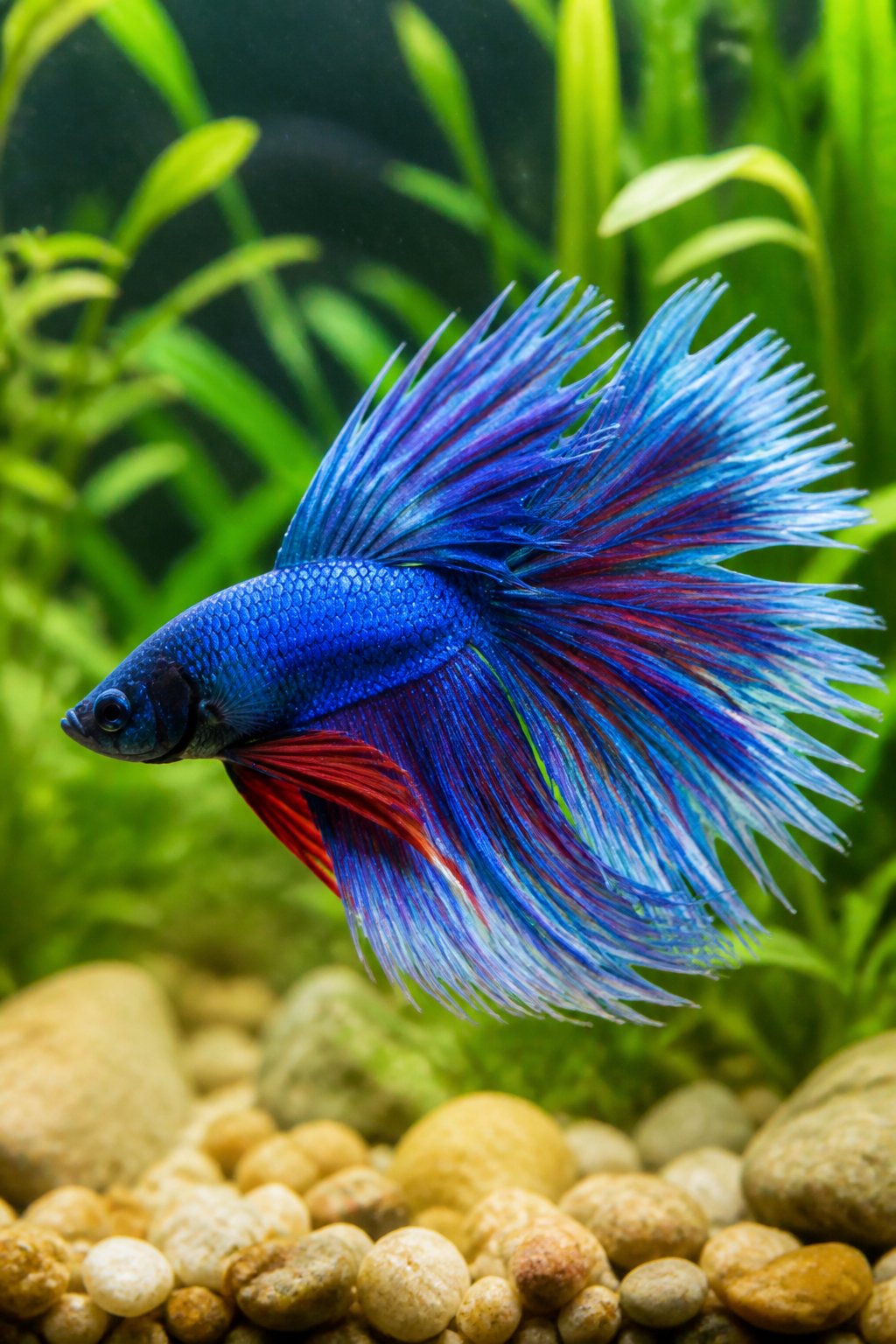
Long, soft fins with extra fringing along the edges — like the fins have their own fringe of shorter rays layered over the main structure. Colors tend toward pale pastels and deeper blues or reds, and the movement is slow and graceful enough to look almost deliberate.
That fringing is beautiful and also fragile. Coarse plants, rough decor, and even slightly sharp substrate edges can catch and tear those delicate fin borders. Anubias and Java Fern on smooth driftwood are reliable choices. Avoid plastic plants with pointed tips entirely — they’re a problem for most long-finned bettas, but especially for feathertails.
Aim for at least 10 gallons with gentle, low-flow filtration. Feathertails aren’t always easy to find at general pet stores — specialty shops and breeders are more reliable sources. Before buying, check the fin fringes carefully under good light. Small tears or discolored fringe edges are worth noting and worth asking about.
9) Halfmoon Plakat
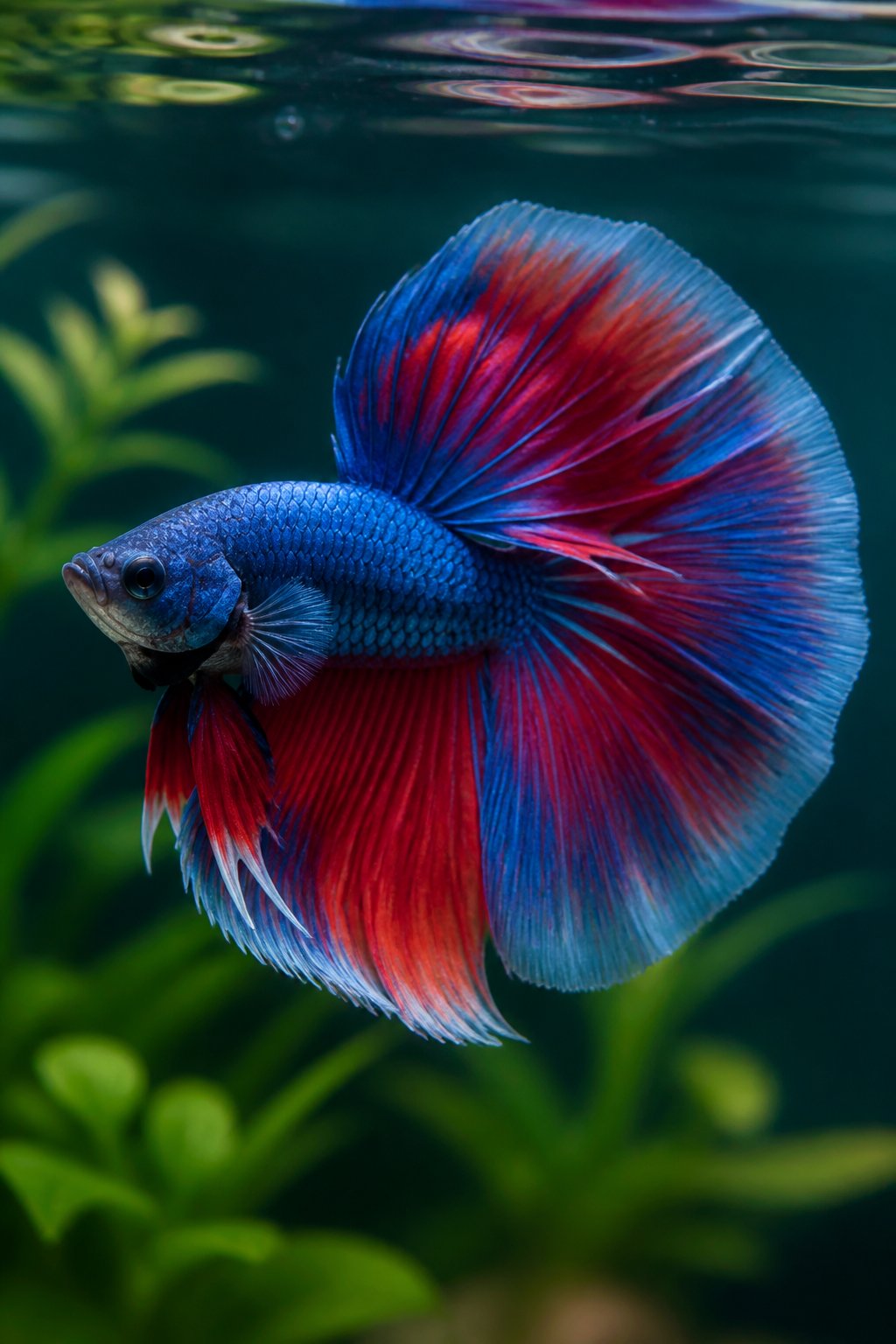
Short, broad fins that flare wide but stop well short of the long streamers on a standard halfmoon. Think of it as the halfmoon’s more practical sibling: you get the dramatic spread without the extra fin weight dragging behind the fish everywhere it goes.
Colors run from solid reds and blues to marbled and bi-color patterns. Movement is quick and deliberate rather than flowing — this fish darts around a planted tank rather than drifting through it. That compact profile means finer plants are less risky than with long-finned types, though gentle flow is still worth maintaining.
Aim for at least 10 gallons with broad-leaf plants and smooth decorations. Halfmoon plakats are fairly common and a good option if you want the visual impact of a wide tail without worrying constantly about fin snags. Look for bright color and clean fin edges when choosing — dull coloring and lethargy in the display tank are signs to keep looking.
Fun Fact
The halfmoon plakat was developed by selectively breeding plakats for wider tail spread without the length of a standard halfmoon. The result is a fish that combines the active, agile temperament of a fighter-line betta with a show-quality tail shape — which is part of why it’s become popular with planted tank keepers who want a visually striking fish that’s also easy to keep active and healthy.
10) Cambodian Betta
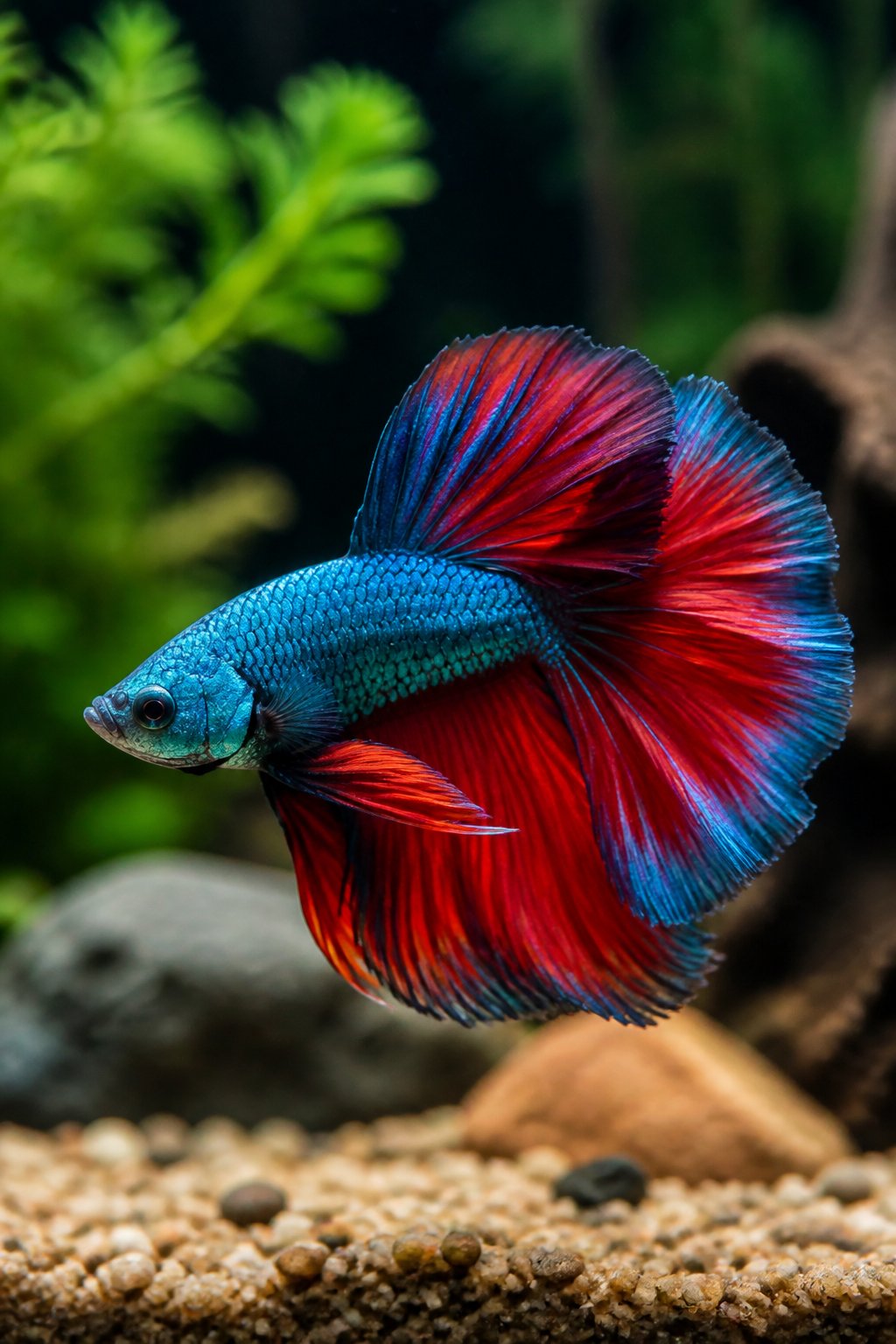
Pale body, warmer red or orange fins. The contrast is quieter than a fully saturated blue or red betta, but it has a particular softness that works really well in a heavily planted setup where the greenery already provides the visual intensity.
Fins are usually short to medium and rounded, and the movement is calm and deliberate. Because the fins aren’t long or flamboyant, Cambodian bettas are forgiving in terms of plant choice — they won’t catch on mid-length stems the way a veil tail or rosetail would.
A 5-gallon tank is workable, though 10 gallons gives more stable water and room for a proper planting scheme. Broad-leaf plants, gentle filtration, and a few hiding spots near the substrate suit them well. Availability is generally good, but look for fish with full, unfrayed fins and alert, responsive behavior — a Cambodian that ignores you at the shop is usually stressed, not calm.
11) Mustard Gas Betta
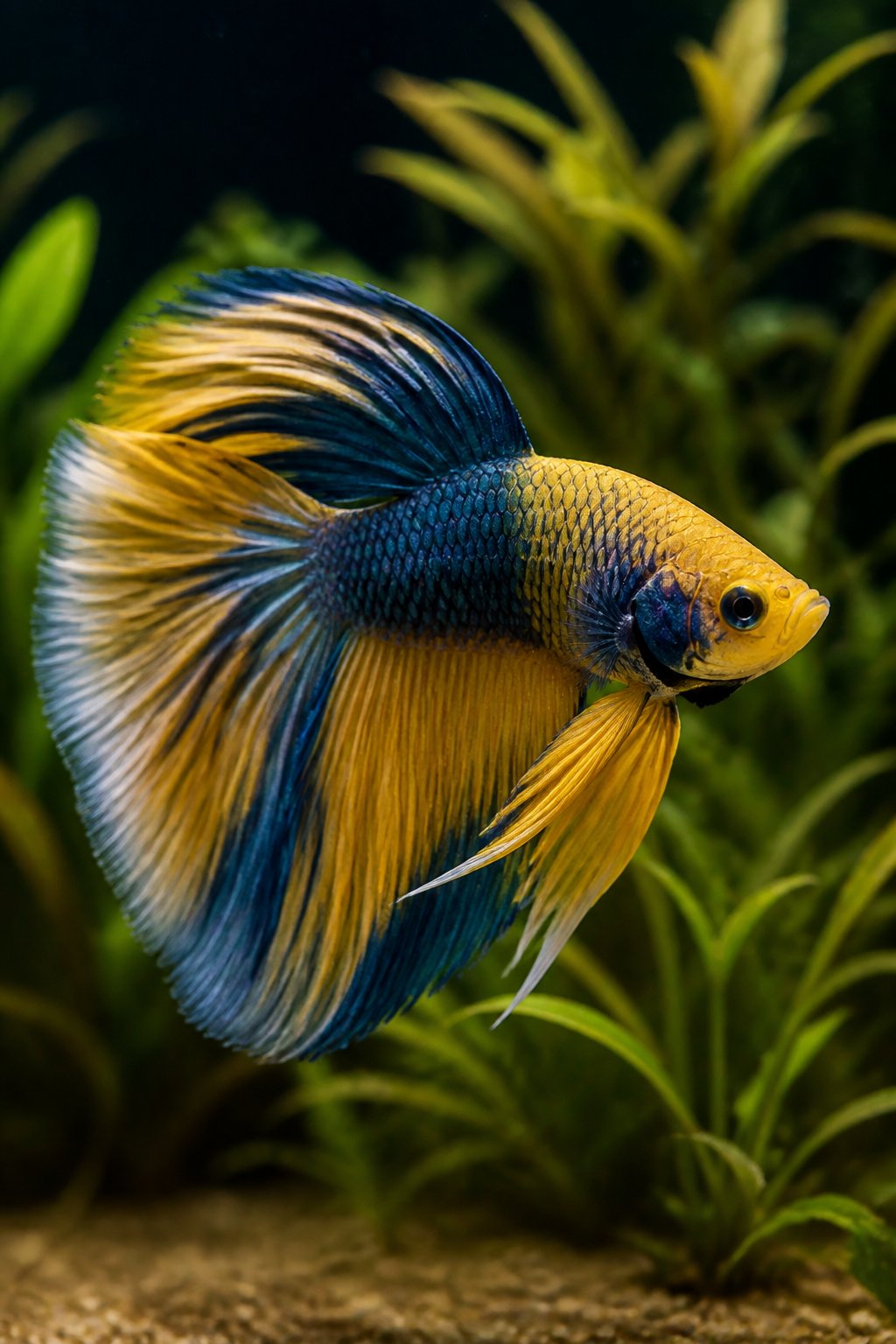
Pale yellow body, smoky gray or brown overlay, darker fins edged in black. The color effect is unlike anything else in the betta world — part muted, part iridescent, with a kind of powdered quality that photographs surprisingly well against dark green foliage.
Fins vary from short to moderate length, and movement is calm. The two-tone, washed look needs the right background to read clearly — too much light or too pale a plant palette and the fish blends in rather than standing out. Darker-leaved plants like Anubias, Java Fern, or Cryptocoryne wendtii provide the contrast that makes the color pattern visible.
Aim for 5 to 10 gallons with smooth-leaf plants and a sponge filter for gentle, low-disturbance flow. Mustard gas bettas aren’t always easy to find — availability is hit or miss depending on your source. When buying, look for even, consistent coloring across the body and fins. A fish that looks overly pale or has clamped fins in the bag has often been stressed by shipping and may take time to color up, if it does at all.
12) Koi (Marble) Betta
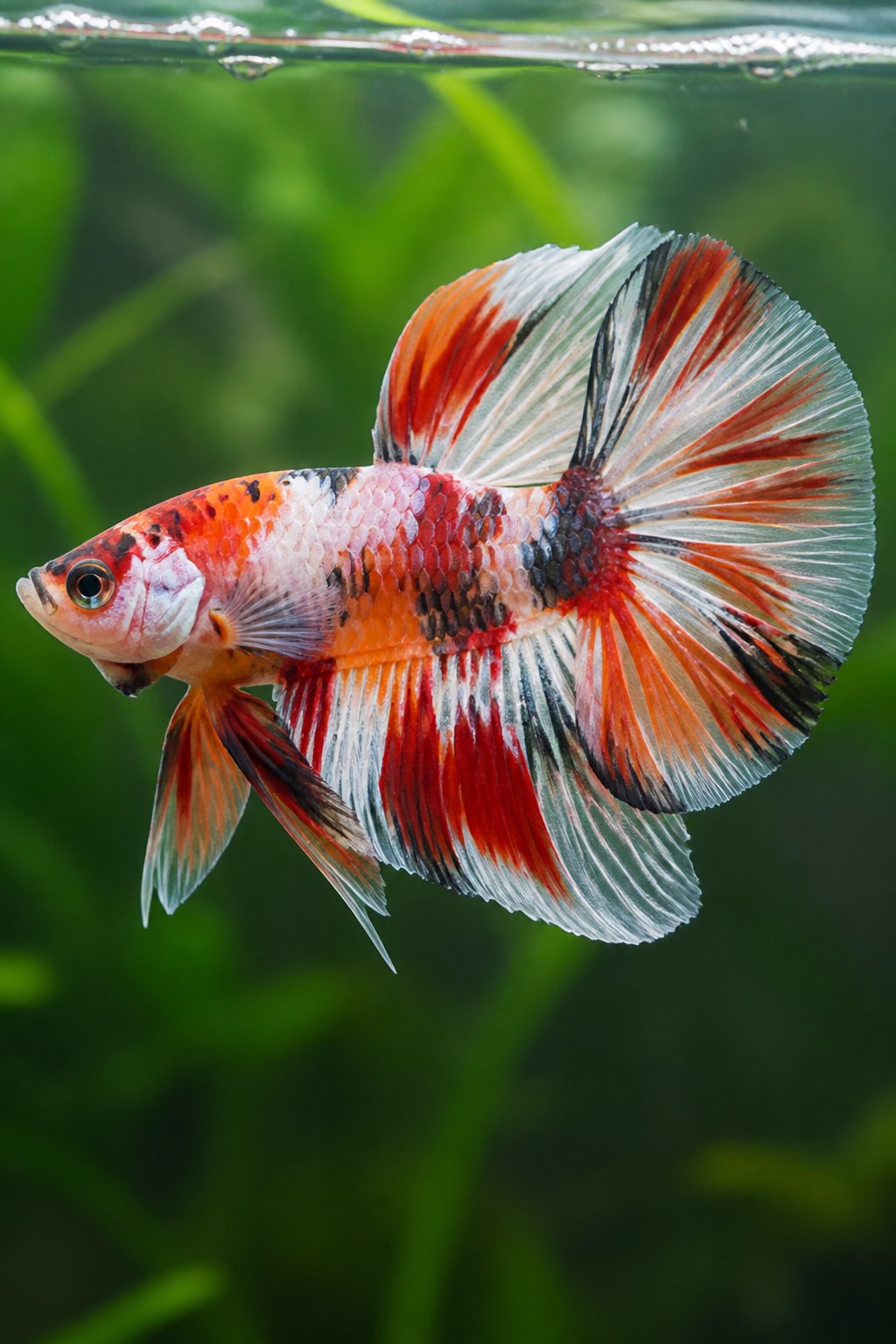
Blotches of red, orange, white, and black on rounded fins that shift and drift as the fish moves. No two koi marble bettas look exactly the same, and the pattern can actually change as the fish matures — the blotches rearrange themselves, sometimes dramatically, over weeks or months.
That color instability is either fascinating or frustrating depending on what you’re after. If you’re choosing a fish because it has a specific pattern you love right now, know that it may look different in three months. In a planted tank, broad leaves give the fish places to rest and the shifting colors somewhere interesting to show against stable green backgrounds. Avoid very fine-leaved plants that collect debris — smooth leaves and floating plants work best for the gentle fins.
Koi marbles are common in shops. Look for fish that are active and eating, and ask the seller about past color changes if you want a sense of where the pattern might go. Stable, bright color at purchase is a better sign than a fish that already looks washed out.
13) Dragon Scale Betta
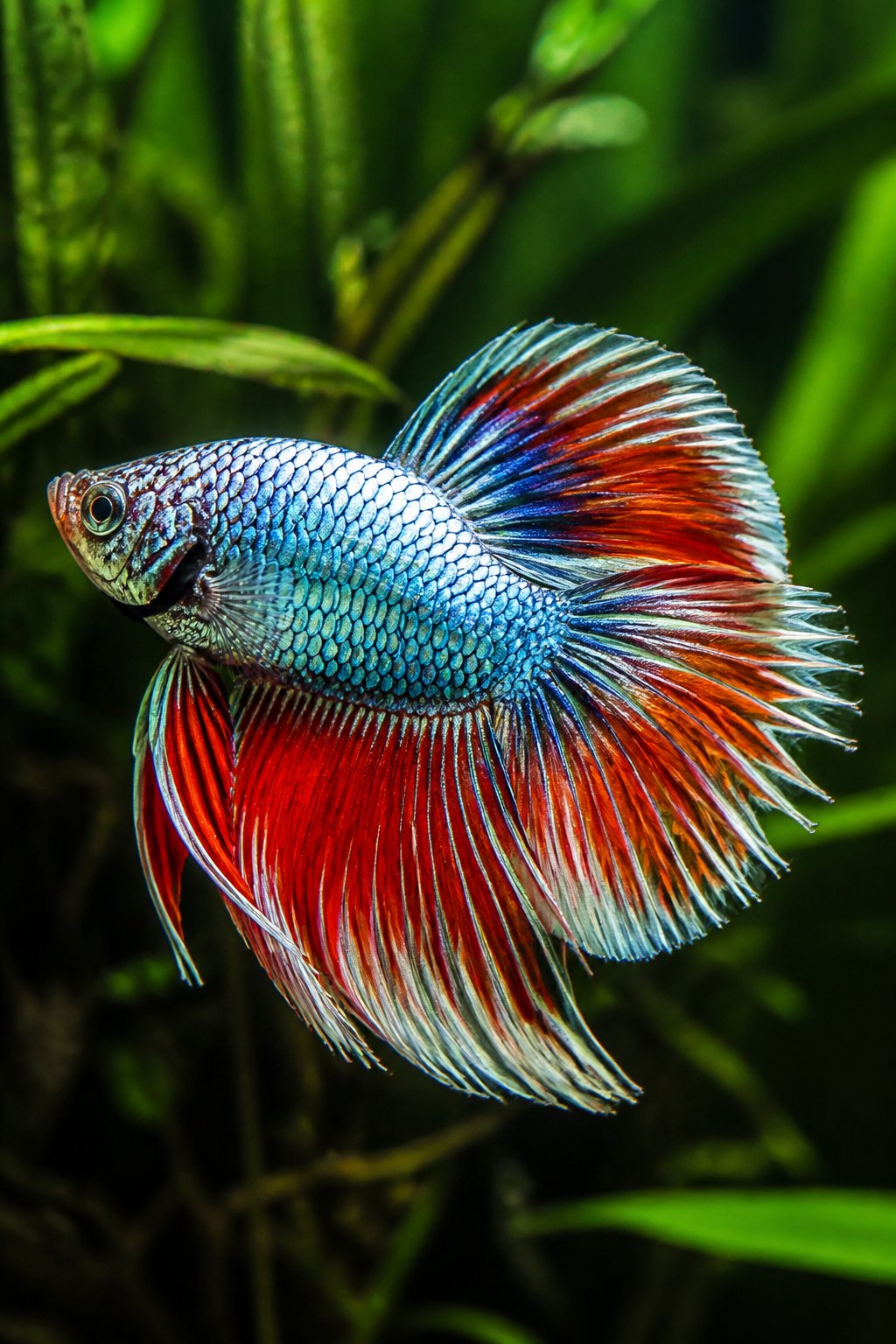
Heavy, metallic scales that catch the light like overlapping coins. The texture is visible from across the tank — there’s a raised, almost three-dimensional quality to the scaling that no other betta type quite replicates. Fins are usually broad and flowing, in solid or bi-color patterns, and movement is steady and deliberate rather than quick.
That thick scaling is the dragon scale’s signature trait, and it does affect the fish in practical ways. They tend to be slightly less agile than thinner-scaled varieties, so they do better in tanks where they won’t have to fight strong currents or navigate very dense plantings. Strong flow stresses them more than it would a plakat.
Give a dragon scale at least 10 to 20 gallons if you want room for both plants and open swimming lanes. Java Fern and Anubias on smooth wood are reliable plant choices — soft leaves, no sharp edges. A sponge filter or adjustable outlet keeps flow gentle. When buying, look for firm, intact scales and normal surface breathing. Obvious lumps or irregular scale patches can indicate underlying health issues that scaling sometimes conceals.
14) Butterfly Betta
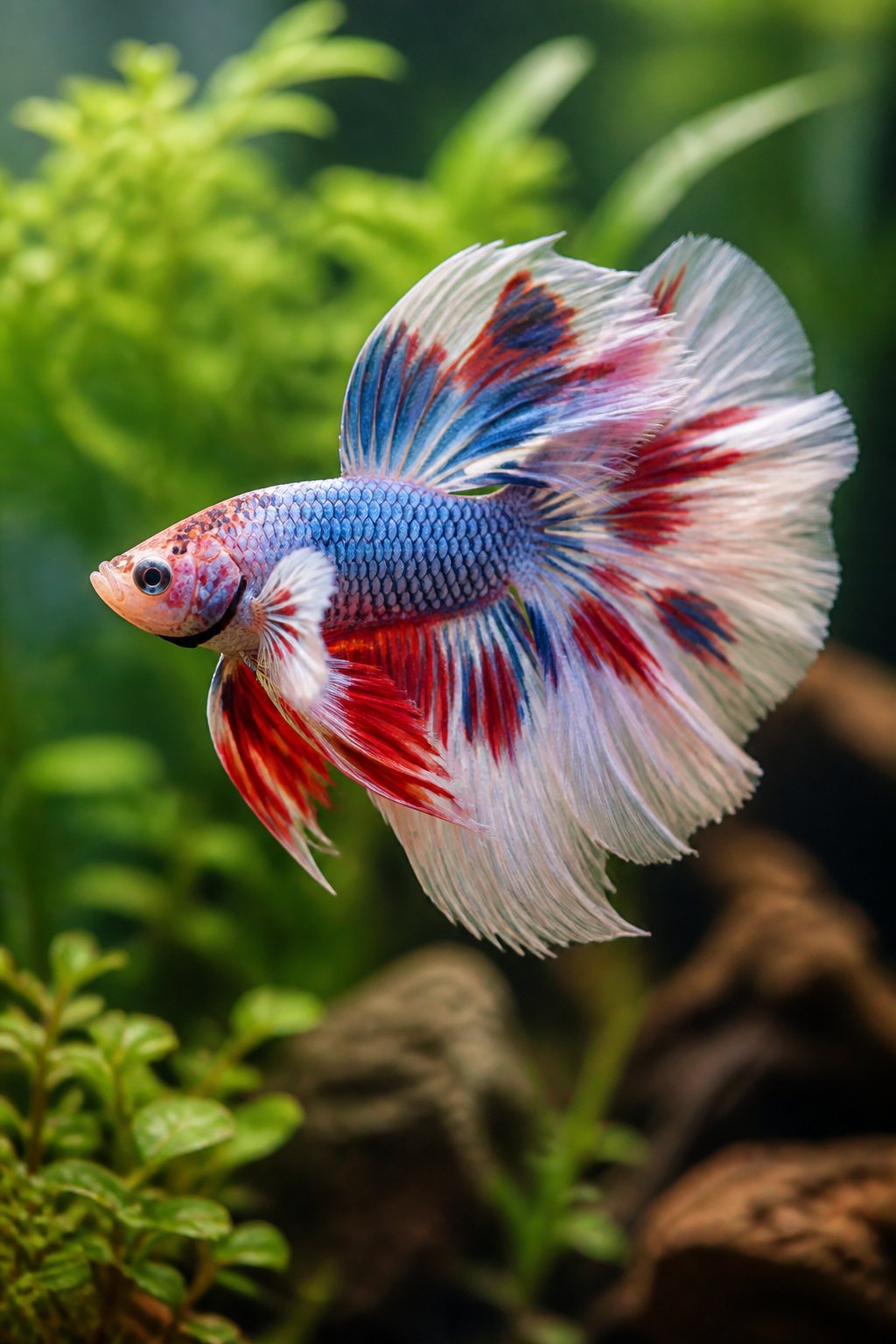
Broad, fan-like fins with a clear band of color division — solid center, pale or transparent edges, the whole thing resembling a wing when the fish flares or drifts slowly through the water. The pattern works best when you can see it from the side, which means open swimming space matters in the tank design.
What makes this type visually distinctive is that pale or transparent rim. It creates a layered look that other betta patterns don’t have. Fine, sharp-edged plants are a risk for those delicate fin borders — keep the planting scheme on the smooth-leaf side and give your fish clear lanes to move through without navigating a maze of stems.
A 5 to 10 gallon tank with gentle flow and plenty of hiding spots suits butterfly bettas well. They’re reasonably common, but fin patterns vary significantly between individuals. Check how the color bands line up on both sides of the tail before you choose — symmetrical banding is the ideal, and a good seller will let you look carefully before committing.
How Color Variations Affect Tank Design
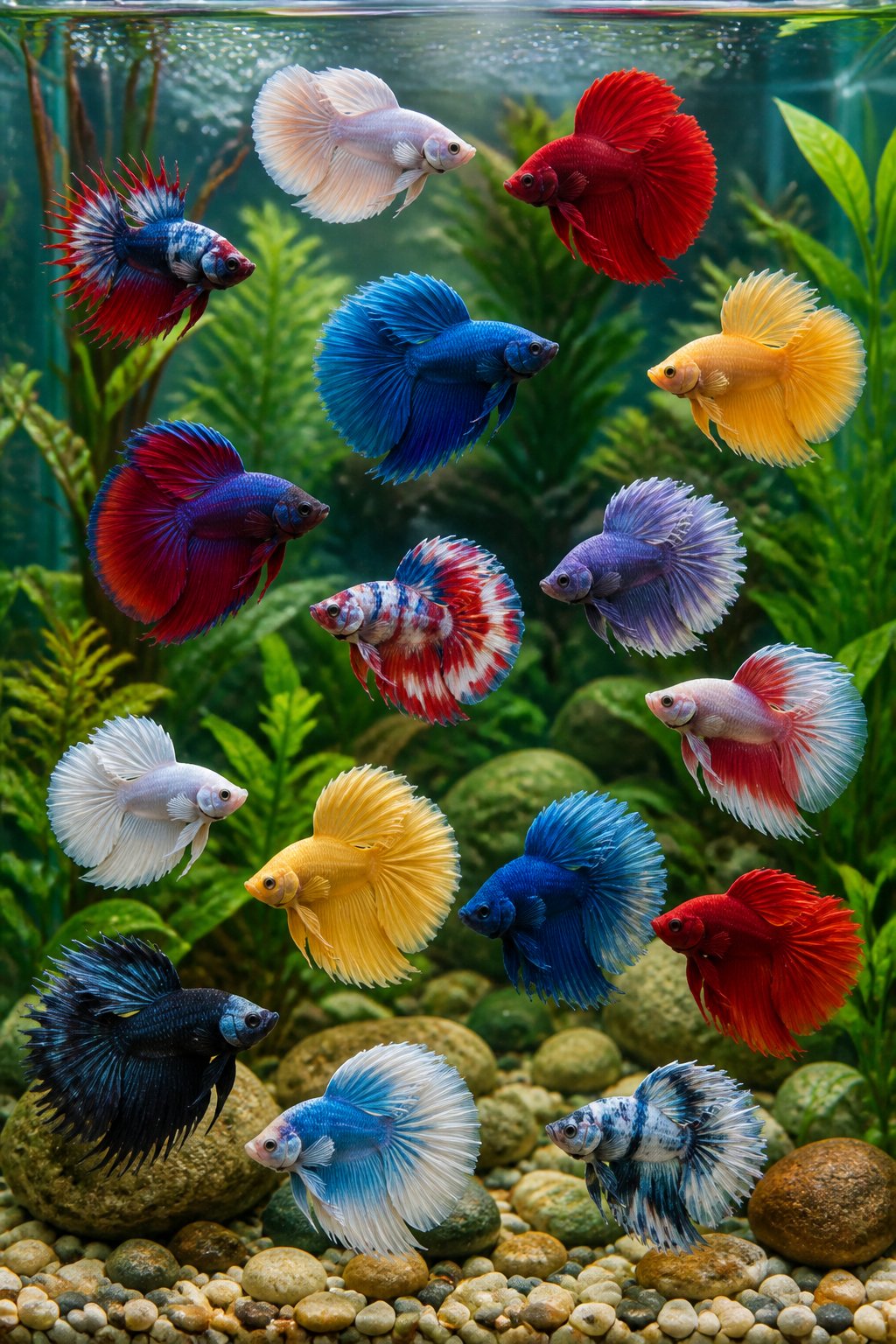
Color affects more than aesthetics. It shapes which plants will make your fish visible, what lighting intensity suits the tank, and how much contrast you need to let the pattern actually read from normal viewing distance. It’s worth thinking through before you commit to a planting scheme.
Contrasting Colors Against Live Plants
Bright red or blue bettas pop immediately against deep green. Pale, metallic, or marbled fish can disappear into a light-green stem-plant background in a way that’s genuinely frustrating once the tank is set up. Darker-leaved plants — Anubias, Java Fern, Cryptocoryne wendtii — give saturated colors somewhere to register clearly.
Fine-leaved carpet plants like Hemianthus or Monte Carlo are beautiful but risky for long-finned types. For veil tails, crowntails, or rosetails, choose broader leaves or floating plants that provide resting spots without the snag risk. If your betta has an iridescent or marble pattern, a mix of leaf textures — broad for visual contrast, finer stems for hiding — tends to show off the fish better than a single plant species throughout.
Keep taller plants toward the back. Open space in the front third of the tank lets your betta swim through a clear sight line, which is where you’ll actually see the color and fin shape doing what they’re supposed to do.
Lighting for Betta Pattern Visibility
Low to medium LED intensity suits most bettas and most live plants. Strong lighting bleaches pale colors and stresses shy fish. Dim light hides metallic sheen entirely — which defeats the purpose if you chose a dragon scale or mustard gas specifically for that quality.
A full-spectrum LED with adjustable intensity gives you the most flexibility. Angle the light to reduce surface glare — you’ll see subtle patterns far more clearly without the reflection. For iridescent fish, a brief boost in intensity during the evening (30 to 60 minutes) reveals shimmer without keeping the light harsh all day. Match overall light duration to your plant load: 6 to 8 hours works for most low-light species, a bit longer only if you’re running demanding stem plants that actually need it.
Choosing Plants and Decor That Work With the Fish, Not Against It
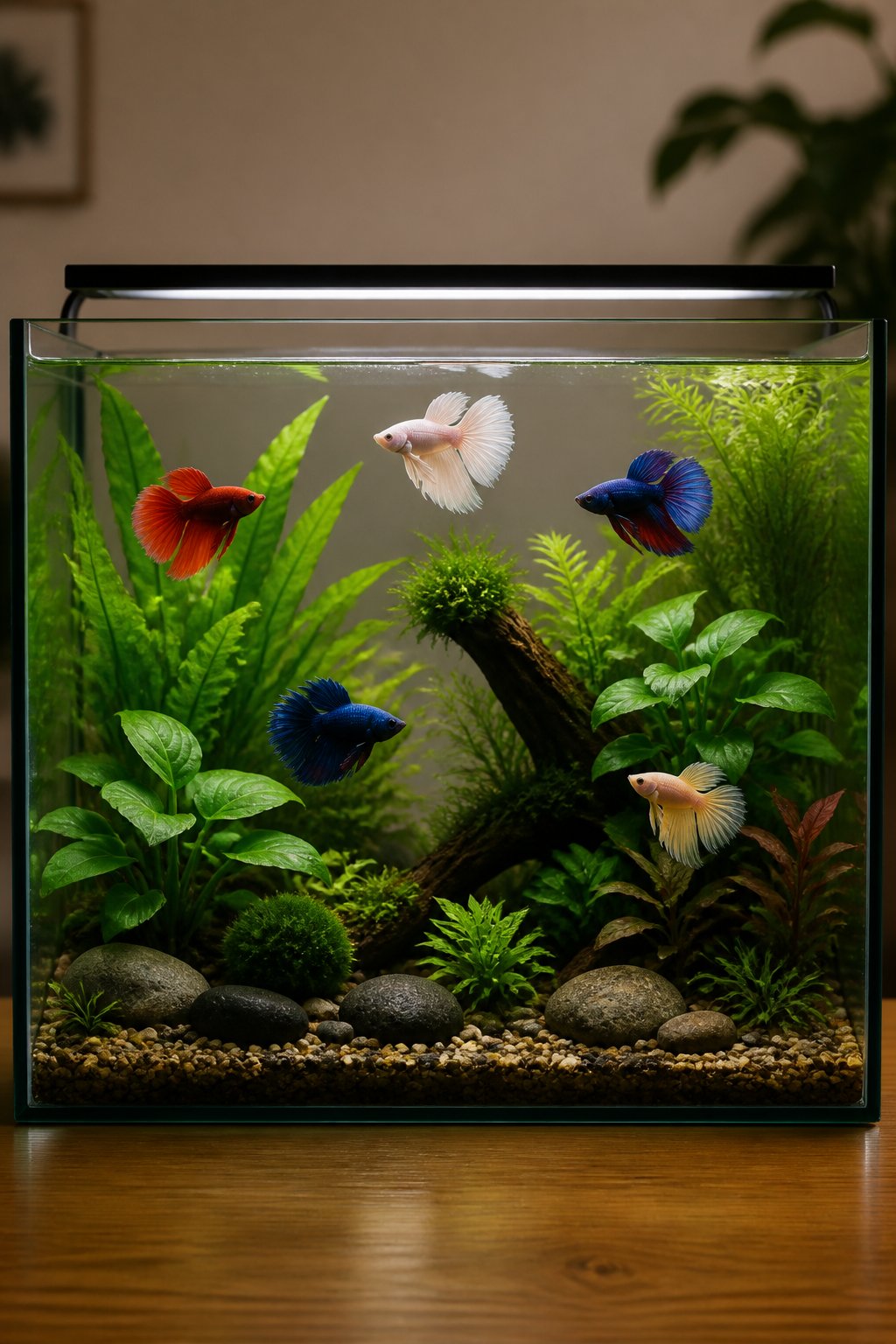
The goal is a tank that protects fins, gives your fish calm swimming lanes, and creates enough shade and shelter that it can settle in and behave normally. That means being deliberate about what you put in and where.
Building Hiding Spots That Actually Get Used
Bettas use hiding spots differently depending on type. Active fish like plakats and halfmoon plakats tend to dart between cover rather than sit in one spot. Shy or long-finned types — rosetails, feathertails, double tails — benefit from lower, more enclosed cover near the substrate where they can rest without fins fanning open in current.
Broad-leaved plants like Anubias, Java Fern, and Amazon Sword provide low, secure cover without sharp edges. Smooth ceramic caves or ornaments with large openings let your fish enter and exit easily — check that the opening is genuinely wide enough before you buy. A couple of floating plants like Frogbit or Salvinia create shaded surface pockets that reduce stress for shyer fish and give active fish somewhere to rest mid-water. When positioning decor, anchor heavier pieces so they don’t shift during water changes and potentially trap a fish underneath.
Low-Maintenance Aquascaping for a Tank That Looks Good Long-Term
Easy plants keep the tank healthy without weekly intervention. Java Moss or Dwarf Sagittaria in the foreground, Anubias and Cryptocoryne attached to rock or driftwood in the midground, Vallisneria in one back corner for height and movement. That layout gives you visual depth, open swim lanes in the front, and a structure that more or less maintains itself.
Keep hardscape minimal. One focal piece of driftwood or a smooth rock cluster plus thoughtful plant placement creates a cleaner look than a crowded aquascape — and it’s much easier to clean around. A sponge filter keeps flow gentle and fins intact, and it’s quieter than most hang-on-back options. With that setup, maintenance usually comes down to weekly water changes and occasional trimming, which is a realistic schedule for most people who actually keep planted tanks long-term.
The betta you choose shapes all of it — how you plant, how you filter, how you arrange sight lines. Start with the fish and work outward from there.