
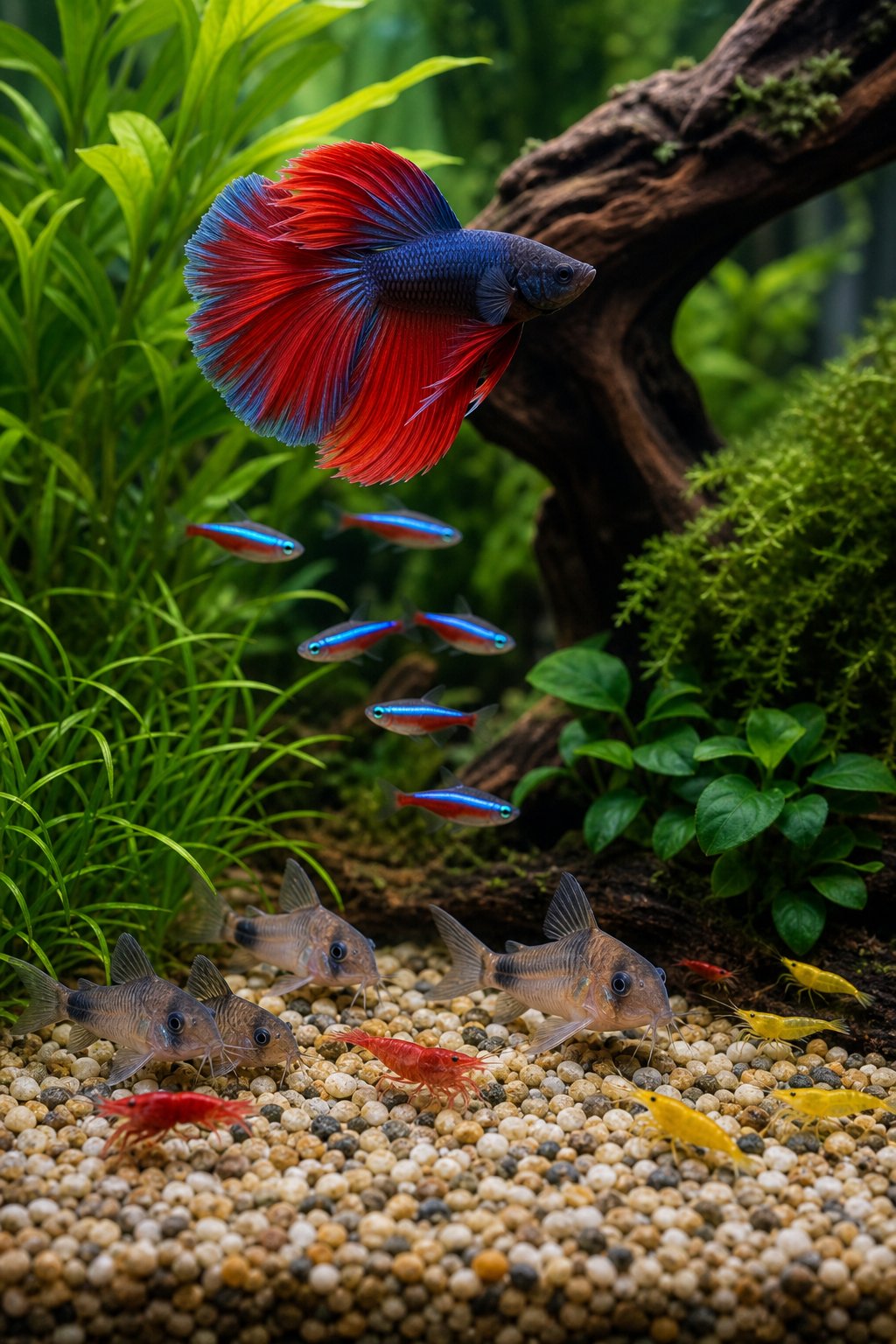
You stand at your planted tank, weighing whether a panda cory or a tiny otocinclus will share space with your betta without sparks flying. It’s a reasonable thing to wonder about. Bettas are territorial and visually reactive, and the wrong tank mate can turn a beautifully planted setup into a stress tank overnight.
What follows is a practical look at 11 species that genuinely coexist well with bettas — and three that cause more trouble than they’re worth. The goal is a tank that looks calm and layered and keeps every fish in it safe.
1) Corydoras panda (Panda Cory)
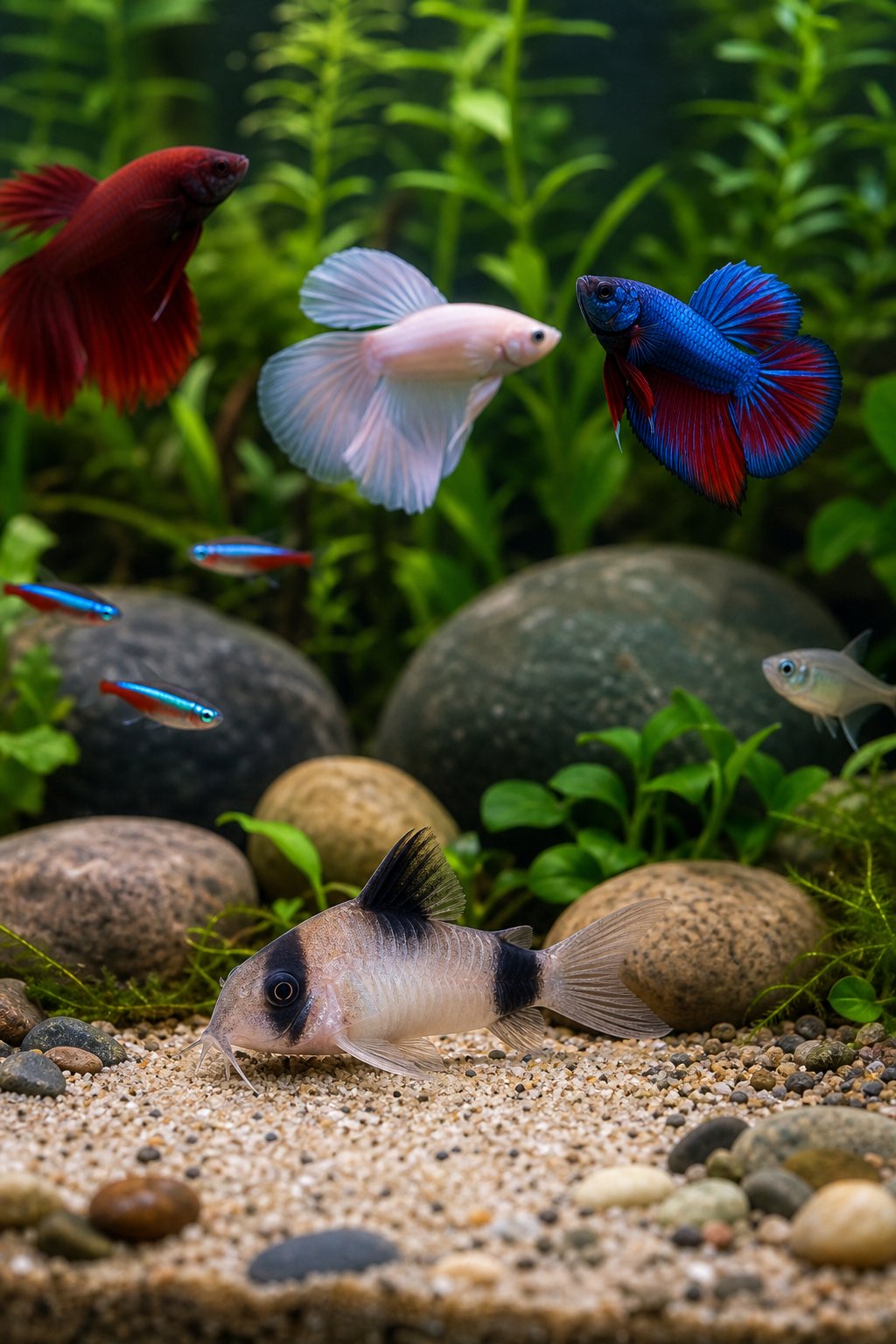
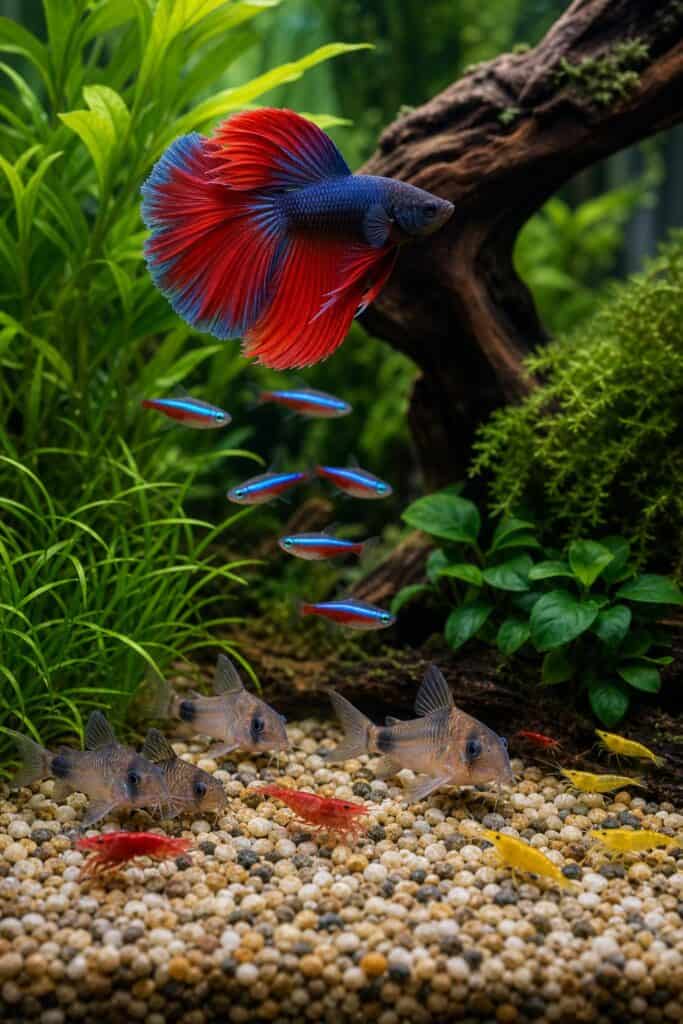
That black “eye mask” and matching dorsal spot make panda cories easy to identify at a glance, but what matters more is how they move: low, steady, methodical sweeps across the substrate. They don’t dart. They don’t flash. They’re about as unprovoking as a bottom-dweller gets.
Keep them in groups of at least four to six — they’re genuinely social and will stress in smaller numbers. A 10 to 20-gallon tank gives a betta and a small cory group enough room to sort out zones without constant overlap. They prefer soft, slightly acidic water, which lines up neatly with most betta setups.
The practical reason they work so well is that they occupy a completely different layer of the tank. Your betta patrols midwater and the surface; the cories stay on the ground. There’s very little reason for confrontation. Give them smooth sand or fine gravel to protect their delicate barbels, and tuck in some driftwood roots and low-growing plants so they have places to rest between feeding runs. Sharp substrate and fast, competitive feeders are the main things to avoid.

Aqua Natural Sugar White Sand 10lb
Check Price2) Otocinclus vittatus (Otocinclus Catfish)
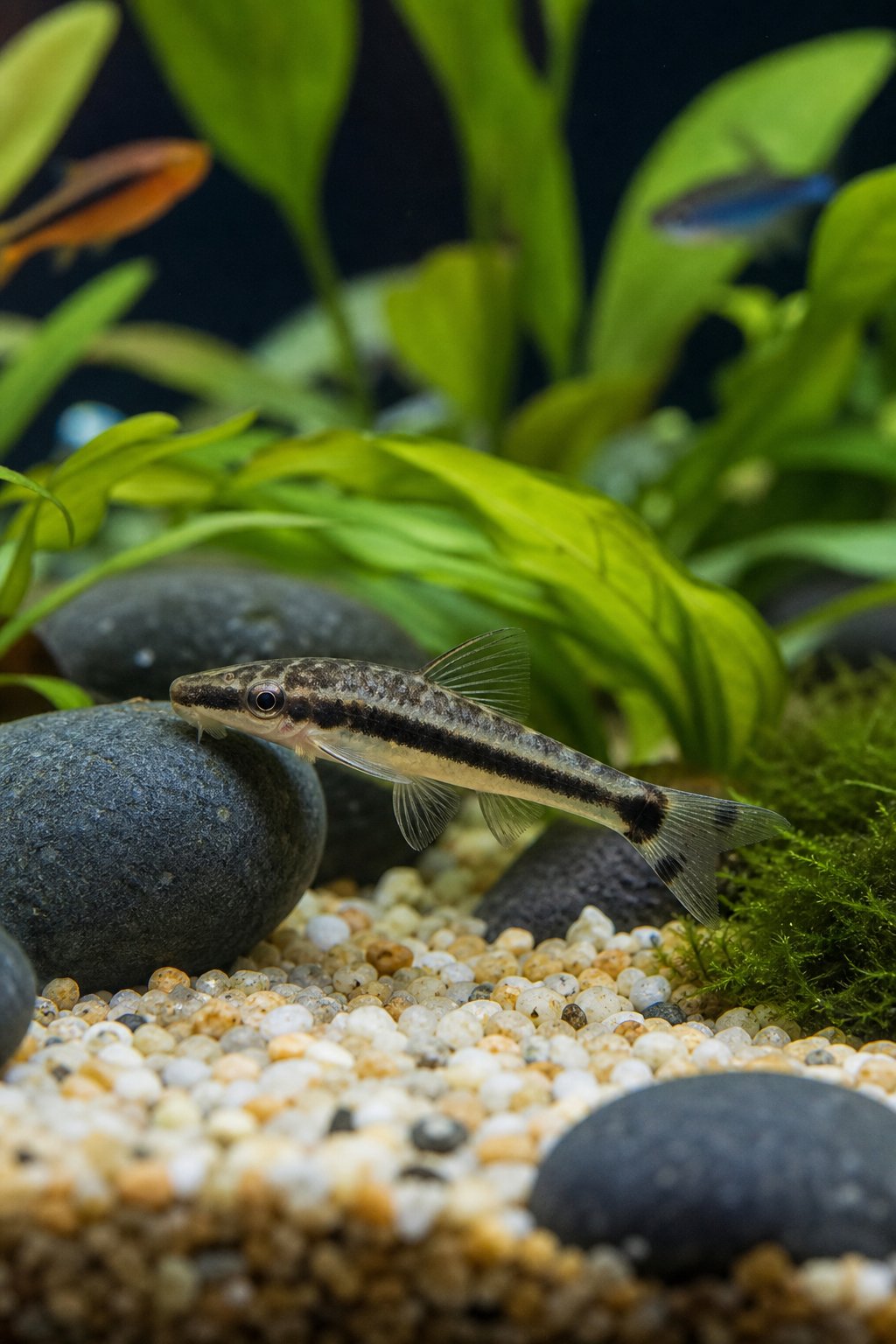
Tiny sucker mouths pressed flat against leaves and glass — that’s what you’ll mostly see from otos. They graze slowly and quietly, moving in short bursts before settling again. Next to a betta’s dramatic fins, they almost disappear, which is exactly the point.
Groups of three to six work well, and a minimum of 10 gallons keeps the environment stable enough for both species. The catch with otos is that they need a well-established tank. New tanks don’t have enough soft algae growth to sustain them, and otos don’t adapt quickly to sudden food scarcity. Supplement with blanched zucchini or cucumber if your tank glass runs clean.
Broad-leaf plants like Anubias give them good grazing surface, and driftwood provides shelter when they want to rest in shade. Avoid strong currents and big water-parameter swings. As long as your betta isn’t unusually aggressive, otos are about as low-conflict as a tank mate can be.
3) Kuhli Loach (Pangio kuhlii)
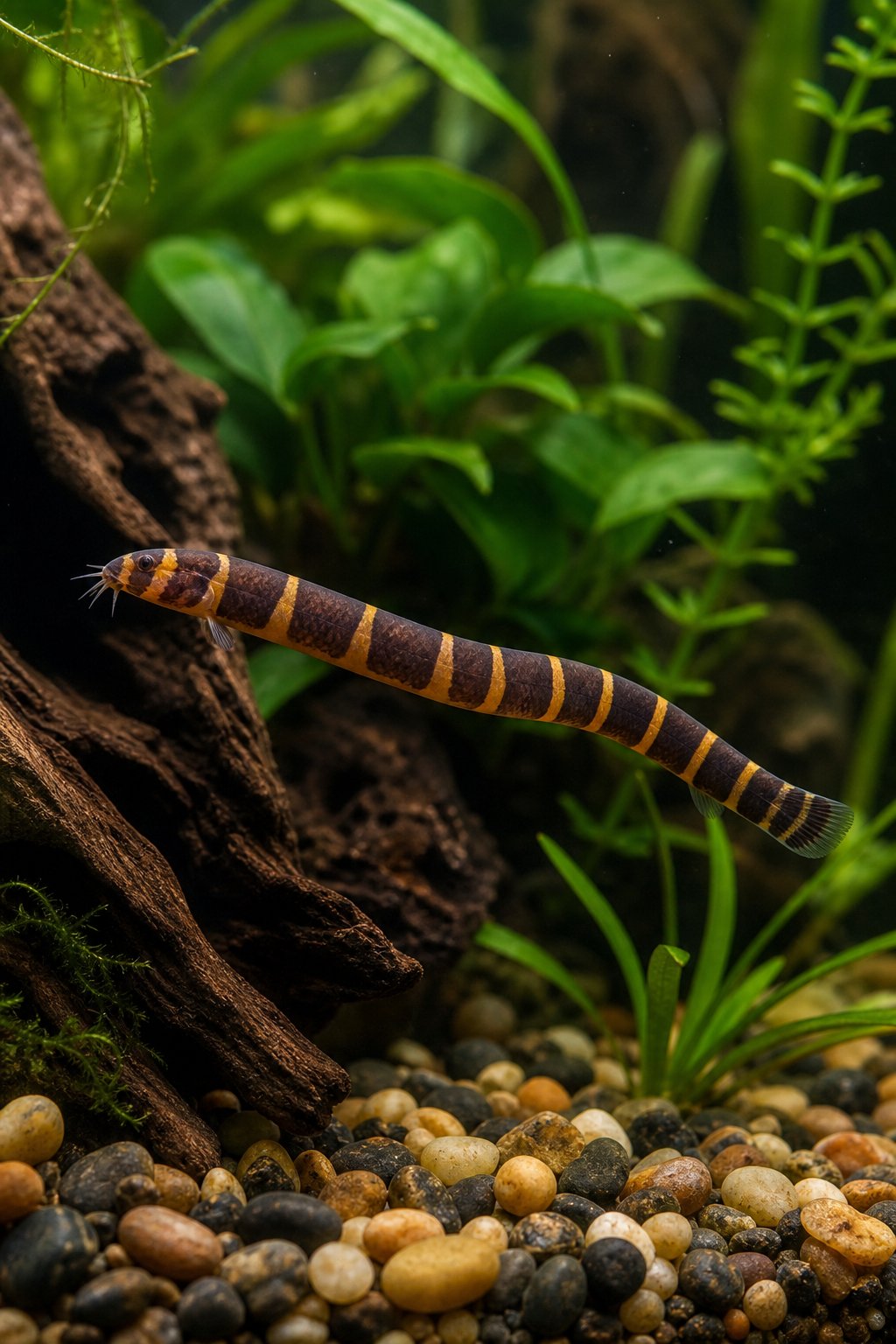
If you’ve ever wanted something that looks genuinely wild in a planted tank without adding aggression, the kuhli loach is worth considering. That thin, ribbon-like body disappearing between plant stems and under driftwood creates a sense of depth and movement that’s hard to get from more predictable species.
They’re nocturnal, so you’ll often only catch them during the dim hours at dawn or dusk. That actually works in their favor as betta tank mates — the two species tend to be active at different times. Aim for a 20 to 30-gallon tank, and layer in leaf litter, small caves, and dense stem plants so the loaches always have somewhere to go.
High flow and very small tanks are the main risks. Kuhli loaches dislike strong currents and cramped spaces, and stress in either direction can cause problems. They prefer slightly acidic, soft water — again, compatible with most betta setups. The behavioral overlap between these two species is genuinely low, which makes this pairing more reliable than it might look at first.
Kuhli loaches breathe intestinally in low-oxygen conditions, which is part of why they survive in slow, heavily planted tanks. It’s also why you’ll sometimes see them dart to the surface unexpectedly — not distress, just a quick gulp of air.
4) Neon Tetra (Paracheirodon innesi)
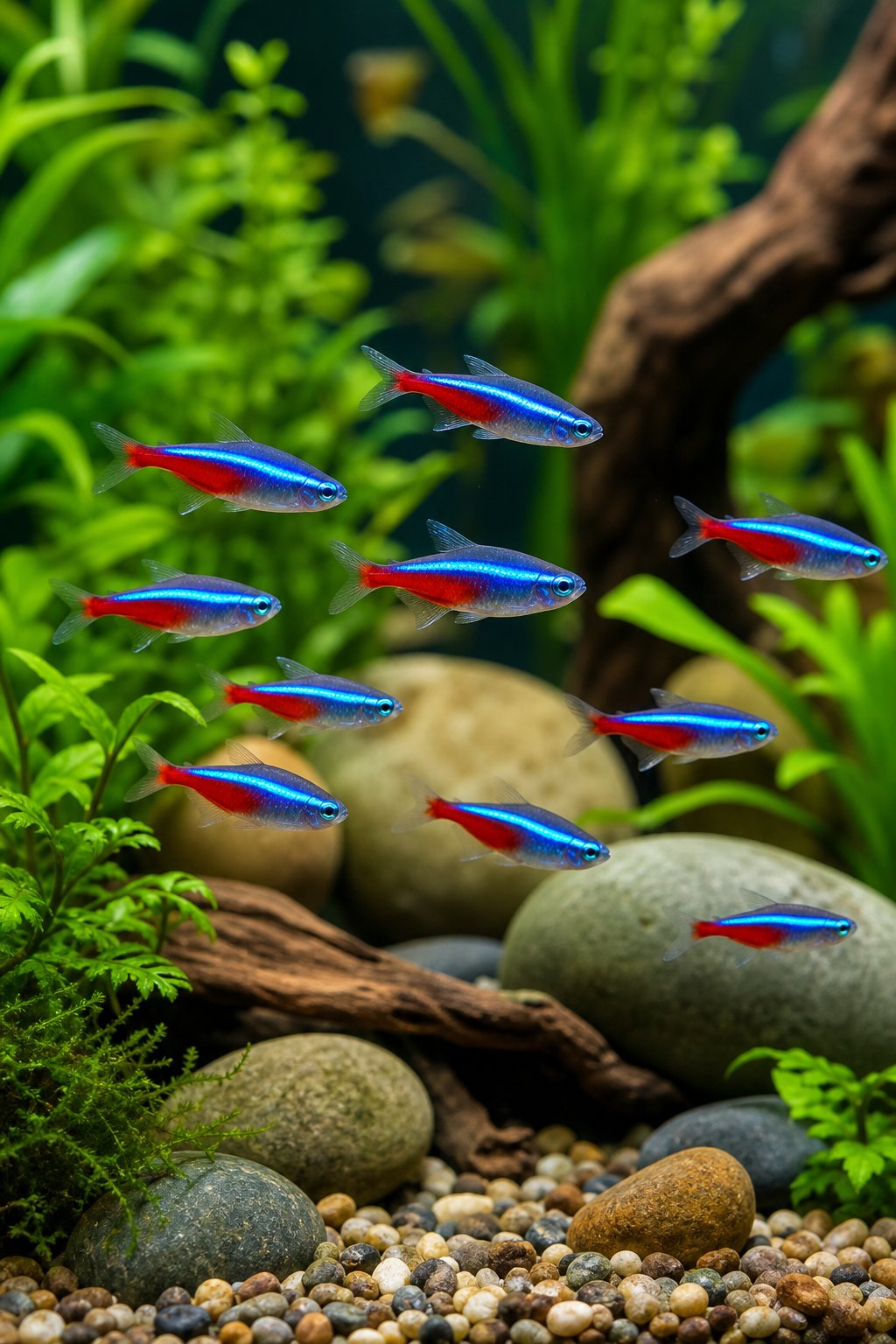
That flash of electric blue and red through midwater is hard to miss. A small school of neons brings consistent, gentle movement to a planted tank — the kind that makes the whole aquascape feel alive without crowding the surface your betta likes to claim.
For a true school of six to eight alongside one betta, 20 gallons is the practical minimum. More room means more visual breaks and less chance of your betta fixating on any single fish. Neons prefer similar water parameters as bettas, so the chemistry side is usually simple to manage.
The risk comes from two directions: an aggressive betta who targets the school, or a school that’s too small and starts nipping fins for reasons that aren’t entirely understood. Keep numbers up, add floating leaves so the betta has a surface territory to anchor to, and watch the first few days carefully. Neon colors fade quickly in poor water, so steady maintenance and gentle flow aren’t optional here — they’re how you know the tank is working.
5) Endler’s Livebearer (Poecilia wingei)
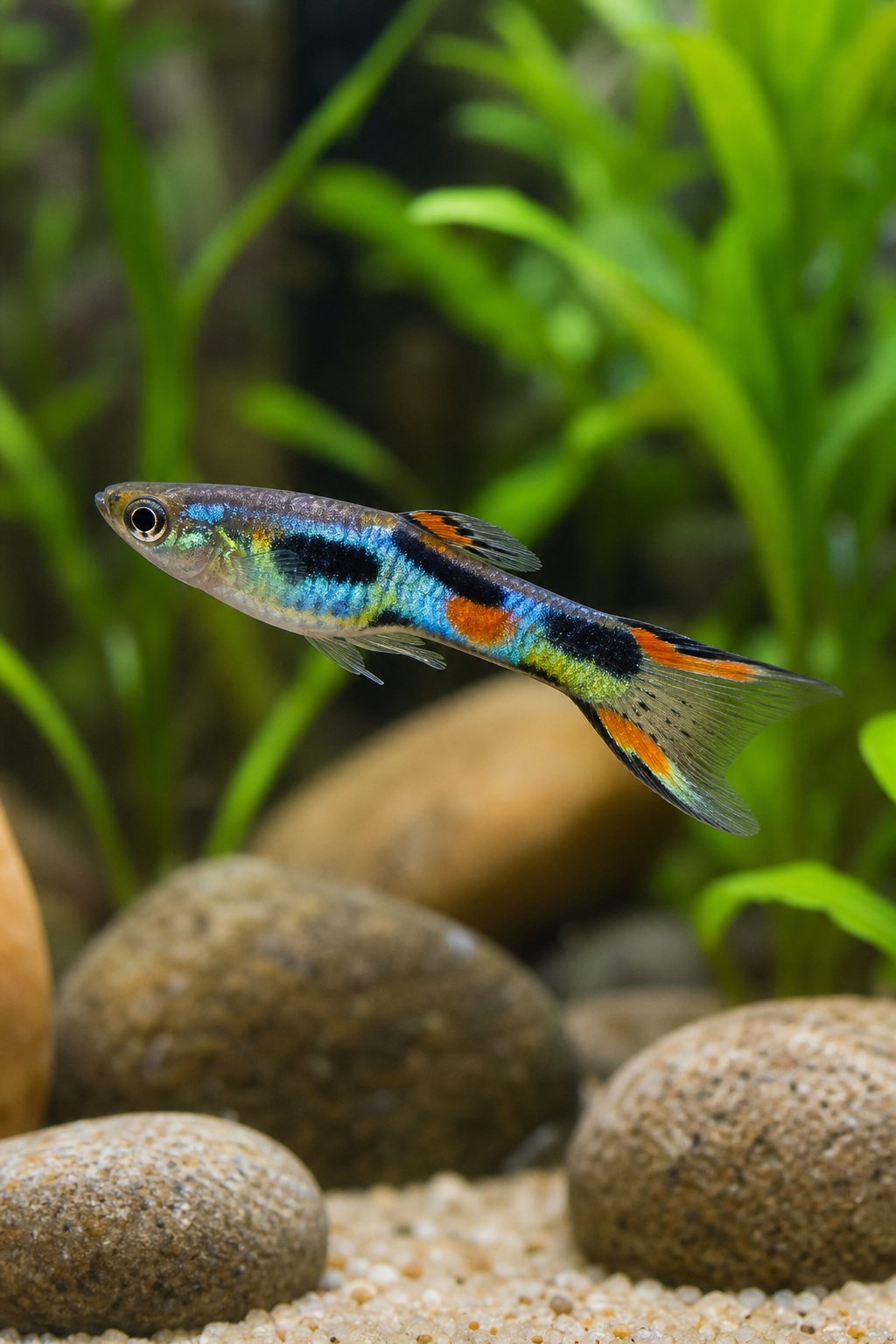
Endler’s males are small and fast, with compact bodies that flash orange and green as they thread through plant stems. They don’t have the long trailing fins that tend to provoke bettas, which is part of why this pairing can work in a 10-gallon setup with a calm betta.
Dense planting matters here more than usual. Floating plants and thick bunches of stem plants give your betta a visual boundary and give the Endlers quick escape routes. They breed readily, so if you’re keeping males and females together, expect fry and have a plan for managing the population.
The honest caveat: if your betta is a chronic flarer or tends to be aggressive toward smaller fish, Endler’s will make it worse, not better. Their fast, darting movement can read as a provocation. Watch the first week carefully, and if persistent chasing starts, remove the Endlers before anyone gets hurt.
6) Amano Shrimp (Caridina multidentata)
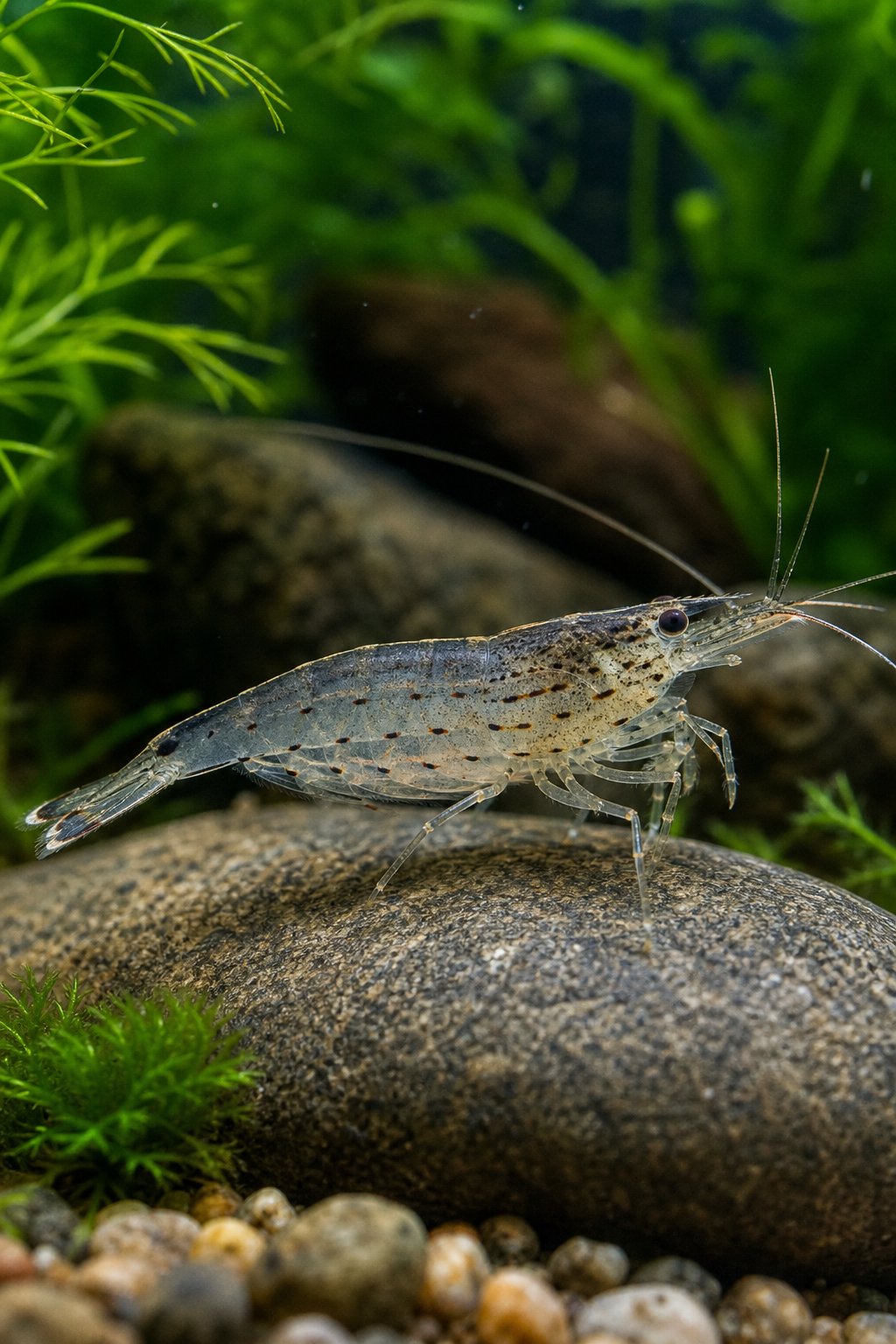
Amano shrimp move with a kind of purposeful calm — always grazing, always methodical, picking at biofilm across leaves, hardscape, and glass. Their near-translucent bodies catch the light in a subtle way that adds texture to a planted tank without pulling focus from your betta.
In a tank of at least 10 gallons, with plenty of Java fern, moss, and scattered rocks for grazing surfaces, Amanos tend to find their own territory and stick to it. Most calm bettas either ignore them entirely or give them a brief inspection and move on.
A few practical notes: shrimp are extremely sensitive to copper, which turns up in some medications and fertilizers, so check labels carefully. Tiny gaps in tank lids are also a real escape risk during maintenance. And if your betta is particularly bold or curious, introduce shrimp slowly and make sure there are enough dense hiding spots that the shrimp can disappear when needed.
7) Cherry Shrimp (Neocaridina davidi)
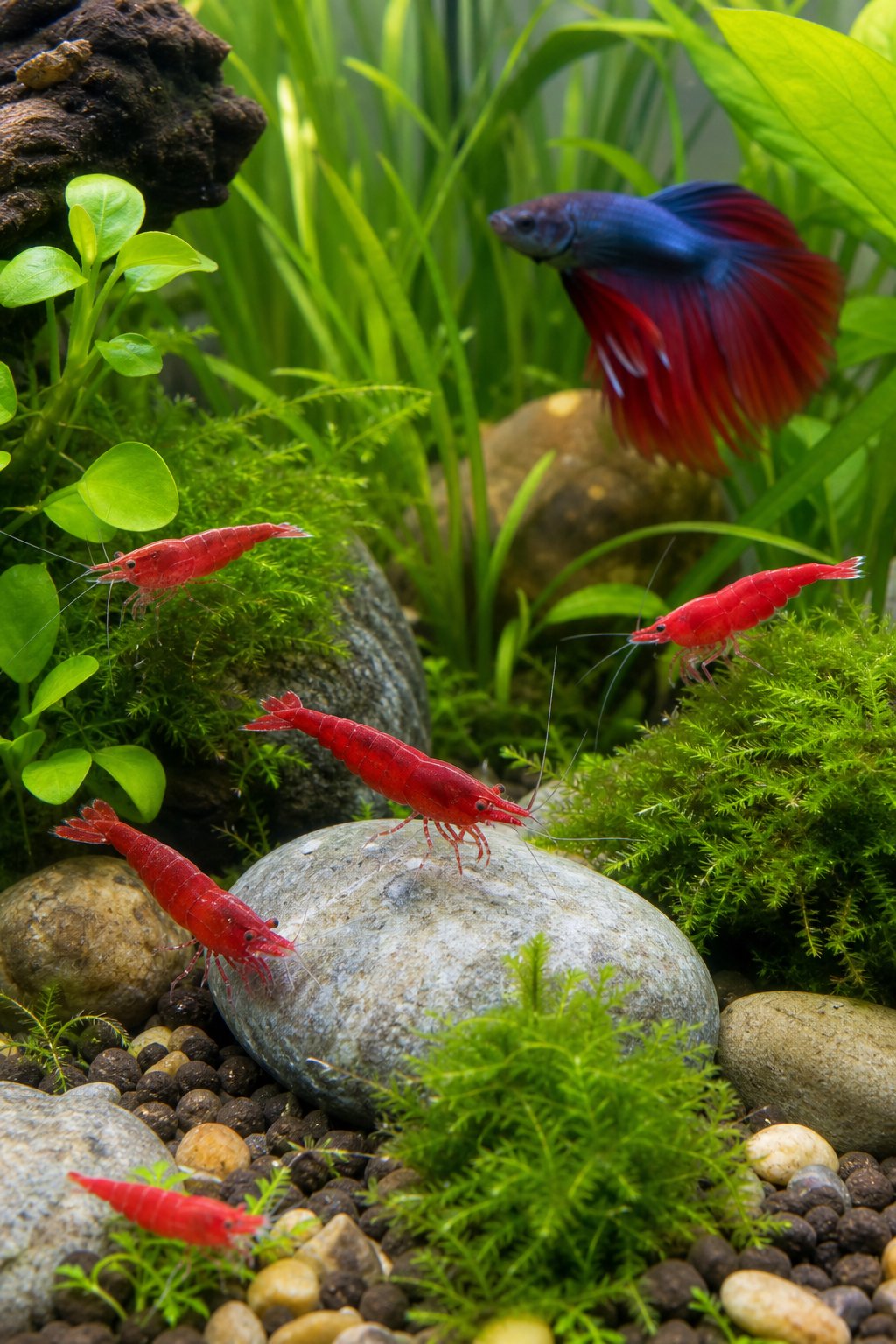
Cherry shrimp are one of those tank mate choices that look risky on paper but work surprisingly well in a well-planted setup. The vivid red against green moss is genuinely striking, and they stay out of your betta’s way when there’s enough cover to hide in.
A planted 5 to 10-gallon tank can work, though a bigger one gives everyone more breathing room.Moss walls, leaf litter, and dense plant clumps give shrimp safe molting spots and escape routes. Keep water stable and slightly cooler rather than pushing the warm end of the betta’s range — shrimp are less tolerant of temperature swings than bettas are.
The honest reality is that bold bettas will eat baby shrimp. It’s not aggression exactly, more opportunistic feeding. If shrimplet survival matters to you, heavy plant cover and a separate breeding setup are the practical answers.
“A well-planted tank doesn’t just look better — it functions better. The hiding spots that make your aquascape feel layered are the same ones that keep your tank mates safe.”

Marcus Fish Tanks Java Moss Aquarium Plant
Check Price8) Mystery Snail (Pomacea diffusa)
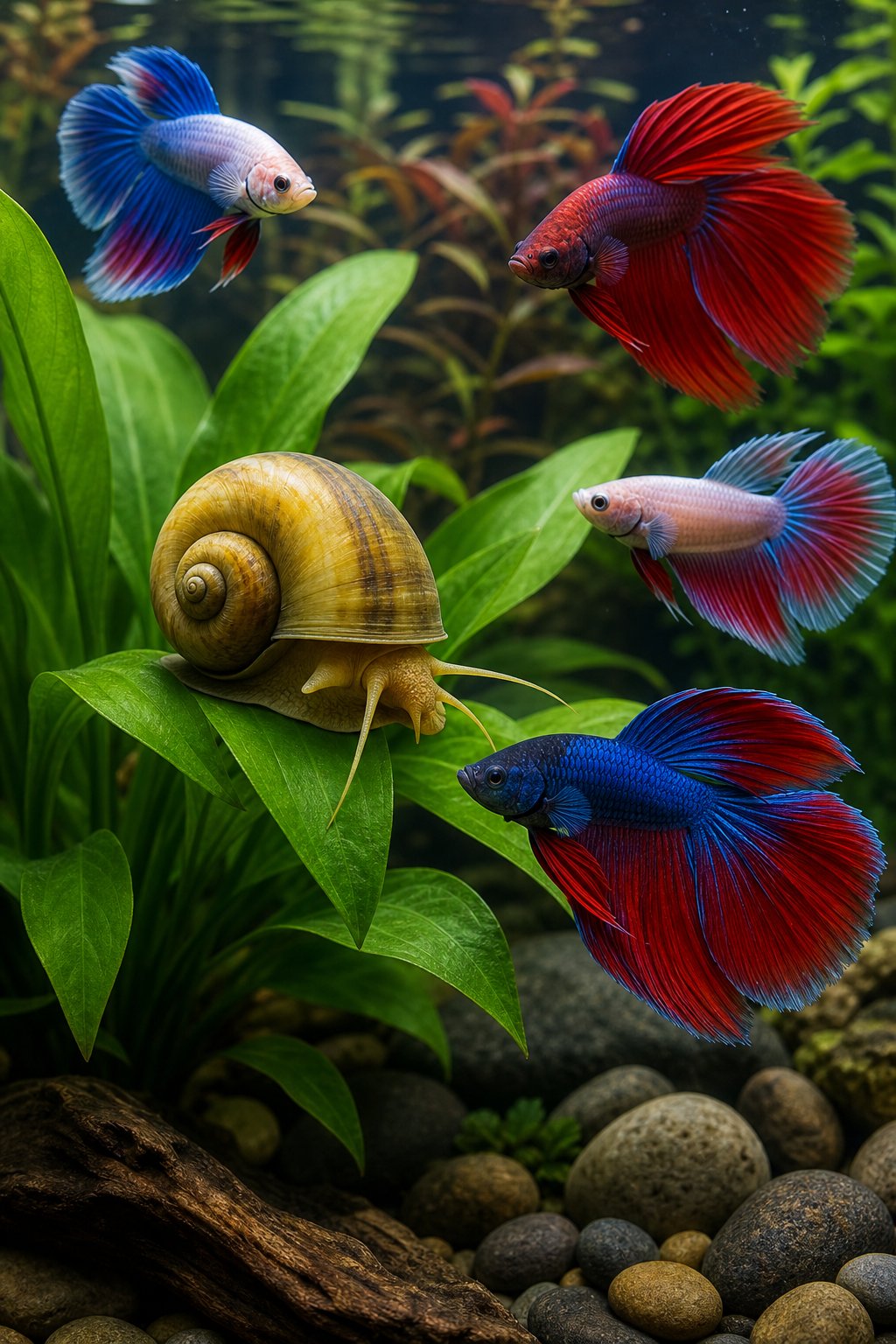
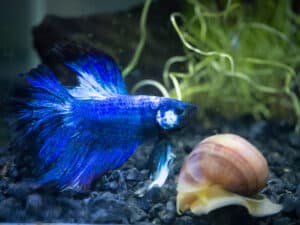
There’s something genuinely soothing about watching a mystery snail move. That slow, deliberate glide across glass or a broad leaf adds a kind of visual calm that faster-moving fish don’t offer.
A 10-gallon tank is a reasonable minimum. Mystery snails don’t need much space, but stable water and established plants help both species settle in. They graze algae and detritus from surfaces, which does real work keeping the glass clean between your regular maintenance sessions.
Bettas mostly ignore them, though some individuals will pick at antennae out of curiosity. Provide driftwood and broad-leafed plants for the snail to climb, and keep flow gentle around the substrate where they feed. One thing to watch: overfeeding the tank encourages snails to reproduce quickly, and a snail population boom can throw off your water quality faster than you’d expect. Also check new snails carefully before adding them — hitchhiker worms and parasites are a real concern with snails from unknown sources.
9) Harlequin Rasbora (Trigonostigma heteromorpha)
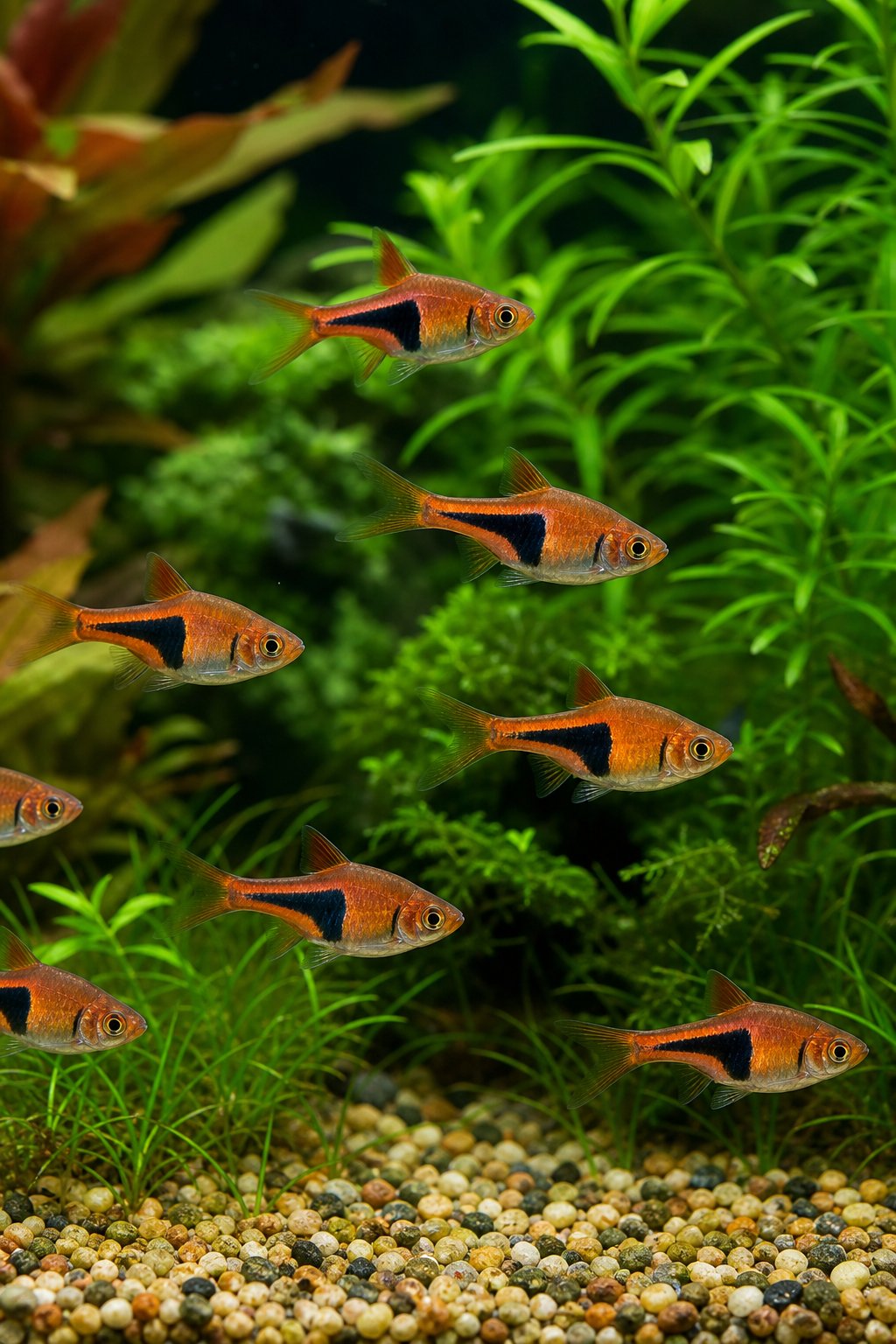
That warm copper body with the dark triangular patch is one of the more visually cohesive looks you can add to a planted tank. When a school of harlequins moves together — tight, synchronized, unhurried — it reads almost like a single organism drifting through the midwater.
Keep at least six, and give them 20 gallons minimum alongside a betta. They’re mid-to-top swimmers, so they share some of your betta’s preferred water column. The schooling behavior actually helps here: a betta confronted with a group of identically-patterned fish has less reason to fixate on any one individual.
Harlequins rarely nip fins, which is a significant mark in their favor. Dense planted edges give them shelter when the betta is feeling territorial, and open mid-tank lanes let the school move without constantly brushing up against your fish’s space. If your betta is particularly reactive, this pairing still carries some risk — there’s no universally safe combination — but for most calm to moderately mellow bettas, harlequins are a reliable choice.
10) Bee Shrimp (Caridina cf. cantonensis)
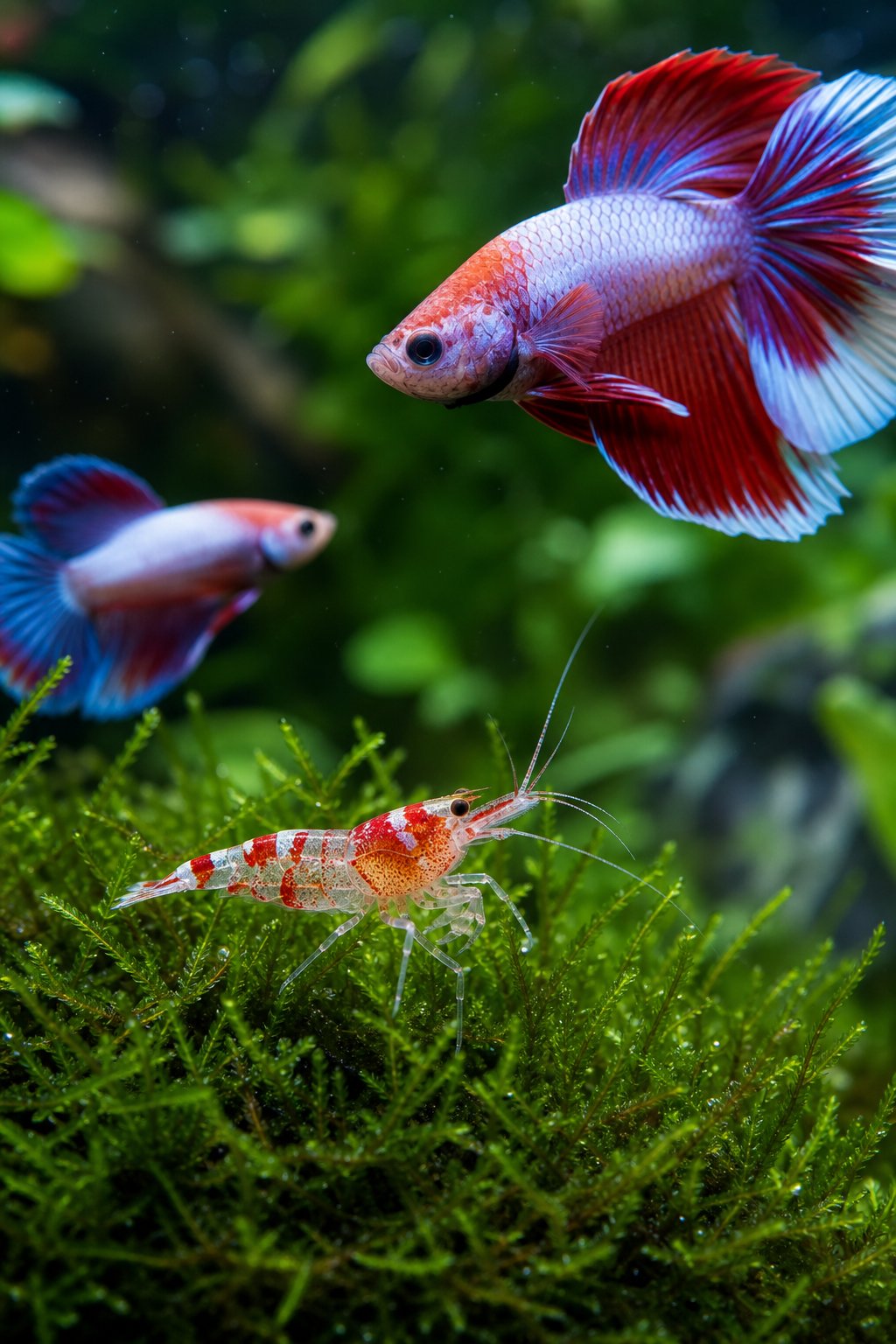
Bee shrimp are striking in the way that tiny, precisely patterned things tend to be. Those clean white and dark bands against green moss make for a genuinely attractive contrast in a low-tech planted tank.
They’re peaceful and, given enough cover, will mostly stay out of your betta’s notice. Dense java moss, carpeting plants, and low light let them graze biofilm at their own pace. A 10-gallon tank is a sensible minimum, but the water chemistry requirements are stricter than Neocaridina species — soft, slightly acidic, and very stable. If your betta setup already runs on the softer side, this works naturally.
The same caution applies here as with cherry shrimp: bettas may snack on juvenile shrimp, especially in sparse tanks. A dense planting scheme is less of an aesthetic preference in this case and more of a practical survival strategy for your shrimp colony.
By The Numbers
Bettas are responsible for roughly half of all reported tank mate aggression incidents in community nano tanks under 20 gallons, according to hobbyist surveys. Most of those incidents happen within the first 72 hours of introduction — which is exactly why slow, supervised introductions matter more than any species compatibility chart.
11) Gold-Ringed Rasbora (Rasbora tornieri)
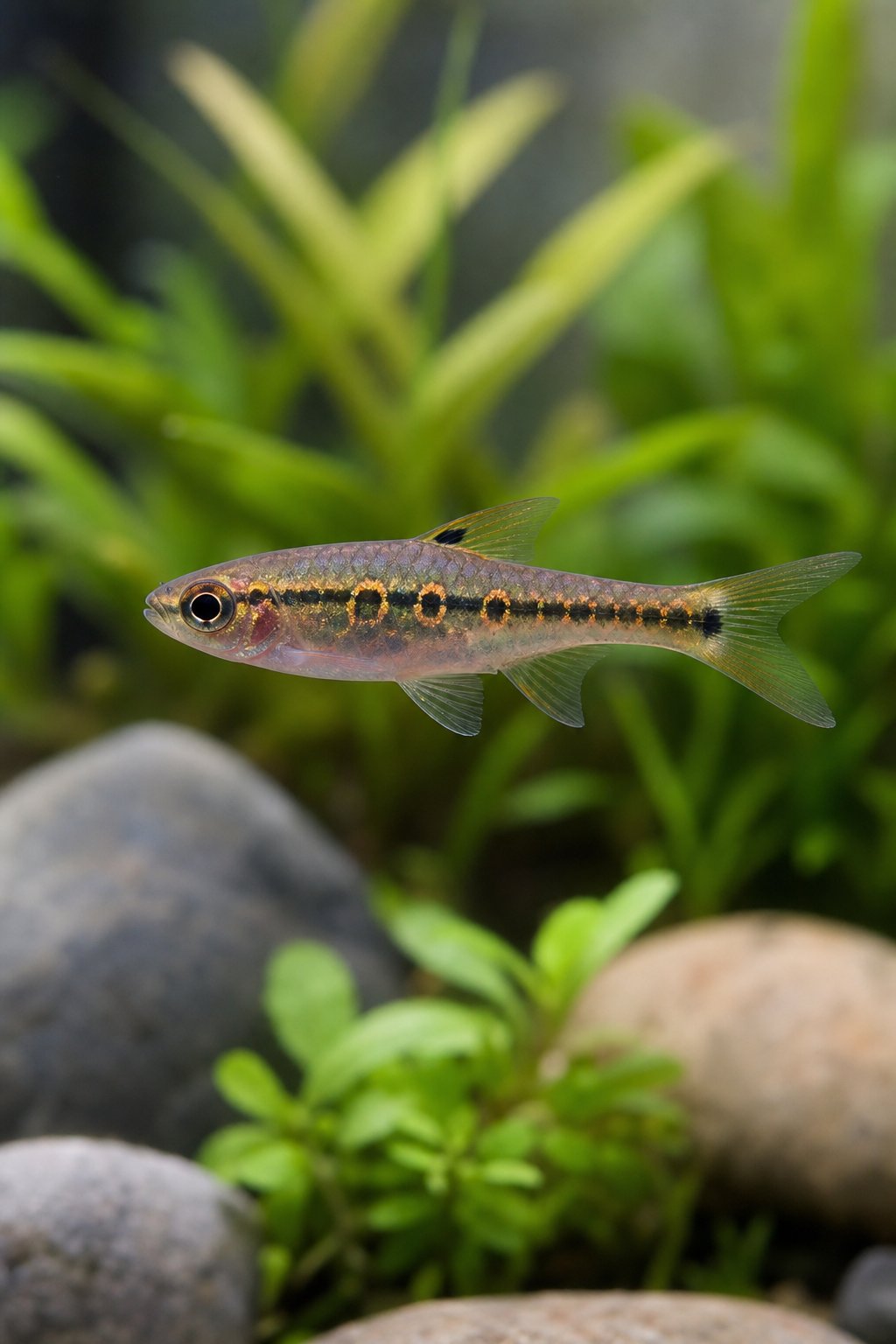
Less commonly stocked than harlequins, but worth seeking out. Gold-ringed rasboras have a quiet, slim elegance — that gold stripe catching the light as they shoal near midwater is subtle compared to neons, but it works especially well in tanks with warm-toned hardscape or brown leaf litter on the substrate.
Groups of at least six keep them secure and focused on each other rather than on your betta. They need a 20 to 30-gallon tank with open swimming lanes balanced by planted edges where they can pull back. Floating plants help soften the sightlines between your betta and the school.
They’re peaceful and quick, which helps them avoid most confrontations. The risks are familiar ones: too small a tank, too few fish in the group, or a betta that’s unusually territorial. If those conditions are managed, gold-ringed rasboras are a tidy, low-drama addition to a planted community setup.
Balancing Beauty and Safety in a Community Betta Tank
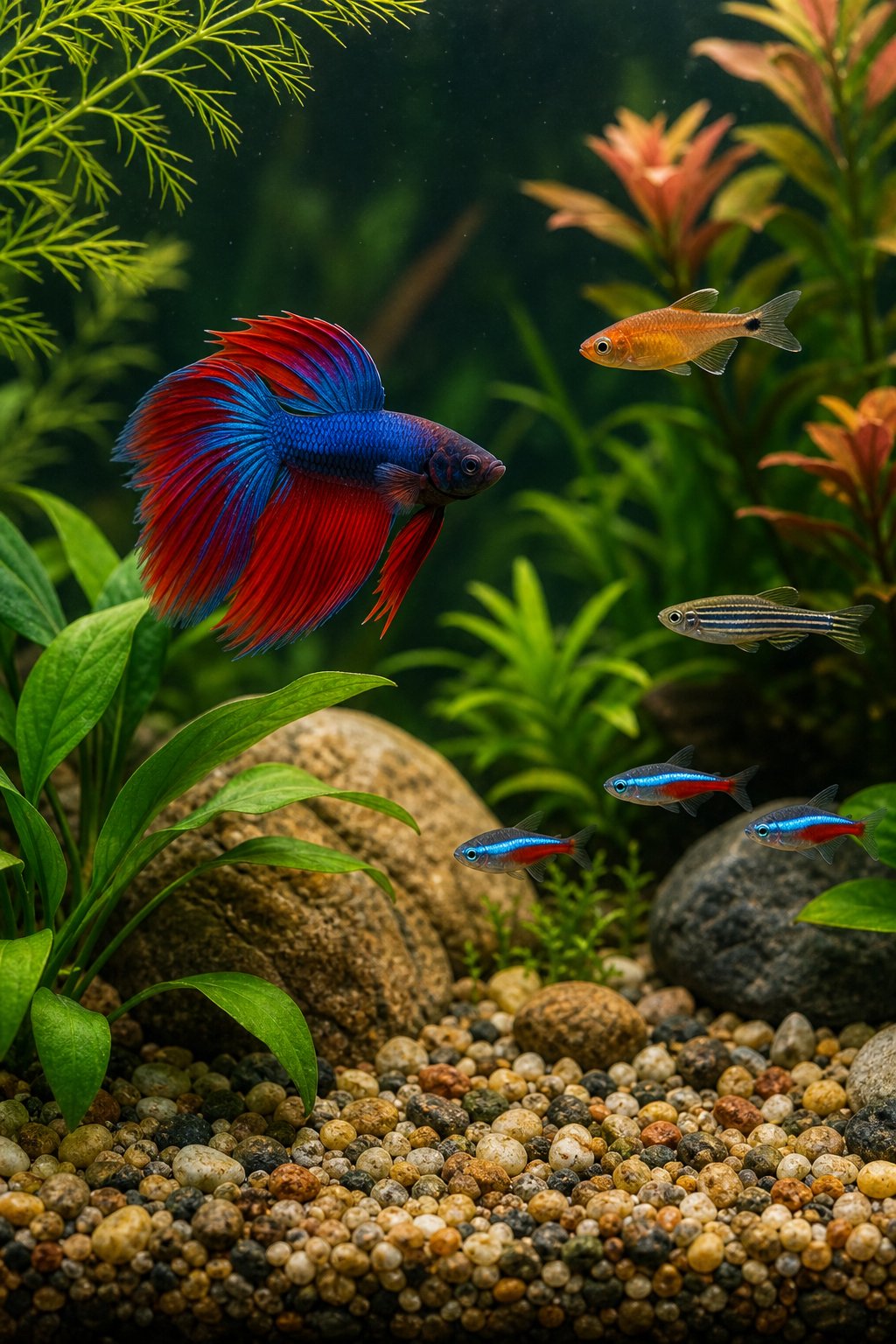
Getting the species list right is only part of the challenge. How you lay out the tank matters just as much — sometimes more. A poorly arranged 30-gallon can be more stressful for a betta than a well-planted 15-gallon with clear zones and broken sightlines.
Tank Layouts That Reduce Stress
Your betta will flare less when it has a clear territory and can’t see every other fish at once. Place taller plants or a piece of driftwood to break the direct line of sight between your betta’s resting area and wherever the school tends to hover. Even a single dense stem plant in the midground can shift the dynamic in a small tank.
Aim for at least 10 gallons before adding any active tank mate, and position your filter output to create gentle, diffused flow rather than a direct current. Bettas prefer slow water near broad-leaf plants. Distribute hiding spots across the full length of the tank — at least three distinct sheltered zones in a 10 to 20-gallon setup — so each fish has somewhere to go that isn’t contested. Watch behavior for the first week and be ready to rearrange if one fish is consistently cornering another.
Choosing Plants for Visual Barriers
Broad-leaf plants do the most useful structural work in a community betta tank. Anubias attached to driftwood, Amazon swords planted at mid-depth, and floating plants like frogbit or dwarf water lettuce near the surface give your betta the resting spots it looks for and break the visual lines that trigger territorial responses.
In the mid-ground, dense stem plants — Hygrophila, Rotala, Bacopa — create soft screens that filter light and limit how far each fish can see across the tank. Plant in groups rather than individually so you’re forming clear zones rather than scattered obstacles. Trim back growth before it fills in completely, since overgrown sections can create dead zones that trap fish rather than protect them. And if you have a betta with long, flowing fins, skip any sharp-edged species. Wide, soft leaves are always the safer call.
Three Tank Mates That Don’t Work
Now for the other side of the list. These three species come up often enough in community tank discussions that they’re worth addressing directly.
1) Tiger Barbs (Puntigrus tetrazona)
Tiger barbs are chronic fin nippers, and a betta’s long, flowing tail is exactly the kind of target they can’t resist. Even in larger groups — the standard advice being to keep them in schools of eight or more to redirect their energy inward — they will still sample your betta’s fins given the opportunity. The combination of their speed and your betta’s reactive temperament reliably ends badly. These are better kept in a species-appropriate community with other fast, robust fish rather than with a betta.
2) Other Male Bettas
This one seems obvious, but it still needs saying: two male bettas in the same tank will fight until one is seriously injured or dead. There’s no planted layout, no amount of visual cover, and no tank size that reliably prevents this. The territorial response between males is hardwired. A divider is not a long-term solution either — the constant visual exposure to a rival through a barrier is its own form of chronic stress. If you want more than one betta, keep them in completely separate tanks.
3) Fancy Guppies (Poecilia reticulata — long-fin varieties)
Standard guppies can work with very mellow bettas in certain setups, but fancy long-fin guppies are a specific problem. Their large, flowing tails look enough like another betta’s fins to trigger sustained aggression. A betta that’s perfectly calm with rasboras or cories may fixate intensely on a fancy guppy male. The risk isn’t worth it when there are so many genuinely low-conflict options available.
Troubleshooting Tank Mate Behavior
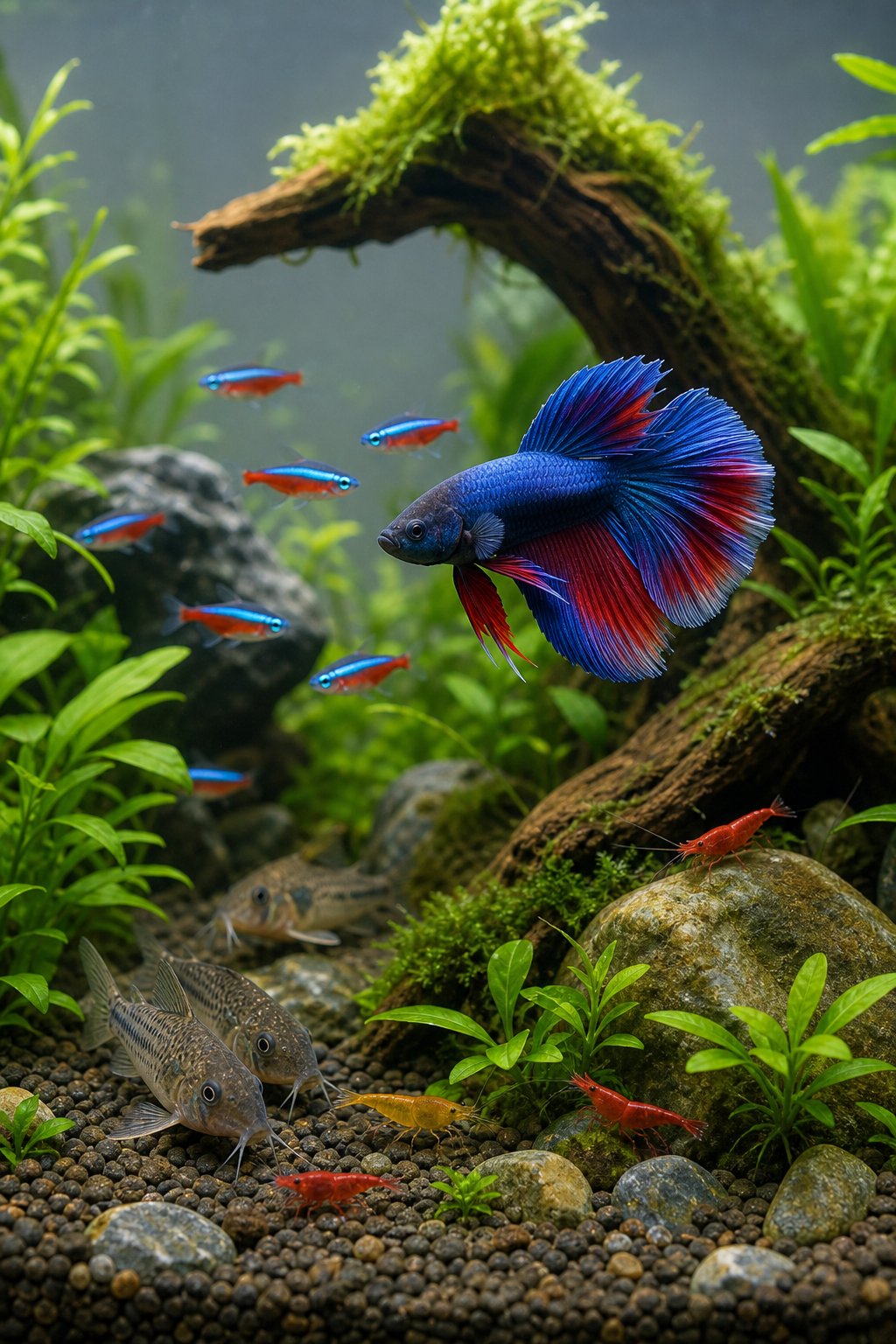
Even with the right species and a well-planted layout, things can still go sideways. The earlier you catch the signs, the more options you have.
Recognizing Early Signs of Aggression
Watch where your betta spends most of its time. Frequent lateral displays or sustained flaring aimed at one corner of the tank suggests it’s fixating on something specific, not just patrolling.
Feeding time is one of the clearest behavioral windows. A fish that’s eating less because it’s being kept away from food isn’t just hungry — it’s being dominated. Check fins and scales every day for the first two weeks after any introduction. Small frayed edges or pale patches along a fin margin are easy to miss in the moment but obvious in photos taken a day apart.
Changes in hiding behavior are also a signal worth taking seriously. A fish that explored freely and now stays compressed behind a cave is telling you something. A simple written note of what you observe each day takes 30 seconds and makes patterns obvious much faster than memory alone.
Simple Adjustments That Actually Help
Start with the tank layout before anything else. Adding a floating plant or rearranging a piece of driftwood to break a sightline can reduce chasing within hours. It costs nothing and should always be the first move.
If sightline adjustments don’t settle things, increase the number of distinct sheltered zones. In a 10 to 20-gallon tank, three well-spaced hiding areas give each fish a place to anchor without constant overlap. Temporarily dimming the lights for a day or reducing flow can also bring a wound-up betta back down.
If aggression continues after a week of adjustments, remove the problem fish — usually the betta — into a separate container while you rethink the arrangement. Rehoming is sometimes the right answer, and recognizing that early is better than watching a situation deteriorate slowly over weeks.
The fish that works best in your tank is ultimately the one your specific betta tolerates — and the only way to know that for certain is patient observation, a willingness to make changes, and a backup plan ready before you need it.