
Planted betta tanks get a reputation for being complicated, but most of that reputation isn’t earned. The truth is that a handful of low-maintenance plants will survive just fine alongside a betta — you just need to know which ones suit your light level, your tank size, and how much time you actually want to spend on upkeep.
This guide walks through 15 plants that genuinely work in betta setups, plus some practical notes on keeping the whole thing healthy over time. No exotic equipment required, and no plant science degree needed.
Feeling unsure about mixing live plants with a betta is completely normal. The goal here is to make the decision simple, so you can pick what fits your setup and get on with it.
1) Java Fern (Microsorum pteropus)
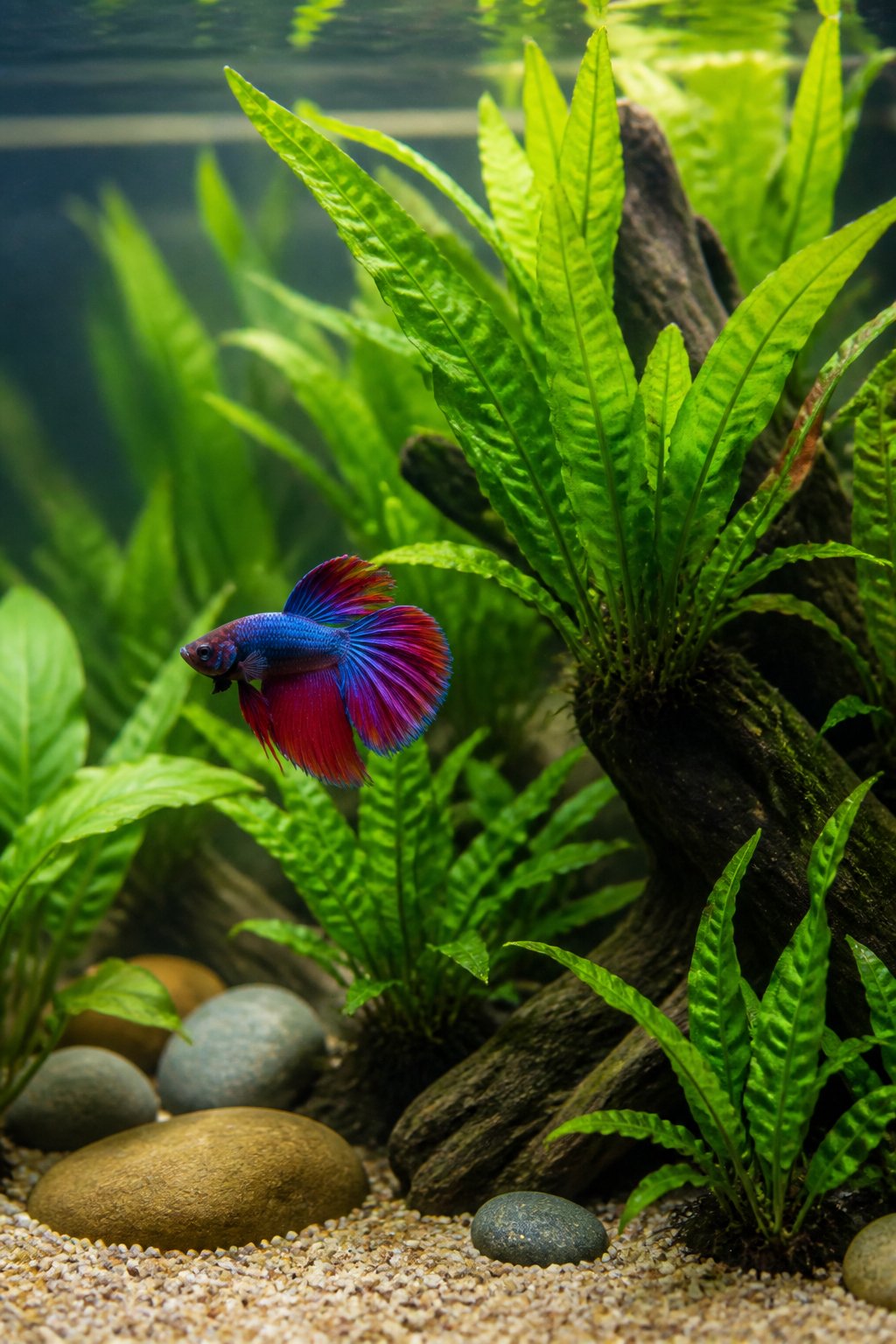
Java fern has long, leathery leaves that can reach 6 to 12 inches depending on the variety. It grows from a rhizome, so it stays perched on wood or rock rather than buried in substrate. That’s actually one of the reasons it works so well in betta tanks — you can wedge it exactly where you want it and it just stays there.
Bettas like broad leaves to lounge on, and Java fern tolerates the occasional gentle nip or splash without falling apart. Attach it to driftwood or a cave and you’ve instantly created a resting spot your fish will actually use.
Care is minimal: low to moderate light, no special substrate, and occasional trimming of damaged leaves. The one mistake worth avoiding is burying the rhizome. That will rot the plant reliably, and it’ll frustrate you before you figure out why it keeps dying. Brown or translucent spots are usually a sign of too much light or poor water flow, both easy fixes.
Java fern is one of the few aquarium plants that reproduces by growing tiny plantlets directly on its leaves. If you notice small leaflets sprouting along the edges of older leaves, that’s not damage — those are new plants forming. Let them develop a few roots, then detach and tie them to another piece of hardscape.

Mainam Java Fern on Driftwood Aquarium Plant
Check Price2) Anubias Nana
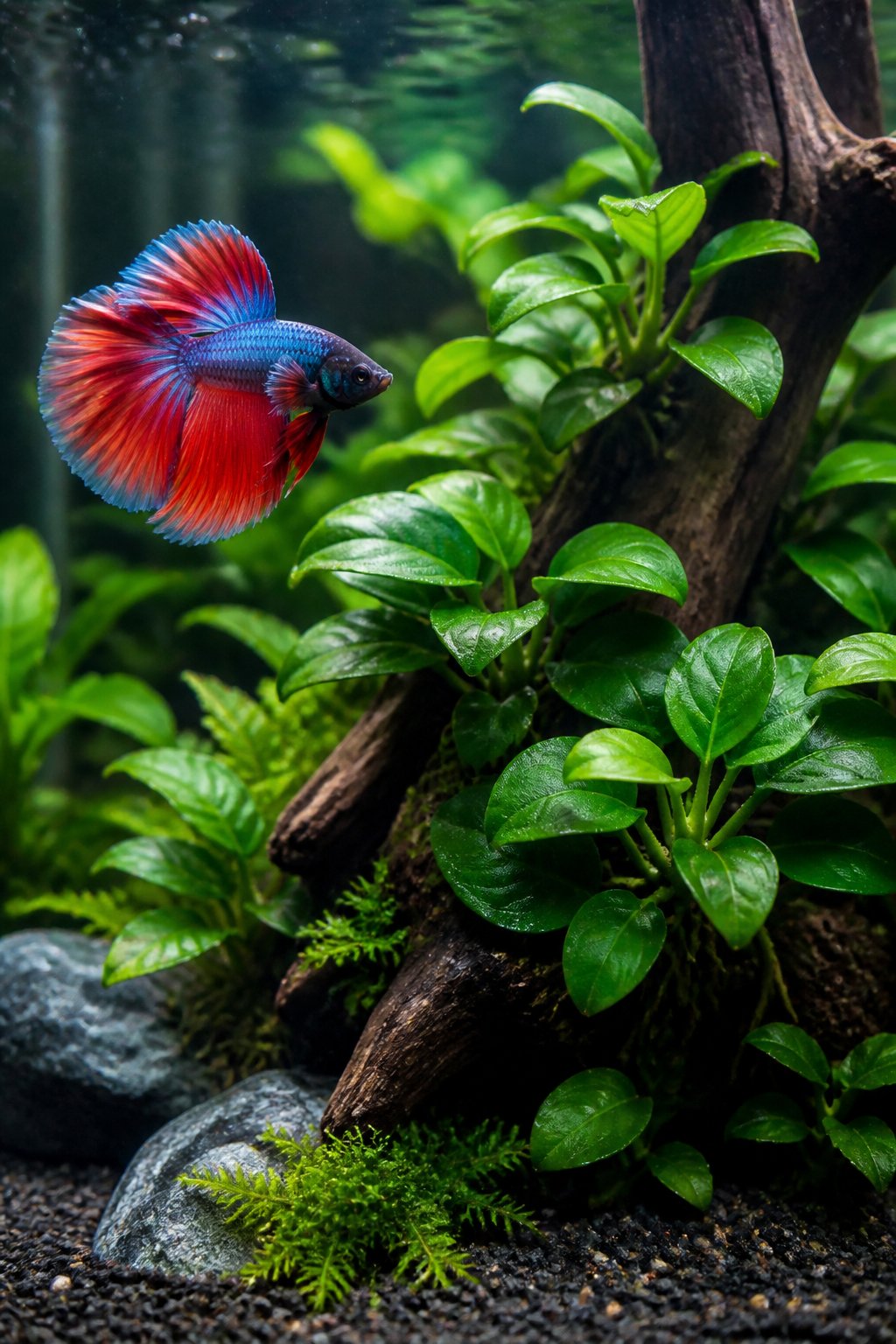
Anubias nana might be the most forgiving aquarium plant you can buy. The leaves are thick, dark green, and stay small — usually 3 to 6 inches tall — with a sturdy look that fits nicely in the midground or attached directly to driftwood.
For bettas specifically, the tough leaf surface holds up well against curious fins and the occasional inspection nibble. The plant also provides shade, which bettas tend to appreciate more than people expect. Place it on wood or rock, keeping the rhizome above the substrate. Low to medium light and occasional trimming are all it needs.
One catch: the slow growth rate means algae can colonize the leaves before the plant outgrows them. A gentle wipe with your fingers or a soft brush during water changes takes care of that. Burying the rhizome in substrate is, again, the main mistake to avoid here.
3) Cryptocoryne wendtii
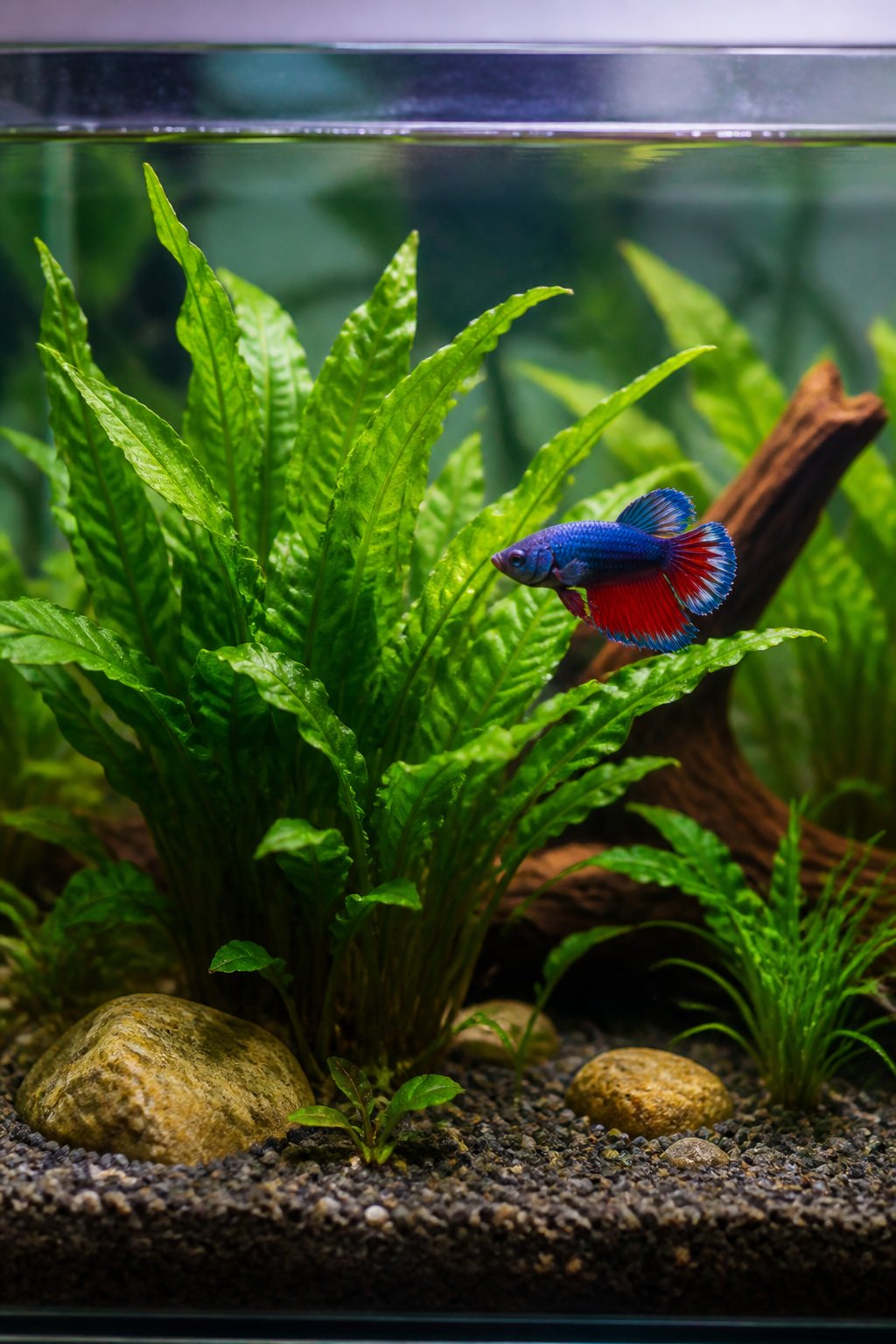
Broad, wavy leaves and a low-to-medium height make Cryptocoryne wendtii a reliable midground plant. Expect 4 to 8 inches in a healthy planted tank, which leaves plenty of open water for a betta to navigate.
Bettas tend to rest near broad-leafed plants, and crypts fit that preference well. Tuck it in the midground or along the back and give it low to moderate light with a nutrient-rich substrate or root tabs. Water changes keep the substrate chemistry balanced, and trimming older leaves as they decay is usually the extent of regular maintenance.
The main thing to know going in: Cryptocoryne melts after being moved or replanted. The leaves go soft and fall apart, and it looks like the plant is dying. It’s usually not. Leave it alone, keep conditions stable, and it will typically push out fresh growth within a few weeks. New keepers often throw away a perfectly viable plant during this phase.
Pro Tip
When you buy Cryptocoryne from a store, it’s almost always been grown emersed (above water). Once it goes into your tank, it has to grow an entirely different set of submerged leaves. That’s what causes the melt — not a problem with your water or your technique. Trim the mushy leaves and be patient.
4) Amazon Sword (Echinodorus bleheri)
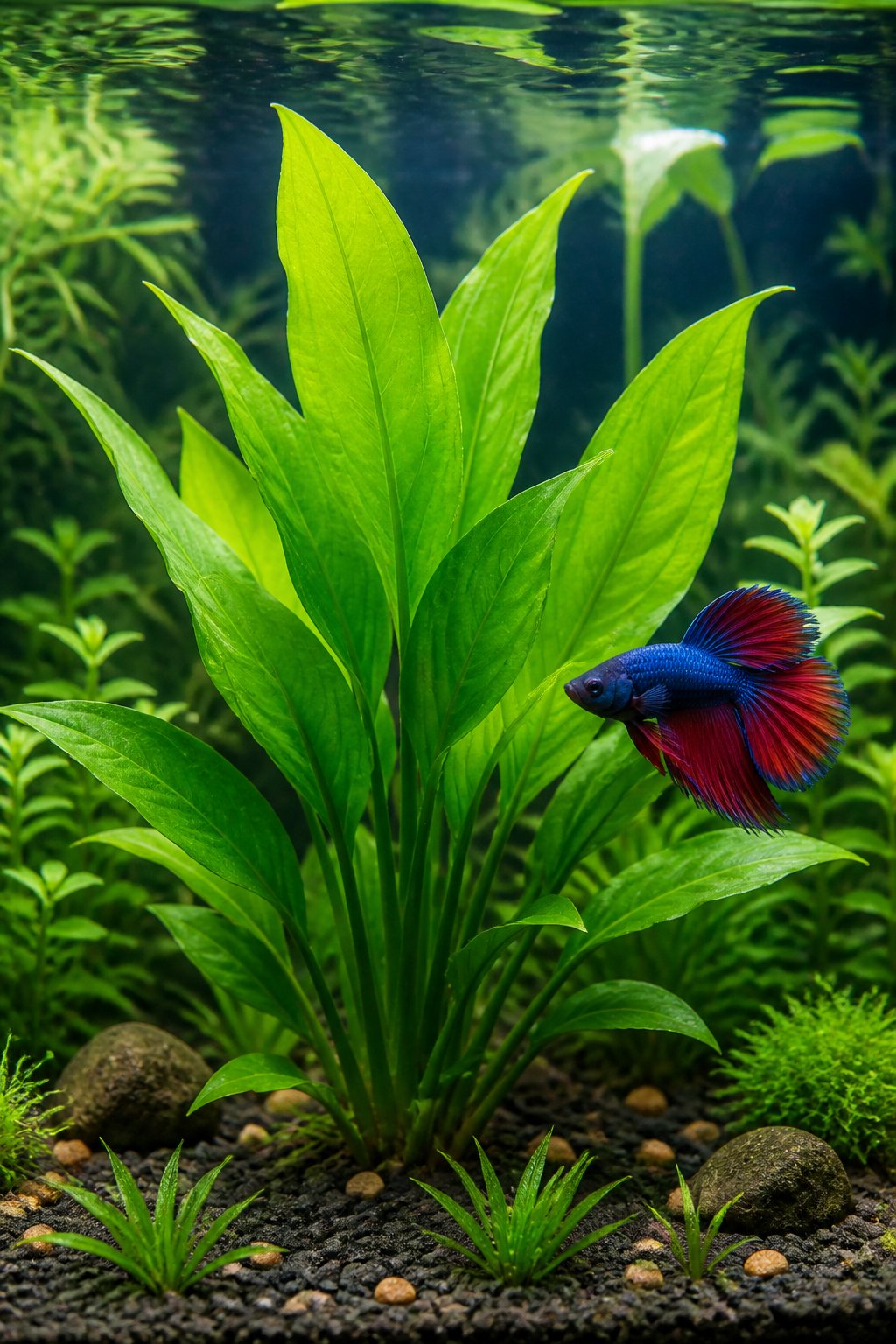
Amazon sword is one of those plants that earns its name. The leaves are broad, upright, and can reach 8 to 12 inches in a roomy tank, making it a strong midground or background anchor. It gives your betta real shelter — not just decorative greenery, but actual shaded hiding space.
Give it moderate to good light and a nutrient-rich substrate or root tabs. Older leaves will need trimming, and if the crown gets too big for your tank, you can carefully remove it and replant it in a larger setup or pass it along.
The honest caveat: Amazon sword can outgrow a 5 or 10-gallon tank faster than you’d expect. If you buy one for a smaller setup, plan on regular pruning or accept that you’ll eventually need to rehome it. Young plants may also melt after the first planting — same principle as crypts. Keep conditions stable, and they almost always recover.
5) Java Moss (Taxiphyllum barbieri)
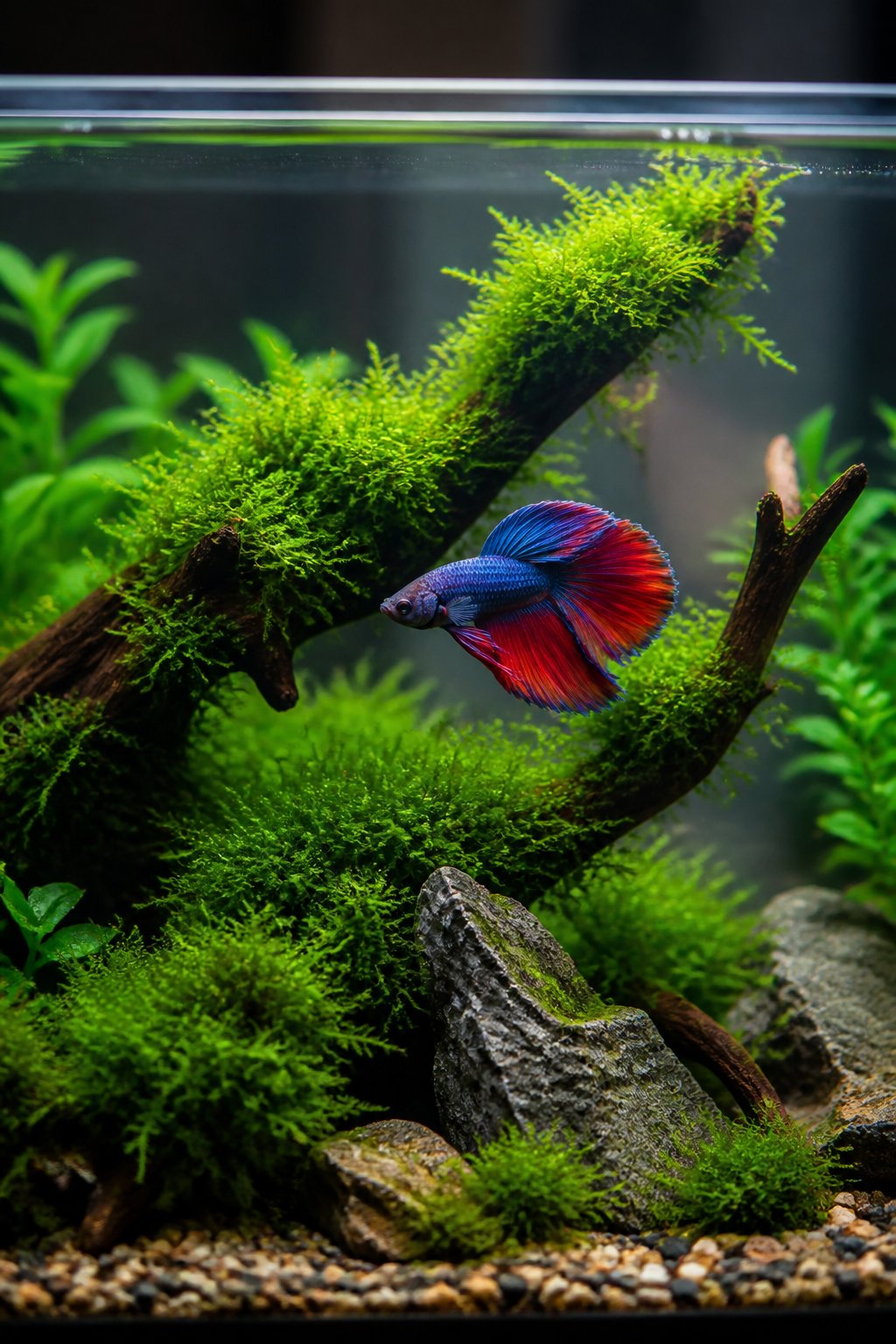
Java moss grows as dense, low clumps on rocks, driftwood, or mesh. It stays under 2 inches tall, spreads readily, and gives shy bettas real cover to duck into when they want a break from open water.
Care is simple. Low to medium light, no substrate needed, and a quick trim every few weeks to keep it from getting too shaggy. Tie or glue it to hardscape and let it do its thing.
The part people overlook: thick moss mats trap debris underneath them. If your water flow is low and you’re not checking beneath the mat during water changes, the trapped detritus will decompose and quietly push ammonia up. Occasional thinning and a gentle rinse during maintenance prevent that problem before it starts.
“The plants bettas actually thrive with aren’t necessarily the prettiest ones in the store — they’re the ones that don’t need you to do much.”
6) Vallisneria spiralis
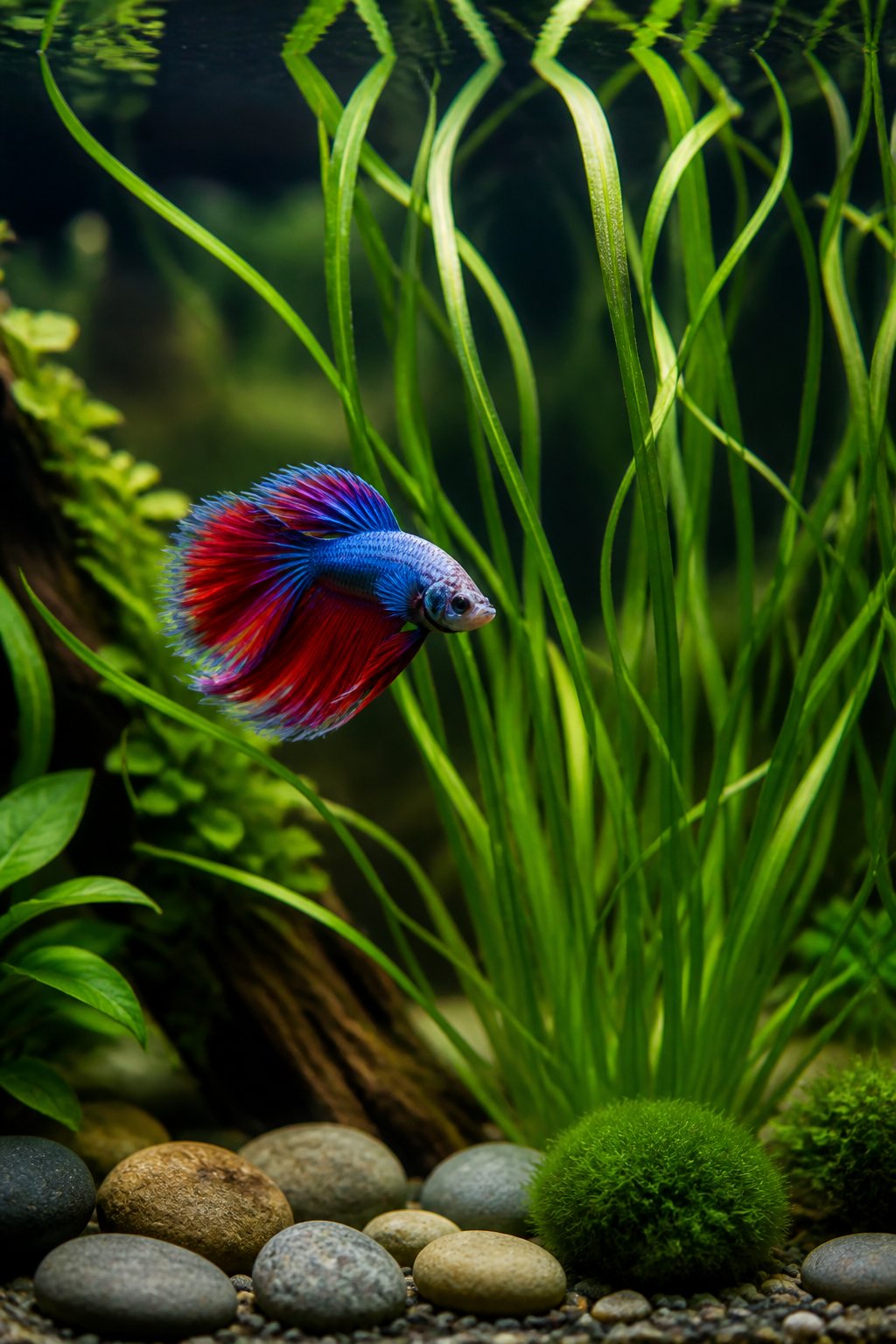
Long, ribbon-like leaves grow quickly and can hit the surface in just a few weeks. Planted along the back wall, Vallisneria creates a natural curtain that gives your betta places to rest near the top and swim through at mid-depth.
It’s genuinely tough. It tolerates a range of water conditions and works well in low-flow betta tanks. The leaves create calm pockets where bettas can hover without fighting a current, which is exactly the environment they prefer.
Moderate light and a nutrient-rich substrate support steady growth. The management job is mostly just pulling runners before they take over. Unchecked, Vallisneria will spread across the entire substrate and start shading out anything shorter, which is worth knowing before you plant your first bunch.
7) Marimo Moss Ball (Aegagropila linnaei)
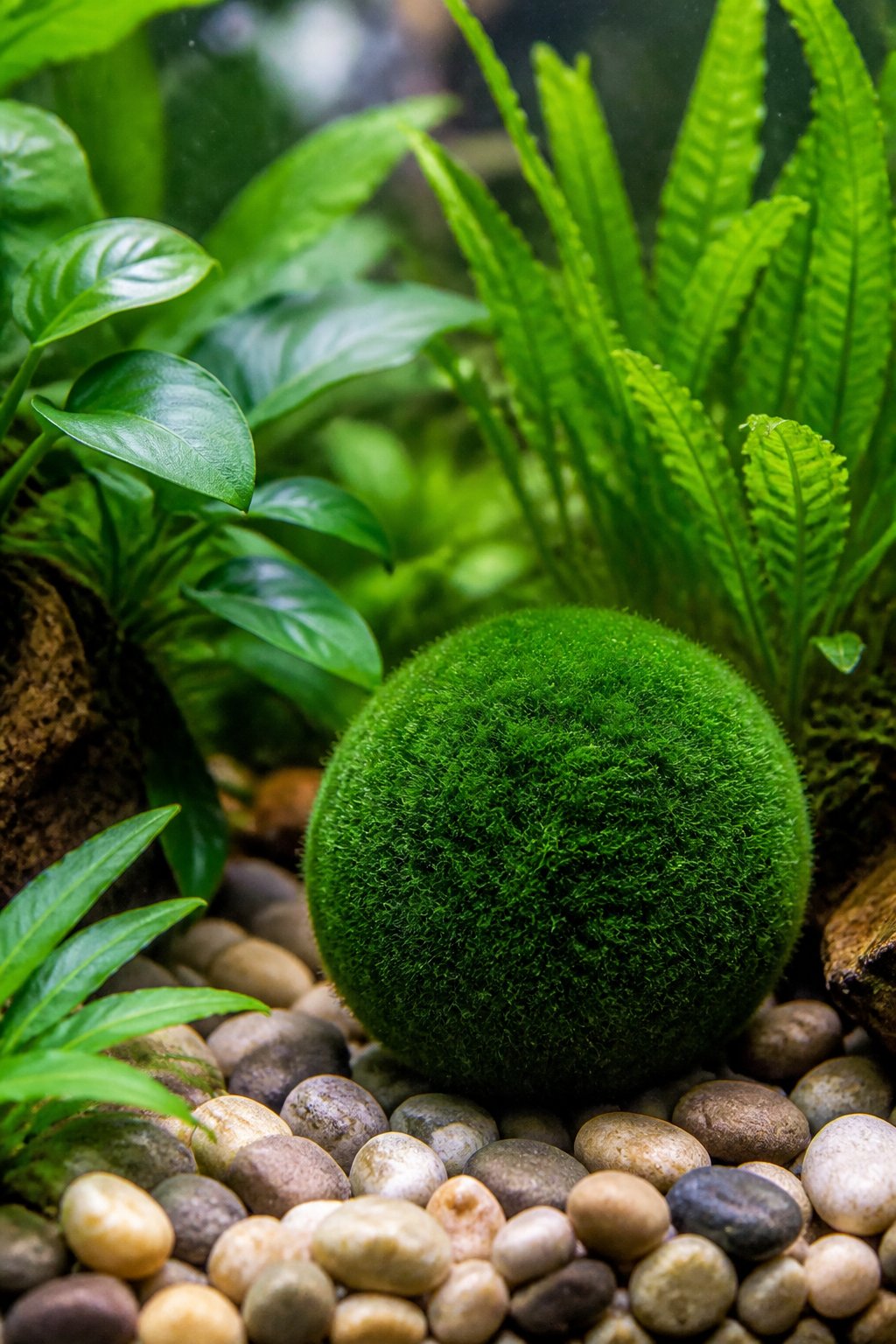
Marimo moss balls are about as low-maintenance as aquarium additions get. A round green sphere roughly the size of a golf ball sits on the substrate, grows slowly, and stays compact indefinitely. No substrate requirements, no trimming, no special lighting.
Bettas often investigate marimo out of curiosity — the soft, slightly spongy texture seems to interest them — and the rounded surface won’t snag or tear fins. They also tolerate the low-light conditions that many betta setups run. During water changes, just roll the ball gently to keep its shape and rinse it in the water you’ve removed.
The common mistake is treating it like moss that needs to be managed. It rarely does. Brown patches show up when water quality slips or light is too intense, but under normal betta-tank conditions, marimo mostly just sits there looking tidy and doing its job.

Generic Live Moss Pebbles for Aquariums
Check Price8) Bucephalandra ‘Wavy Green.’
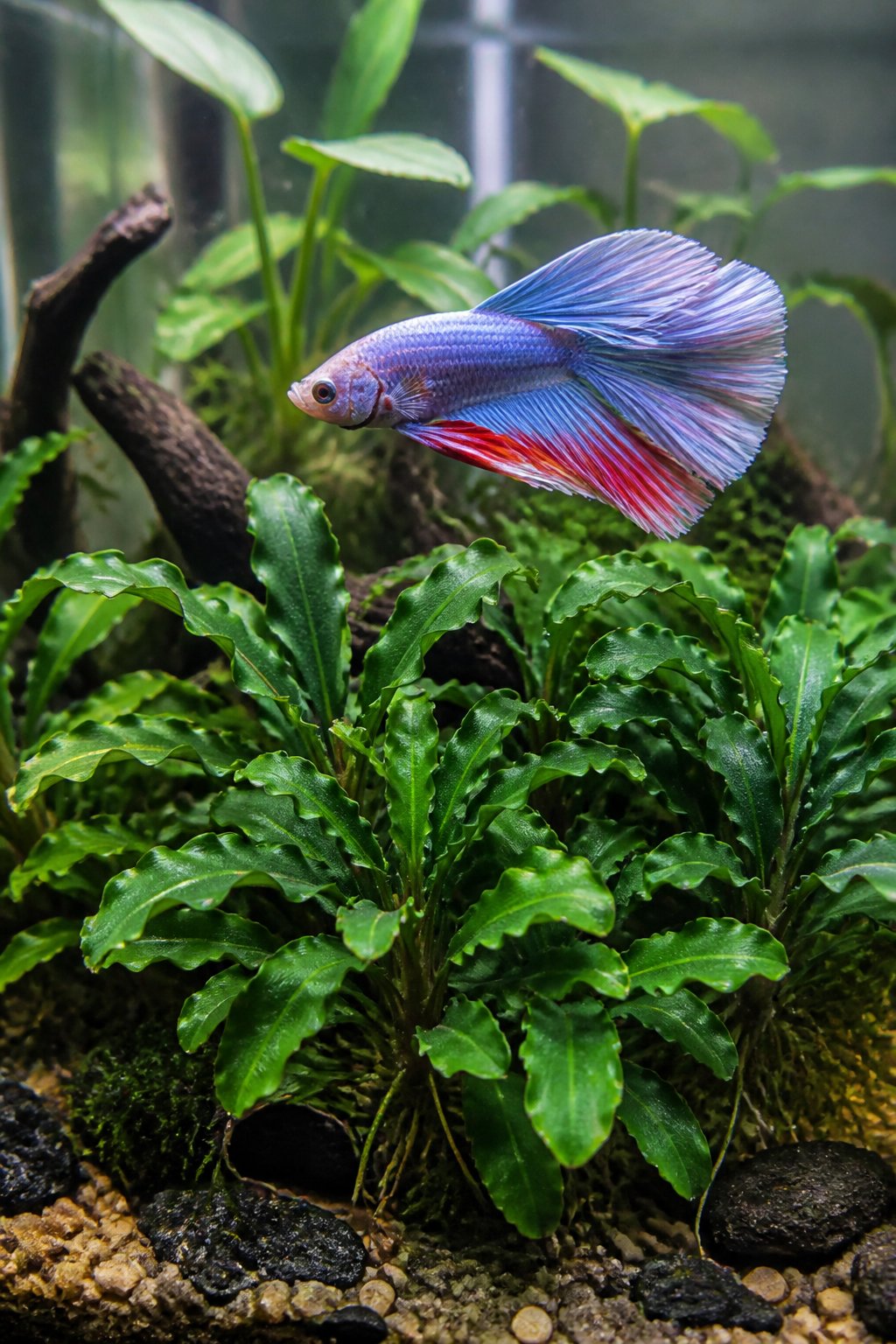
Bucephalandra is a slow grower with thick, wavy-edged leaves that stay small — usually 1 to 3 inches. It attaches to hardscape, tolerates low flow, and gives bettas shaded resting spots between leaves.
Low to medium light suits it well. Attach it to driftwood or rock, keep the rhizome exposed, and it will settle in quietly. You rarely need to trim it, and liquid fertilizers should be kept light — Bucephalandra doesn’t push new growth fast enough to use heavy doses efficiently.
The slow growth rate trips people up. A plant that isn’t visibly changing week to week can feel like it’s failing, but Bucephalandra is almost always just taking its time. Give it a month or two before drawing conclusions.
9) Dwarf Hairgrass (Eleocharis parvula)
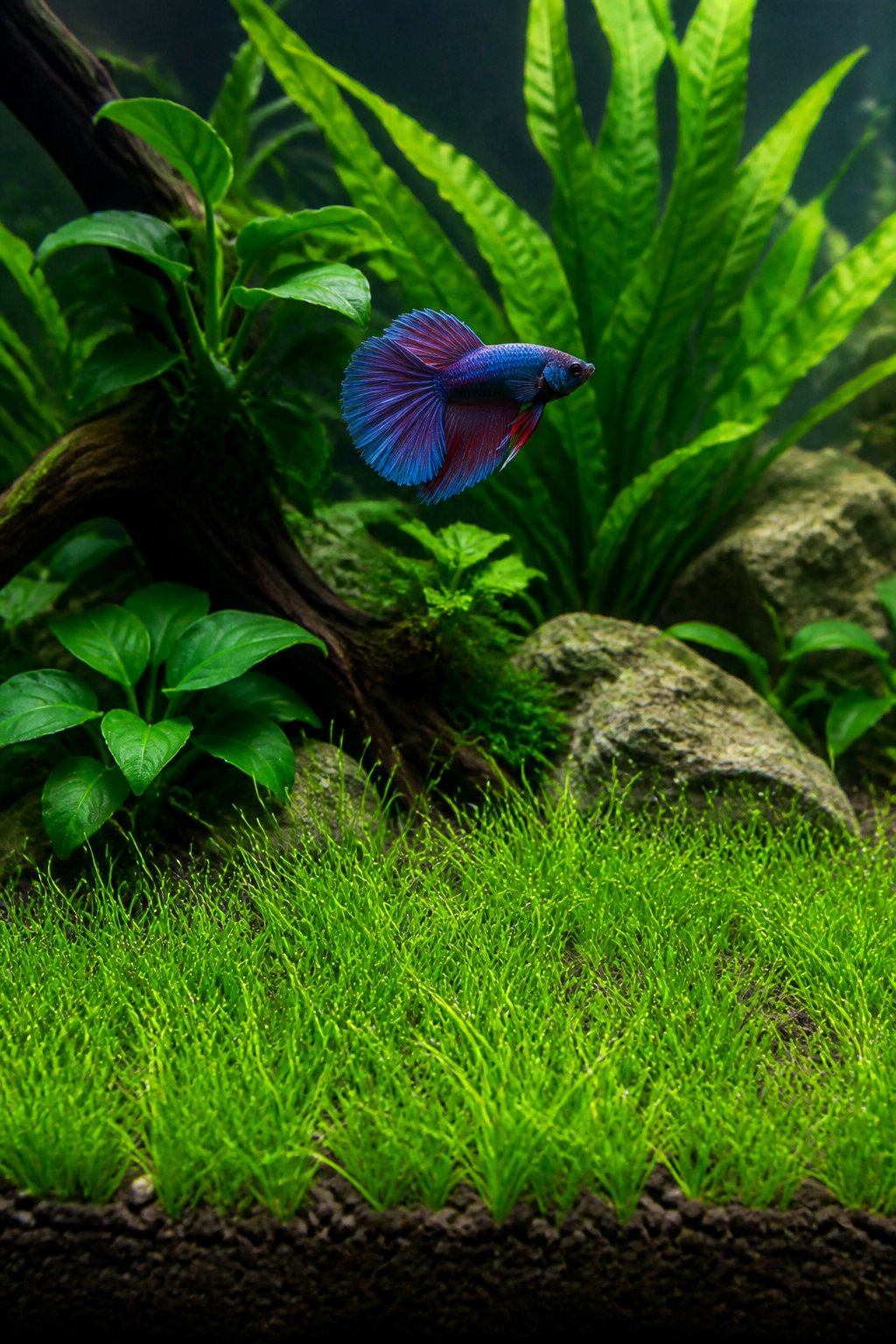
Dwarf hairgrass forms a short, dense carpet that stays under an inch tall when kept trimmed. The fine blades sway with gentle movement in the water, which creates a surprisingly natural-looking foreground.
Bettas like having low cover near the substrate to rest and explore, and thin grass blades won’t snag long fins. The plant tolerates normal betta-tank temperatures and grows slowly enough that it won’t suddenly take over.
Moderate to high light is the main requirement, along with a fine substrate for runners to spread through. CO2 speeds things up, but isn’t essential. In low-light tanks, though, be realistic — dwarf hairgrass will struggle or melt, and patience during the establishment phase is non-negotiable. Algae tends to outcompete it in new tanks before the carpet fills in, which is a normal part of the process rather than a sign that something’s wrong.
10) Lucky Bamboo (Dracaena sanderiana) — Root-Only Setups
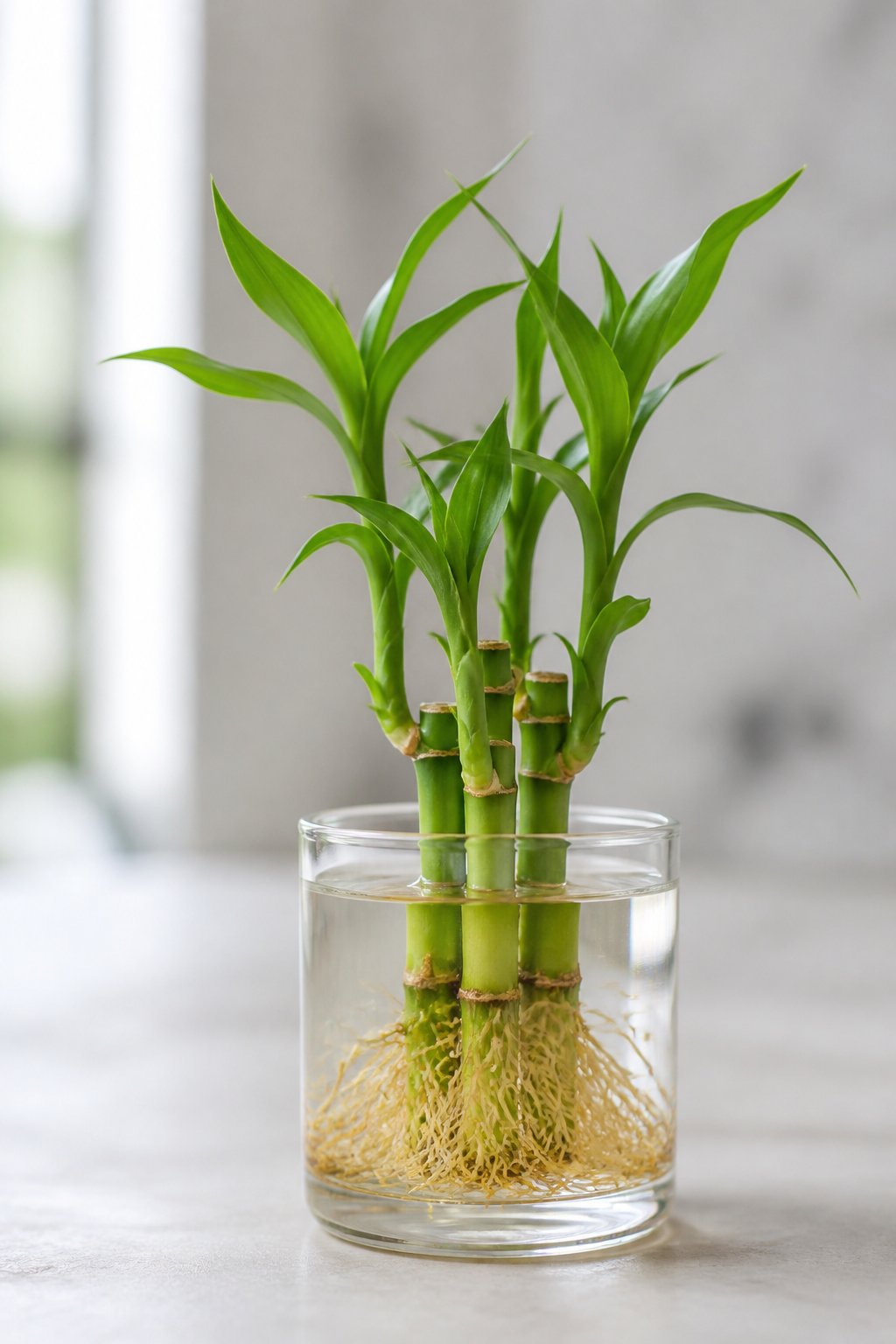
Lucky bamboo works in betta tanks, specifically in root-only setups, where the stalks stay above the waterline, and only the roots are submerged. The dangling roots create cover that bettas genuinely use — they swim through them and rest nearby.
Keep the stalks out of the water. Submerging them leads to stem rot, sometimes quickly. Anchor the plant in smooth pebbles or a suction cup clip, give it bright indirect light, and change the water regularly to avoid root slime. Trim yellowing leaves as they appear and rinse roots gently during water changes.
Soft, mushy roots and brown leaf tips are the two things to watch for. Both signal water quality or light problems. Caught early, both are fixable. Left alone, they tend to get worse.
11) Pygmy Chain Sword (Echinodorus tenellus)
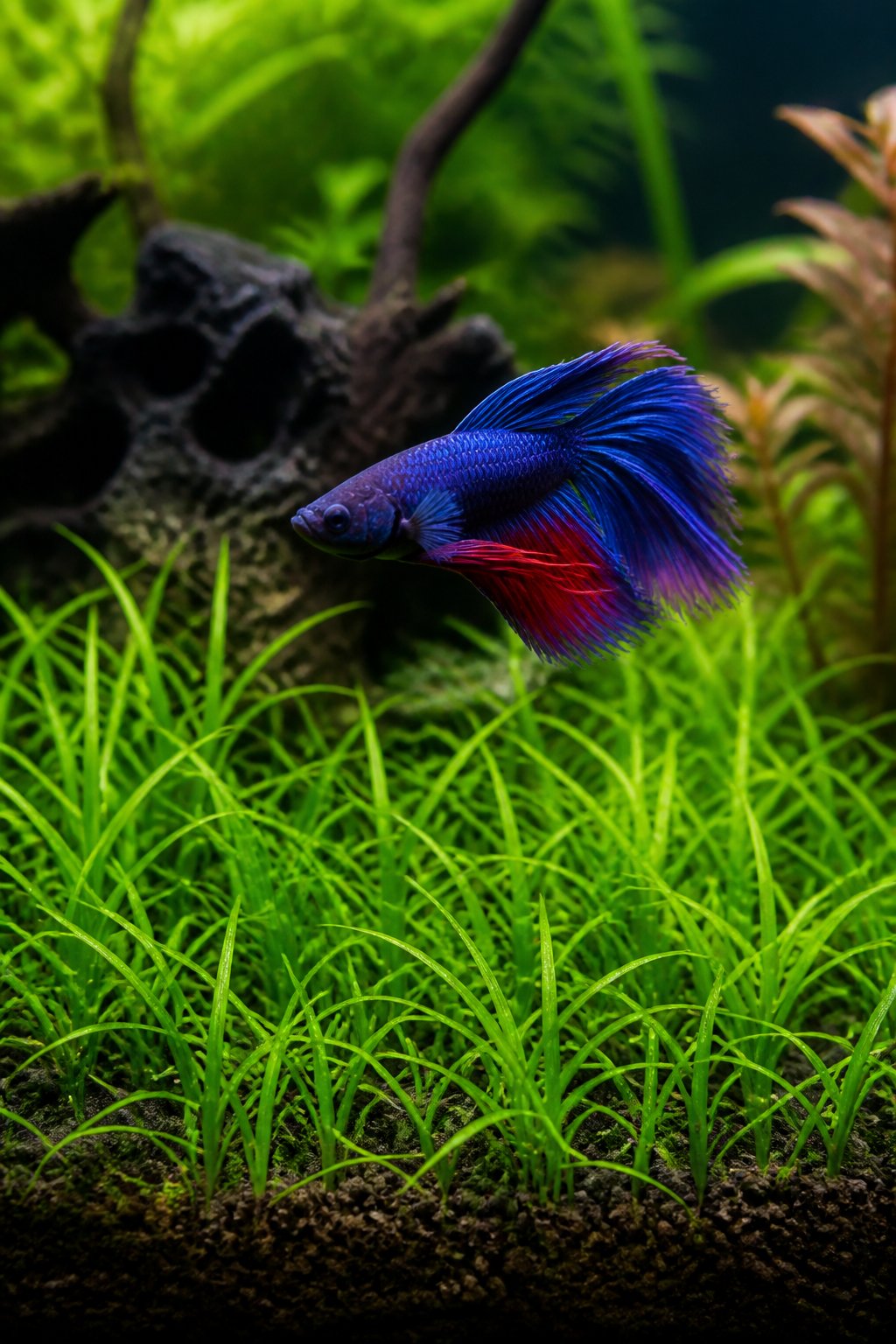
Pygmy chain sword stays low and spreads into a short grassy carpet, usually just a few inches tall. It’s a good foreground option when you want something a little more structured than moss but less demanding than dwarf hairgrass.
Bettas appreciate the low cover, and the fine leaves are thin enough not to catch fins. The plant tolerates standard betta-tank temperatures and won’t crowd out slower-growing species nearby.
Moderate light and a soft substrate support healthy growth, with root tabs if your tank runs low on nutrients. In very low-light tanks it will either grow slowly or melt — there’s not much middle ground. Overcrowding and shallow planting are the common mistakes that stunt it early on.
12) Aponogeton crispus
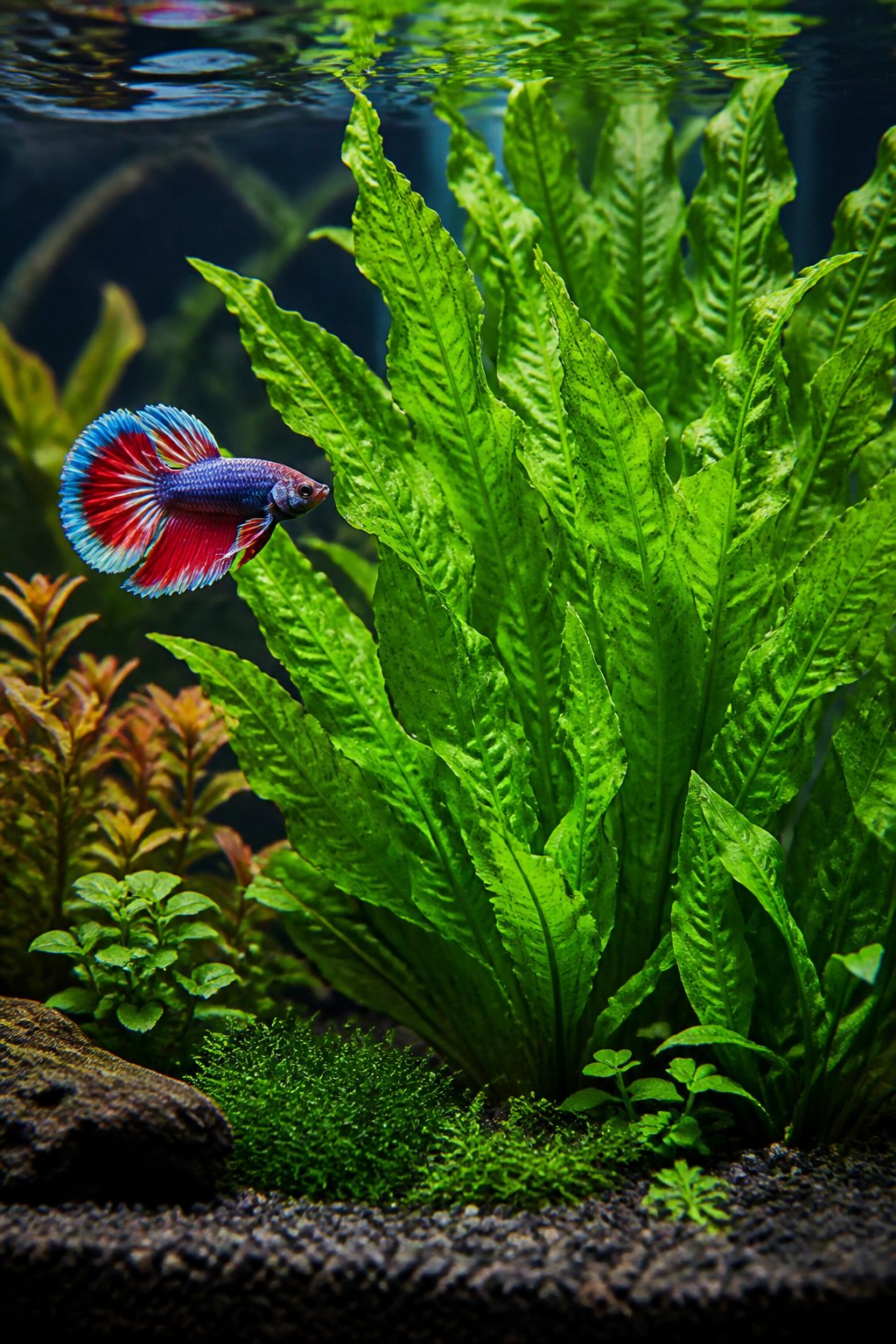
Aponogeton crispus forms a wide rosette of wavy, olive-green leaves that can reach 8 to 12 inches across in a larger tank. The surface coverage it provides is something bettas actually seek out — they like resting under broad leaves, and this plant delivers that without much effort from you.
Moderate to bright indirect light and a nutrient-rich substrate or root tabs keep it healthy. Trim old leaves as they age and remove seed stalks to keep things tidy.
One thing worth knowing: Aponogeton crispus can go dormant, particularly in cooler months, and may die back significantly before coming back. New keepers sometimes pull the corm, thinking the plant is dead when it just needs rest. Leave it in place, and it usually regrows. Plant it with the growing tip just above the substrate — burying the crown will rot it.
13) Rotala rotundifolia — Low-Light Strains
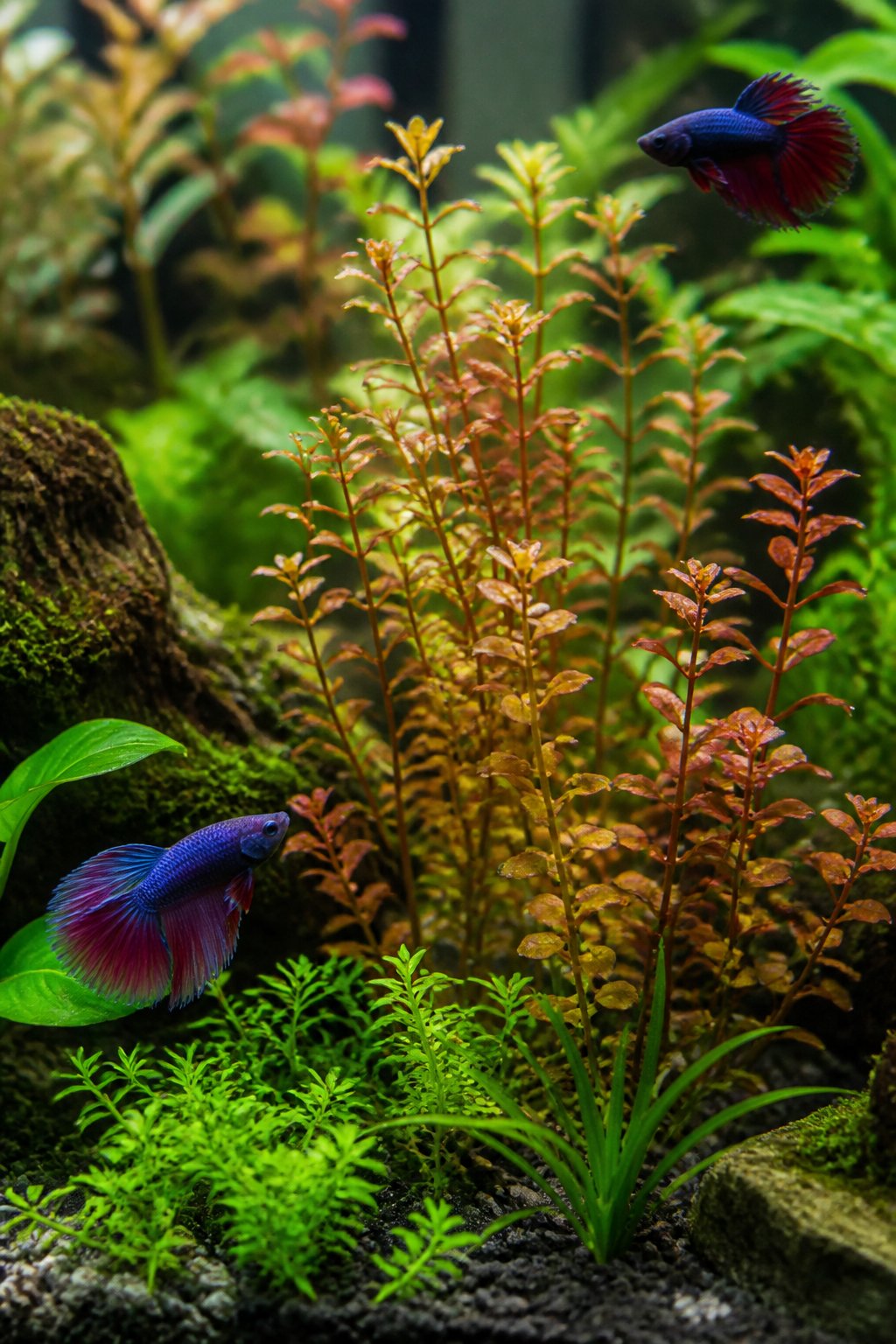
Rotala rotundifolia in its low-light strains grows slowly enough to stay manageable in a 10 to 20-gallon betta tank. The fine stems and small, round leaves give a soft, layered look in the background, and the stems create natural cover that bettas can explore readily.
Keep light low to moderate and use a nutrient-rich substrate or root tabs for best results. Regular water changes and occasional trimming cover most of the care.
Watch for pale leaves and leggy growth, which usually means light or nutrients are short. The most common neglect: people plant Rotala and let it run without trimming. Untrimmed stems flop over, create shaded dead spots in the substrate, and start to look messy. A quick trim every couple of weeks keeps the whole thing looking intentional.
14) Hygrophila polysperma — Compact Varieties
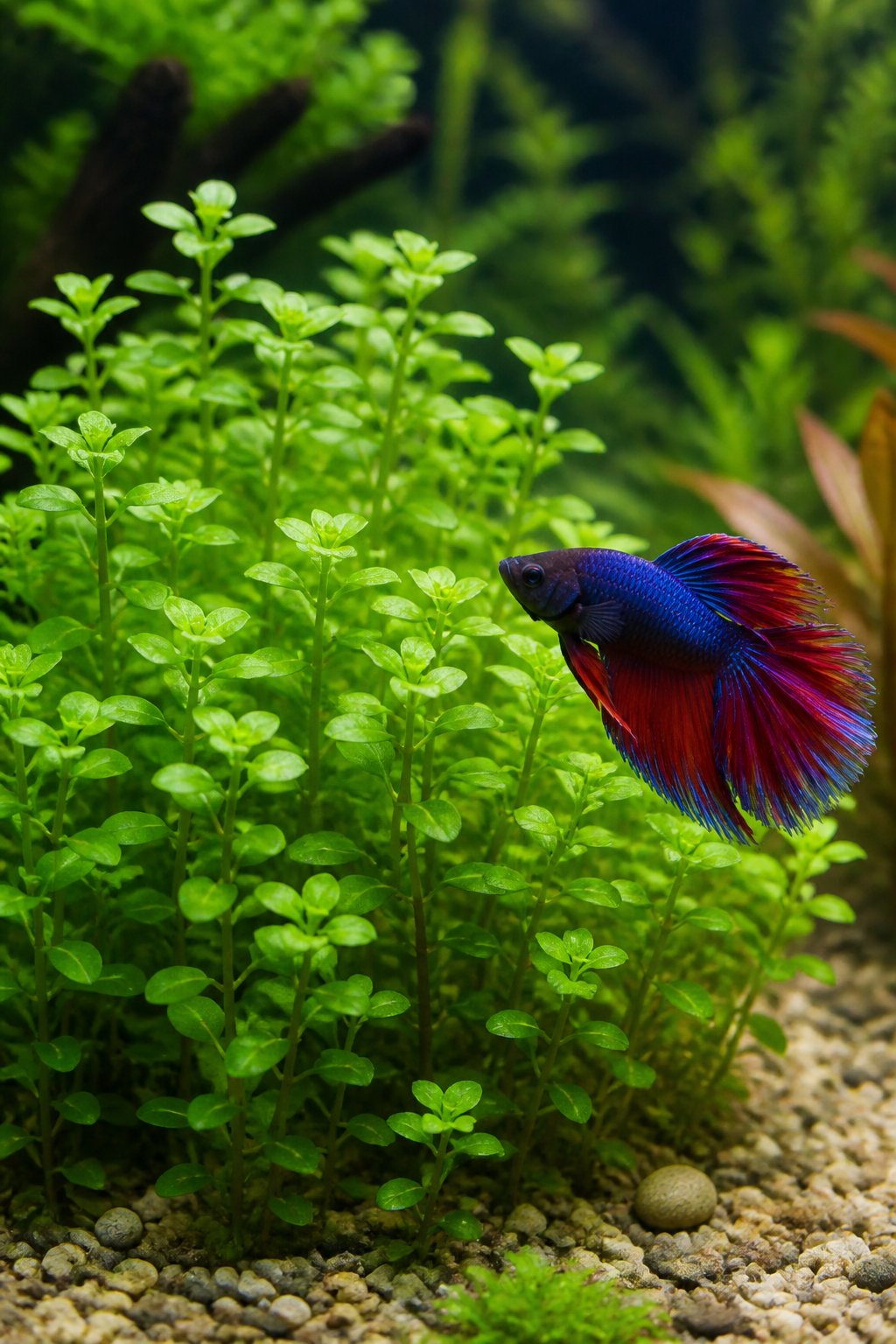
Compact Hygrophila polysperma stays shorter and bushier than the standard tall varieties, usually reaching 6 to 12 inches. The narrow green leaves sometimes pick up a slight red tint under brighter light, which adds some visual contrast without requiring anything special from you.
Use it as a midground or background plant that gives your betta real stem cover to navigate. It tolerates a wide range of water conditions and resists nibbling better than more delicate species. Moderate light and a basic substrate are all it needs — no CO2 required, though growth will be faster with it.
The management issue with Hygrophila is speed. It grows quickly, and if you skip a few trims, it can crowd slower plants and increase nutrient demand noticeably. Keeping up with it takes maybe five minutes during a water change, but skipping it for a month tends to create real work.
15) Bolbitis heudelotii (African Water Fern)
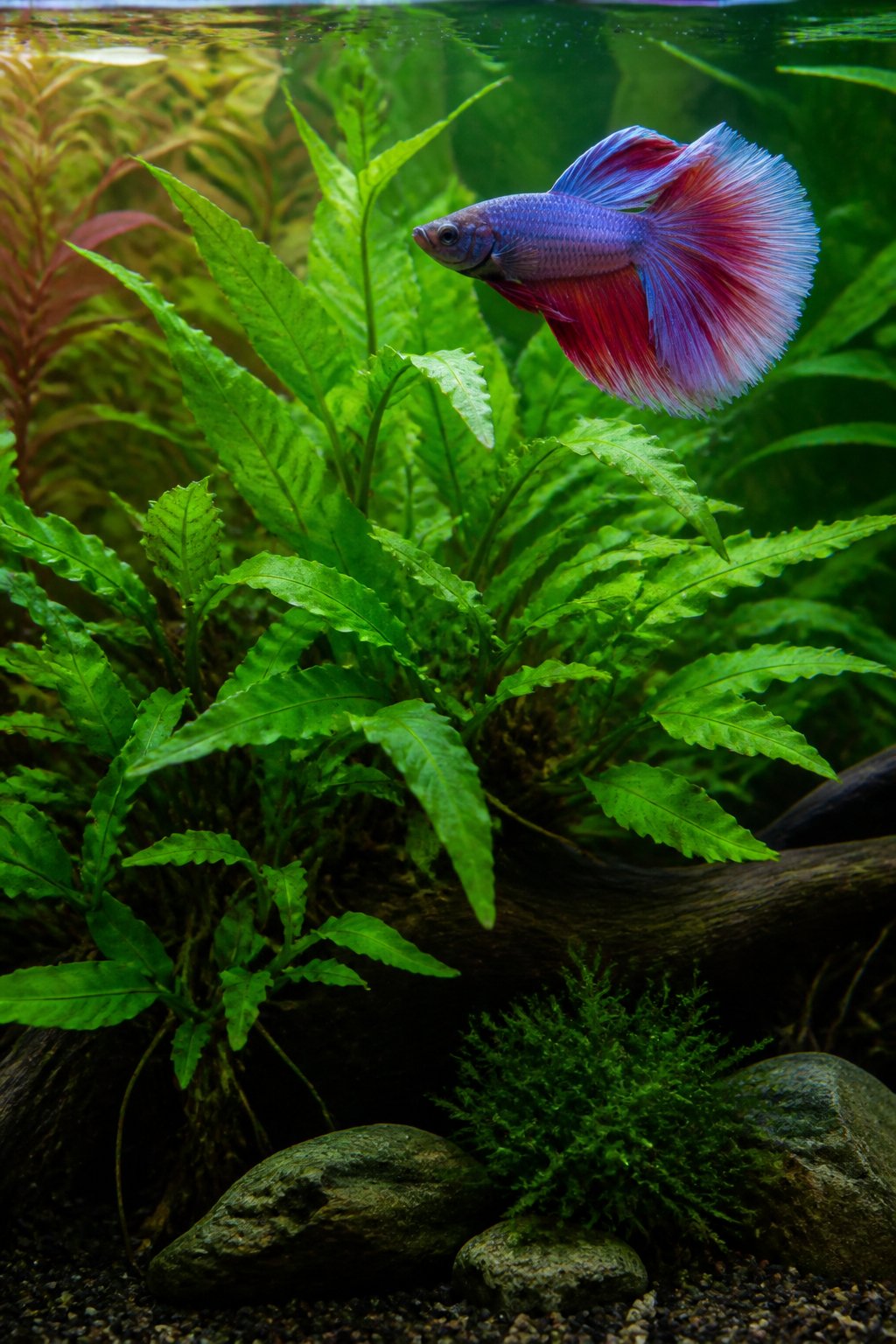
Bolbitis has thick, dark green fronds that grow slowly and reach 6 to 12 inches with time. It adds a structured, low look to hardscape without spreading or floating out of place — you tie it to driftwood or rock, and it stays there.
Bettas like the cover between the fronds and the open swim space above. Low to medium light suits it well, and it prefers temperatures in the 72 to 78°F range, which aligns cleanly with most betta setups. No special substrate needed — stable attachment and occasional leaf cleaning keep it going.
Bolbitis will sometimes melt after a lighting change or when it first enters a new tank. Don’t trim it too hard during that phase and don’t bury the rhizome. Both are common early mistakes that set the plant back significantly. Given stable conditions and patience, it recovers reliably.
How Planted Tanks Actually Help a Betta
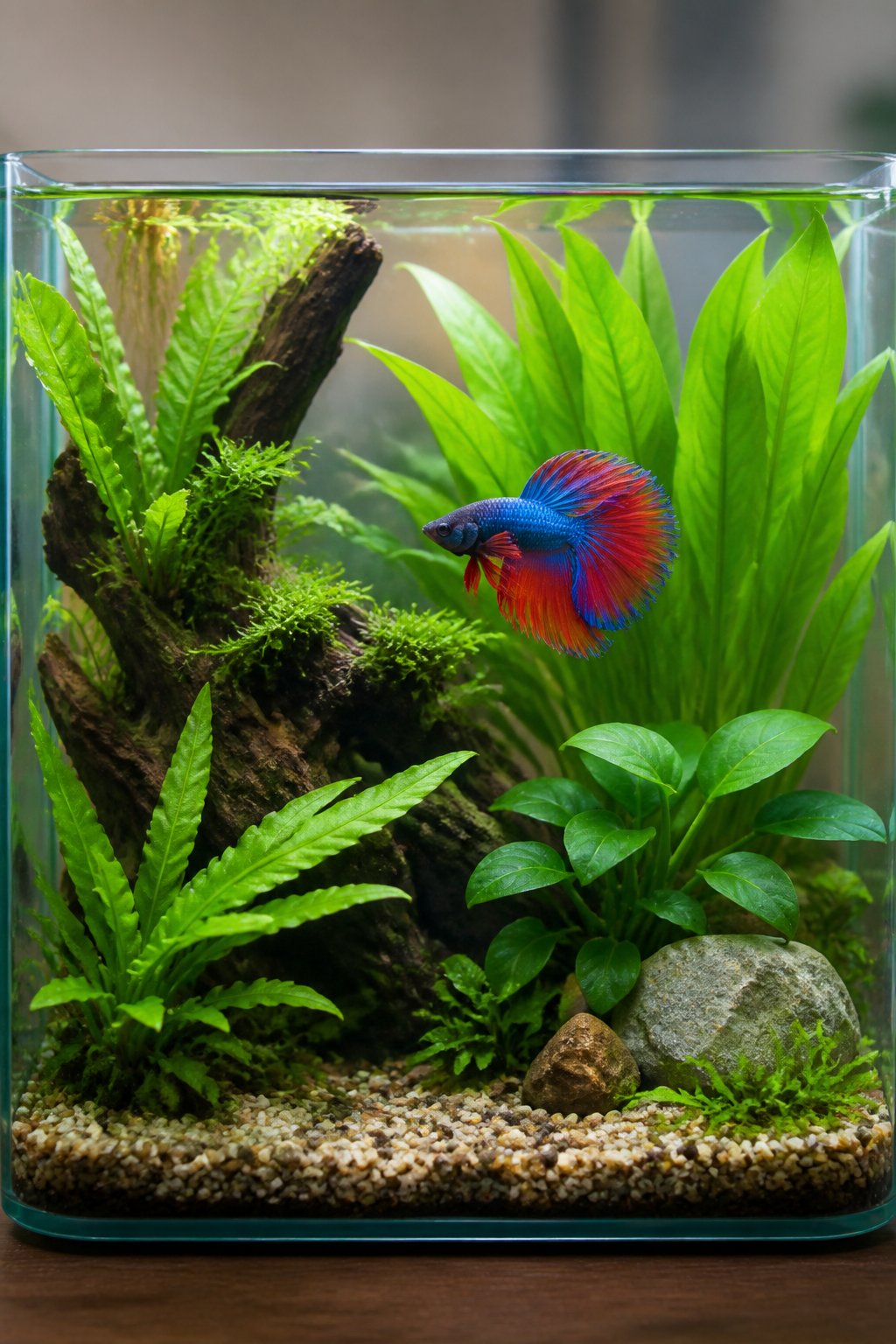
Plants in a betta tank aren’t just decoration. They do real work, and understanding that makes it easier to choose the right ones and place them where they’ll actually matter.
Reducing Stress and Settling Your Fish
Java fern and Anubias give bettas broad surfaces to rest on and visual breaks that reduce the exposed, open-water feeling that can keep some fish on edge. Tied to driftwood or rocks, they won’t shift around during active swimming or fin displays.
Plants that break sightlines also reduce the intensity of flare responses if you keep other fish in the tank. Taller stems in the back and mid-height rosettes near the sides create distinct zones — and bettas tend to claim one area and settle into it, which is a sign the environment feels predictable to them. Decaying leaves work against this quickly, so trimming dead growth isn’t just aesthetic maintenance.
Keeping the Water Cleaner
Fast-growing stem plants like hornwort pull nitrates out of the water column actively. Trimming and removing the cuttings physically exports those nutrients from the tank rather than just breaking them down into something else.
Rooted plants like crypts and Vallisneria work through the substrate, helping stabilize ammonia and nitrite uptake from below. Root tabs support that process in tanks with inert substrate. The balance matters, though — too much light accelerates algae as readily as it accelerates plant growth, and too many liquid fertilizers in a small tank can shift water chemistry faster than your betta can comfortably handle.
Weekly water changes and removing dead leaves are the foundation. Everything else builds on those two habits.
Troubleshooting the Problems That Come Up Most Often
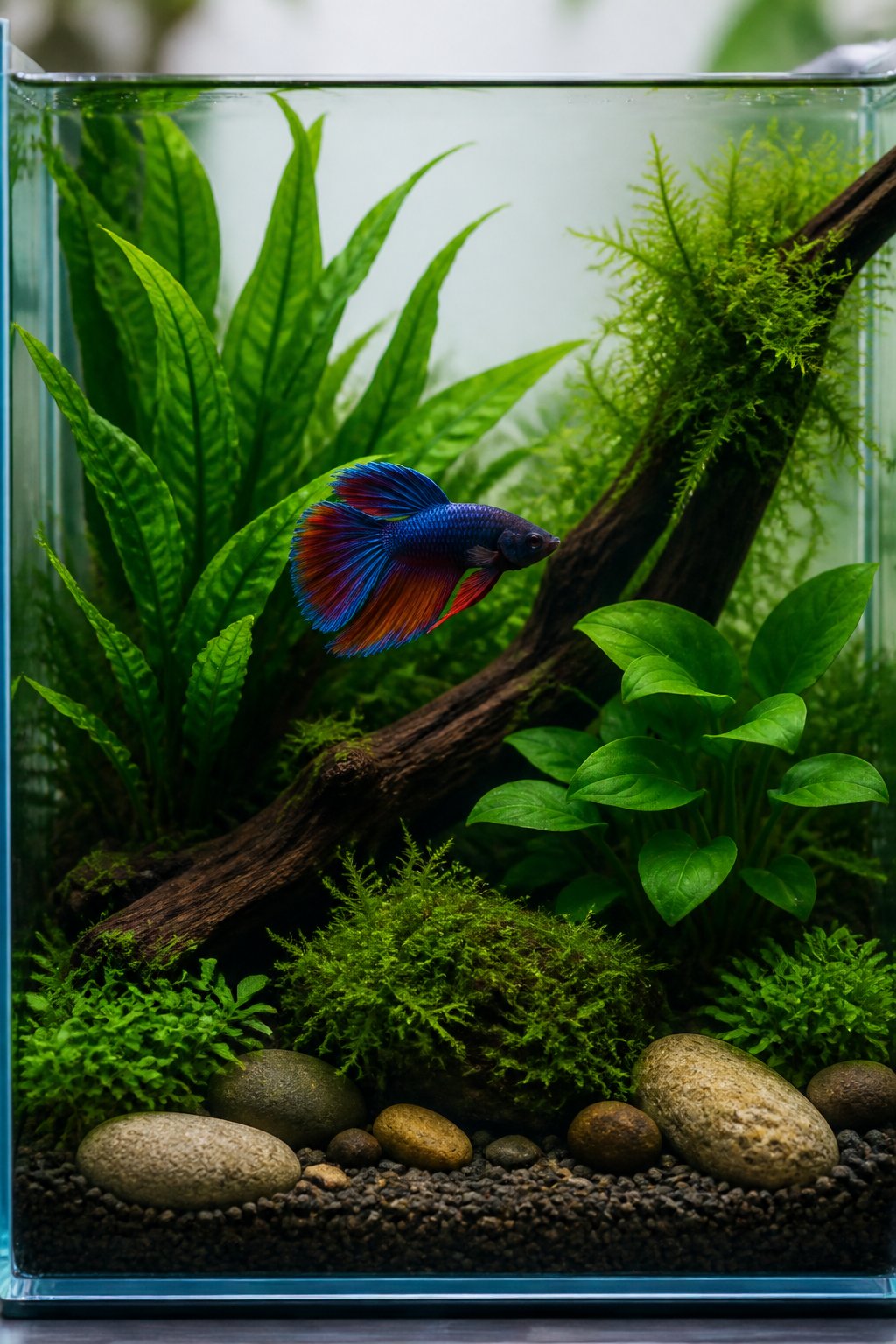
Most planted tank problems come from one of three sources: too much light, inconsistent water changes, or a plant in the wrong conditions. Sorting out which one applies usually clears things up faster than any product or additive.
Managing Algae Without Overcomplicating It
Green algae appearing on glass or plant leaves typically means light is running too long or feeding is too heavy. Reduce the photoperiod to 6 to 8 hours using a timer and cut feedings back. Consistency matters more than intensity here.
Weekly 25% water changes remove the excess nutrients algae needs. A gravel vacuum during those changes pulls trapped waste from the substrate before it can fuel another bloom. Fast-growing stem plants compete directly with algae for those same nutrients — adding hornwort or water sprite is often more effective than scrubbing.
Manual removal with a soft brush handles what’s already there. Amano shrimp and snails help with ongoing maintenance, but check that your betta’s temperament allows for tank mates before adding anything. Skip chemical algaecides entirely — they’re hard on plants and can stress your fish in ways that aren’t always immediately obvious.
What to Do When Plants Melt or Rot
Transparent, collapsing leaves are almost always plant melt — a response to changed conditions, usually light or water chemistry. Trim the affected leaves promptly so the plant can redirect energy toward new growth, then leave it alone. Most plants recover once conditions stabilize.
Rot is different: soft brown stems or blackened roots that smell faintly off. Cut back into healthy tissue with clean scissors, remove the affected material from the tank, and check water flow and fertilizer levels. Poor circulation combined with excess fertilizer is the usual cause. Replant healthy runners or stem sections in fresh substrate.
If the same plant keeps failing despite adjustments, it may simply be wrong for your setup. Swapping to Java fern or Anubias — both of which attach to hardscape, tolerate low light, and ask very little of you — removes a lot of variables at once.
Most planted betta tanks that struggle aren’t struggling because of the betta. They’re struggling because of the plants chosen for them.