
Seeing your betta fish act out of character is always stressful. If your normally active fish is suddenly hiding, refusing food, or swimming erratically, it is easy to assume the worst. However, before you panic or start adding medications to the water, you should check the most common culprit first: the tank’s temperature.
Bettas are tropical fish that rely on a stable, warm environment to keep their metabolism and immune system functioning properly. When a heater malfunctions, unplugs, or struggles to keep up with a drafty room, your betta experiences heater stress.
Fortunately, temperature issues are highly treatable if you catch them early. Here is how to figure out exactly what is going wrong and how to fix it safely without shocking your fish.
Signs Your Betta is Stressed by Temperature
Bettas react differently depending on whether they are freezing or overheating. Because they are cold-blooded, their body temperature matches the temperature of the water around them. Watch for these physical and behavioral clues.
When the Tank is Too Cold
If the water drops below their comfortable range, a betta’s metabolism slows down drastically. You might notice:
- Lethargy: Your betta is resting at the bottom of the tank or resting on leaves for long periods.
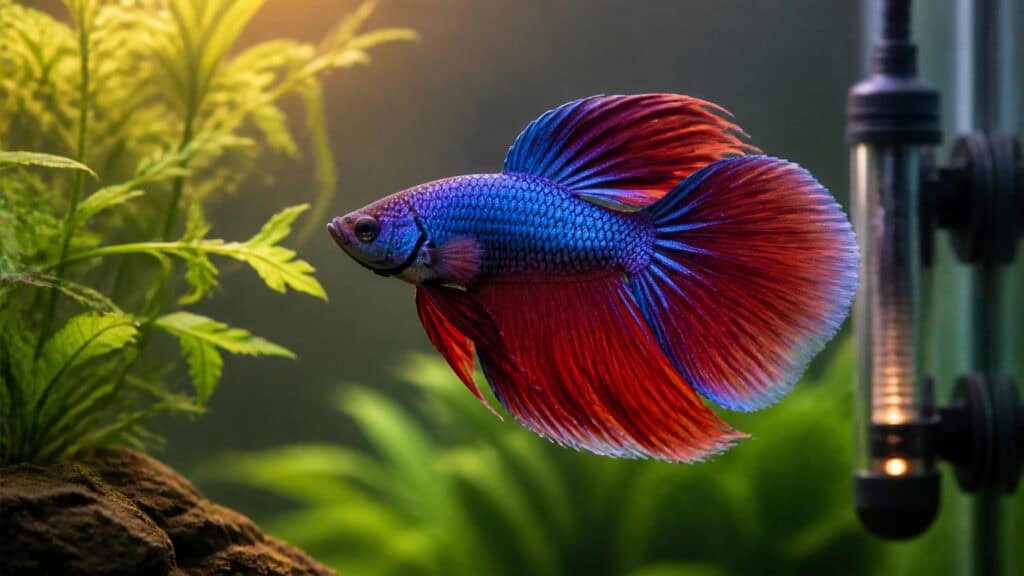
- Hugging the heater: They may hover as close to the heater as possible to soak up any residual warmth.
- Loss of appetite: Because they cannot digest food properly in cold water, they will often ignore their pellets.
- Clamped fins: Their fins will look pinched or folded against their body rather than flowing and relaxed.
- Faded color: A stressed, cold betta will often lose their vibrant hues, looking pale or dull.
When the Tank is Too Hot
Overheating is just as dangerous, as warmer water holds less dissolved oxygen. Signs of an overheated tank include:
- Erratic swimming: Darting around the tank in a panicked manner.
- Gasping at the surface: Spending excessive time at the top of the water trying to breathe, as oxygen levels in the water have dropped.
- Rapid gill movement: Their gills will pump much faster than normal as they struggle to get enough oxygen.
What to Check First: Your Diagnostic Checklist
If you suspect a temperature issue, do not immediately unplug everything or start dumping water into the tank. Take a deep breath and run through this diagnostic checklist to isolate the problem.
The Heater Troubleshooting Checklist
- 1. Check your secondary thermometer: Never rely solely on the temperature dial printed on the heater itself. Look at your separate glass or digital thermometer. What is the exact temperature right now?
- 2. Look for the heater’s indicator light: Most heaters have a small LED that turns on when it is actively heating. If the water is cold and the light is off, the heater may be broken or unplugged. If the water is hot and the light is stuck on, the internal thermostat has likely failed.
- 3. Check the water level: Heaters need to be fully submerged (or submerged to their specific fill line) to read the water temperature accurately. If the water has evaporated and exposed the top of the heater, it can overheat, shut off, or even crack.
- 4. Feel the water flow: Is the heater placed in a dead zone? Heaters should be placed near the filter output so warm water is pushed throughout the tank. If the water near the heater is warm but the rest of the tank is cold, you have a circulation problem.
- 5. Note the room’s ambient temperature: A standard aquarium heater can only raise the water temperature about 5 to 10 degrees above the room’s temperature. If your house is freezing, a low-wattage heater might simply be unable to keep up.
The Betta Temperature Zone Guide
To understand how urgent your situation is, compare your thermometer reading to this temperature zone chart.
| Zone | Temperature Range | What It Means for Your Betta |
|---|---|---|
| Ideal Zone | 78°F – 80°F (25.5°C – 26.5°C) | Perfect conditions. Metabolism, digestion, and the immune system are functioning optimally. |
| Stress Zone (Cold) | 75°F – 77°F (24°C – 25°C) | Slightly too cool. Your betta may become sluggish and more susceptible to illnesses like Ich or fin rot. |
| Stress Zone (Hot) | 81°F – 83°F (27°C – 28°C) | Slightly too warm. Metabolism speeds up, aging the fish faster. Bacteria also multiply quicker in this range. |
| Danger Zone (Cold) | Under 74°F (23°C) | Emergency. High risk of temperature shock, severe lethargy, and organ failure. |
| Danger Zone (Hot) | Over 84°F (29°C) | Emergency. Severe oxygen depletion. High risk of suffocation and fatal heat stress. |
How to Safely Fix the Temperature
The most important rule of fixing aquarium temperature is to go slowly. Rapid temperature changes cause thermal shock, which can be fatal to a betta even if you are moving them into the “ideal” range. Aim to change the water temperature by no more than 1 to 2 degrees Fahrenheit per hour.
Scenario 1: The Tank is Too Cold
If your heater has died or cannot keep up, you need to warm the tank gradually.
- Do not add boiling or hot water directly to the tank. This creates dangerous hot spots that can burn your fish.
- Replace the heater: If the heater is broken, purchase a new one. Install it, set it to 78°F, and let it slowly bring the tank up to temperature over several hours.
- Insulate the tank: If you are waiting for a new heater to arrive, wrap the outside of the glass tank in thick towels or blankets to trap whatever heat is left.
- Float warm water bottles: In an emergency, fill a plastic zip-top bag or water bottle with warm (not hot) tap water and float it in the tank. Monitor the thermometer closely.
Scenario 2: The Tank is Too Hot
If a heater thermostat gets stuck in the “on” position, it will continuously heat the water until it cooks the tank. You must cool it down immediately, but gently.
- Unplug the heater immediately. Do not remove it from the water right away, as the glass can shatter if it cools too fast in the air. Just cut the power.
- Remove the tank lid. This allows trapped heat to escape and increases oxygen exchange at the surface.
- Point a fan at the water surface. Evaporative cooling is the safest way to lower tank temperature gradually.
- Do not drop ice cubes into the tank. Ice will melt rapidly, causing a severe and localized temperature crash that will shock your betta.
How to Prevent Future Heater Stress
Once your betta is safe and swimming happily again, take a few steps to ensure this doesn’t happen again.
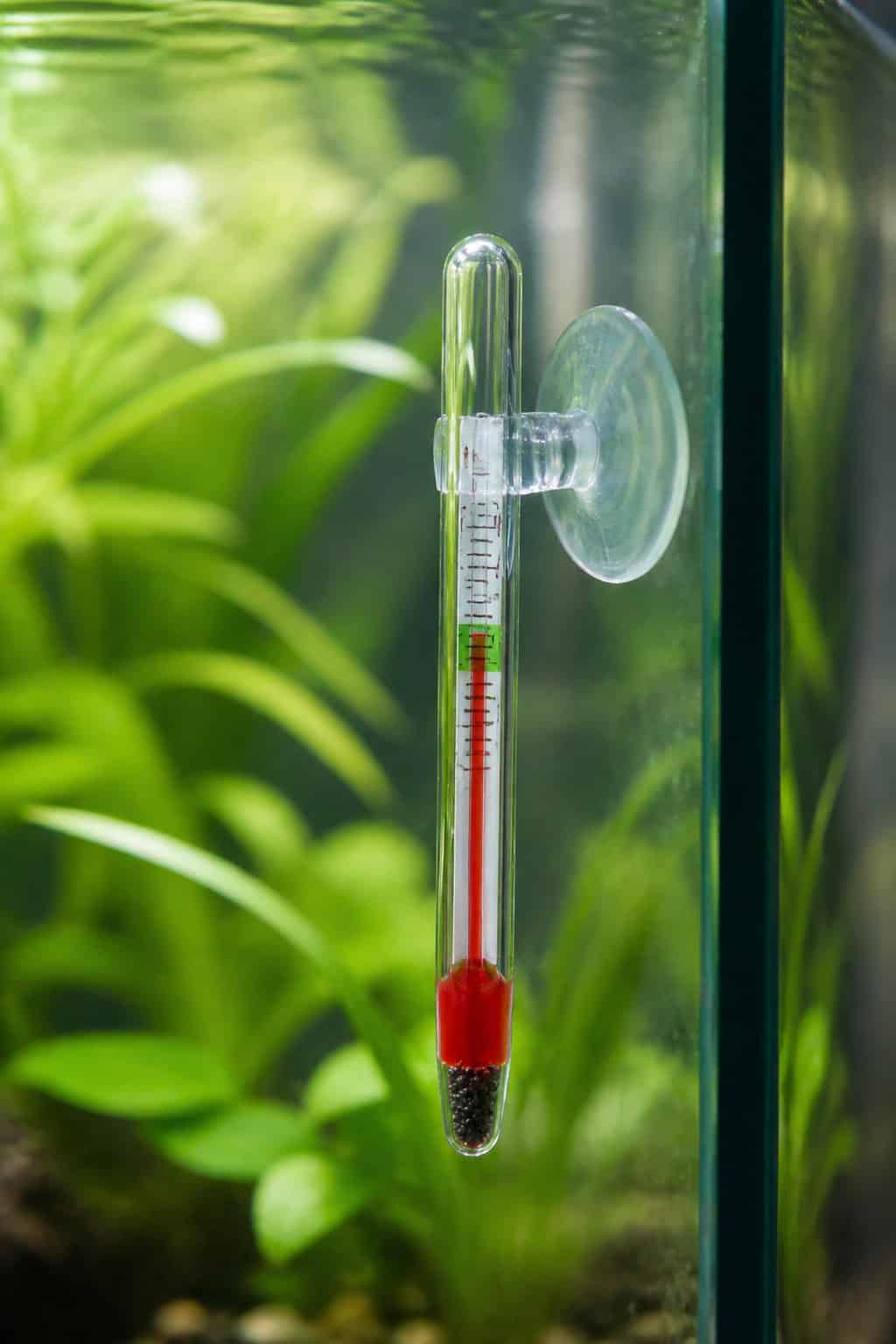
First, always use a separate thermometer. A simple glass thermometer with a suction cup placed on the opposite side of the tank from the heater is the most reliable way to monitor your water. Digital thermometers are also great, but glass ones never run out of batteries.
Second, choose an adjustable heater over a preset one. Preset heaters are calibrated to hold water at 78°F, but they cannot be adjusted if your room gets exceptionally cold in the winter or hot in the summer. An adjustable heater gives you the control to turn the dial up or down as the seasons change.
Finally, make sure you have the right wattage. The general rule is 5 watts per gallon of water. For a standard 5-gallon betta tank, a 25-watt heater is perfect. For a 10-gallon tank, use a 50-watt heater. Using a heater that is too weak means it will run constantly and burn out, while a heater that is too powerful can heat the small volume of water too rapidly.

hygger Small Betta Aquarium Heater with LED
Check PriceConclusion
Bettas are remarkably resilient fish. If you notice signs of heater stress, stay calm, check your thermometer, and make adjustments slowly. By keeping a close eye on your equipment and understanding your betta’s ideal temperature zones, you can easily provide a warm, stable home where your fish will thrive.