
You set up the tank, plugged in the filter, and instead of swimming happily, your betta is hiding behind the heater. Before you assume your fish is sick, look at the water current. Filter flow stress is one of the most common issues in new betta setups.
Bettas have heavy, trailing fins. In the wild, they live in slow-moving or stagnant water. Modern aquarium filters are designed to push large volumes of water to keep tanks clean, but out of the box, the flow is often far too strong for a betta to handle. If your fish is constantly fighting a mechanical current, they will quickly become exhausted, stressed, and prone to illness.
Fortunately, you rarely need to buy an expensive new filter to solve this. Here is how to diagnose flow stress and the exact gear adjustments you should make first.
The Symptoms: How to Tell It’s Flow Stress
Because bettas are dramatic fish, it can be tough to tell the difference between a sick fish and a tired one. Before you start dosing medications, watch your betta’s behavior and look for these specific signs of flow stress:
Flow Stress Diagnostic Checklist
- Getting physically pushed: Your betta is blown downward or across the tank when swimming near the middle or top of the water column.
- Constant hiding: They spend all their time in low-flow areas, such as wedged behind the heater, resting flat on the substrate, or hiding deep inside decorations.
- Clamped fins: They hold their fins tight against their body while swimming to reduce drag against the current.
- Torn fins without rot: You notice clean rips or tears in their fins, but no black, melting edges (often caused by struggling against the current or getting sucked against the intake).
- Lethargy: They only swim up to the surface for a quick gulp of air before immediately letting themselves sink back down to rest.
What to Check First: The Immediate Gear Checks
If your betta is showing the symptoms above, do not head to the pet store yet. Check your current setup for these two common, easily fixable mistakes.
1. The Adjustable Flow Knob
Many Hang-On-Back (HOB) and internal filters have a small dial, lever, or slider on the intake tube or the top of the motor housing. It is easy to miss if you did not read the manual. Check your filter and turn this dial to the lowest possible setting. In many cases, this cuts the flow rate in half and solves the problem instantly.
2. The Water Level “Waterfall” Effect
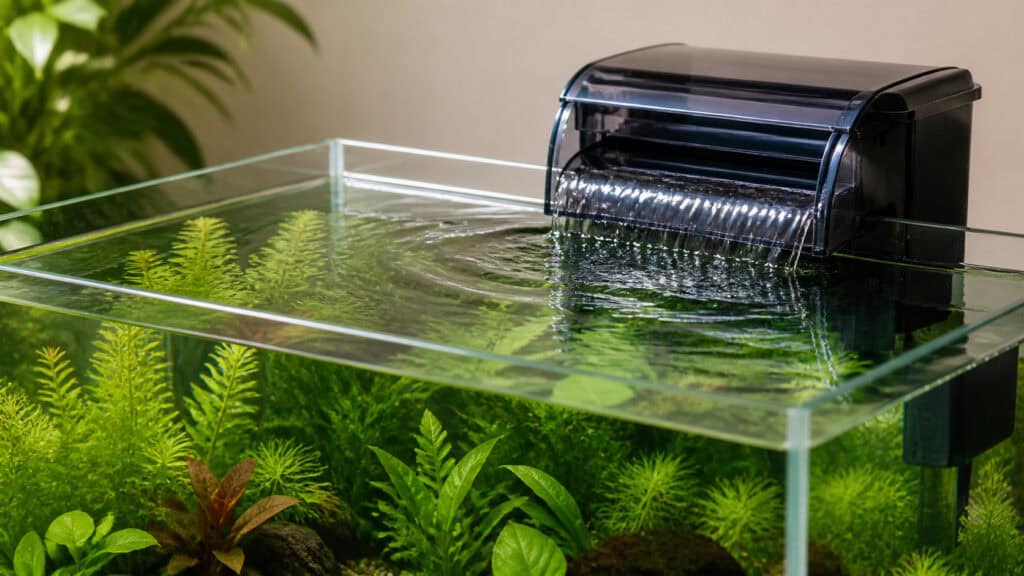
If you use a HOB filter, look at where the water exits the filter and enters the tank. If your tank’s water level is two or three inches below the filter lip, you have created a waterfall. This plunging water drives deep into the tank, creating a massive, turbulent underwater current. Top off your tank so the water level is just below the filter lip. The water should flow smoothly across the surface rather than crashing down into it.
Quick, Cheap Fixes by Filter Type
If you have adjusted the flow knob and topped off the water, but the current is still too strong, you need to baffle the output. Baffling simply means placing an object in the way of the water flow to diffuse its energy. Here is how to do it based on the type of filter you own.
| Filter Type | The Problem Area | The Cheap Fix |
|---|---|---|
| Hang-On-Back (HOB) | The output lip (waterfall) | Cut a plastic water bottle into a curved cylinder and tape it over the output to redirect water horizontally, or place a suction-cup soap dish filled with aquarium gravel directly under the flow. |
| Internal Filter | The output nozzle (jet stream) | Cut a small piece of coarse aquarium filter sponge and stuff it directly into or over the output nozzle to break up the jet stream into a gentle trickle. |
| Canister Filter | The return pipe | Install a spray bar attachment. Point the holes slightly upward toward the surface or directly at the back glass to completely shatter the water’s momentum. |
The Intake Hazard: Protect the Fins
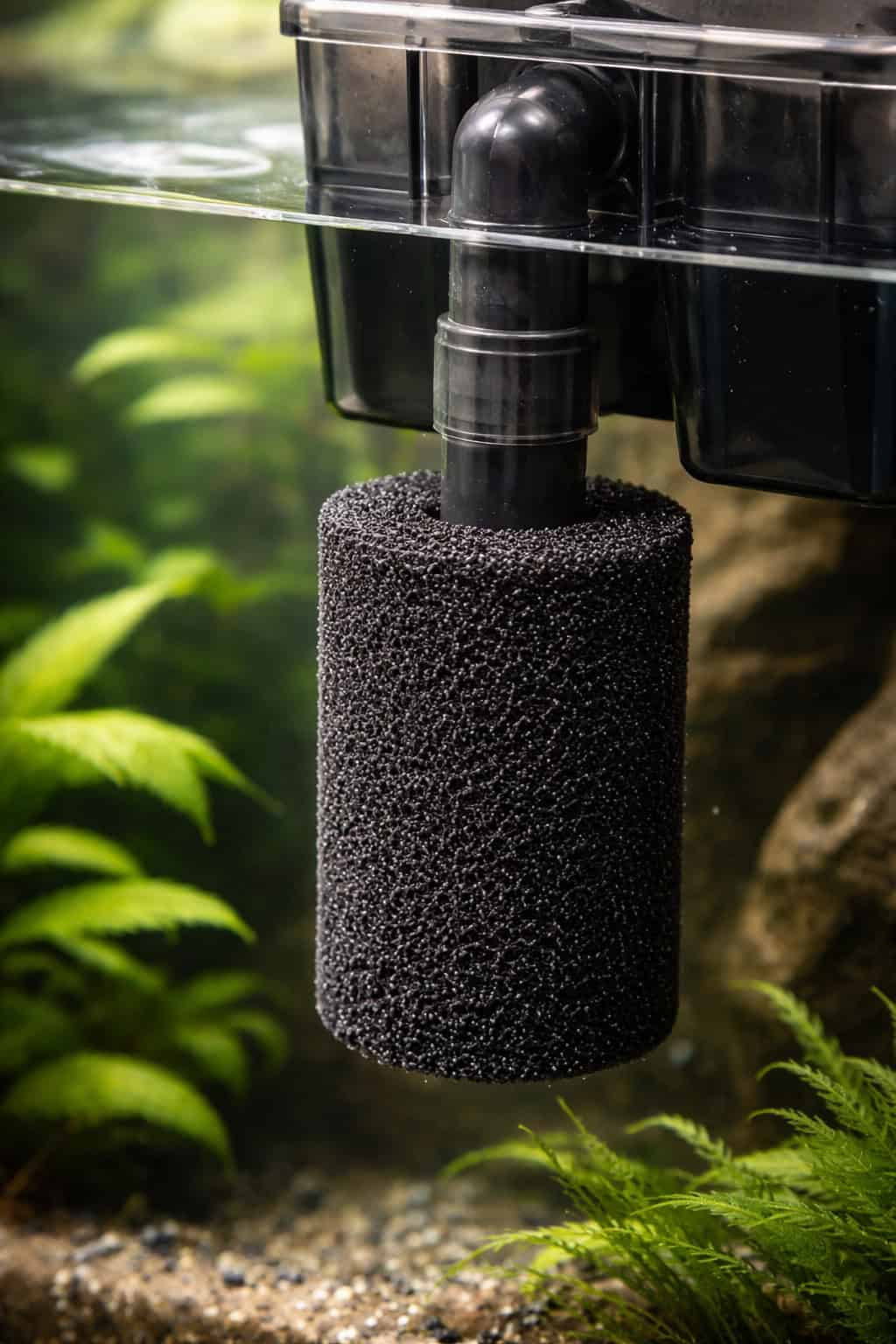
It is not just the water coming out of the filter that causes stress; it is the water going in. Filter intake tubes are notorious for grabbing heavy betta fins. If your betta swims too close to an unprotected intake grate, the suction can pin them against the plastic, leading to severe fin tears and exhaustion.
The best investment you can make for a betta tank is a pre-filter sponge. This is a simple, hollow cylinder of aquarium sponge that slides directly over your filter’s intake tube. It costs about two dollars, completely protects your betta’s fins, slightly reduces the overall flow rate of the filter, and provides extra surface area for beneficial bacteria to grow.

AQUANEAT Pre-Filter Sponge for Aquarium Intake
Check PriceWhen to Actually Replace Your Gear
Sometimes, a filter is simply too powerful for the tank size. If you have a filter rated for a 30-gallon tank running in a 10-gallon betta setup, no amount of baffling will make it comfortable for your fish.
If you have baffled the output, covered the intake, and your betta is still struggling to swim, it is time to swap the gear. For bettas, the ultimate low-cost upgrade is actually a downgrade in mechanics: a simple sponge filter powered by a small air pump. Sponge filters create no mechanical suction, rely on gentle bubbles to move water, and are completely safe for long-finned fish.

Pawfly Mini Sponge Filter for 5 Gallon Tanks
Check PriceDialing It In
Adjusting the flow is a normal part of setting up a betta tank. You want enough surface agitation to prevent a biofilm from forming, but not so much that the water column becomes a washing machine.
Make one adjustment at a time—whether that is adding a pre-filter sponge or building a water bottle baffle—and watch your betta’s swimming patterns for 24 hours. Once they start exploring the open water instead of hiding behind the heater, you will know you have dialed the flow in perfectly.